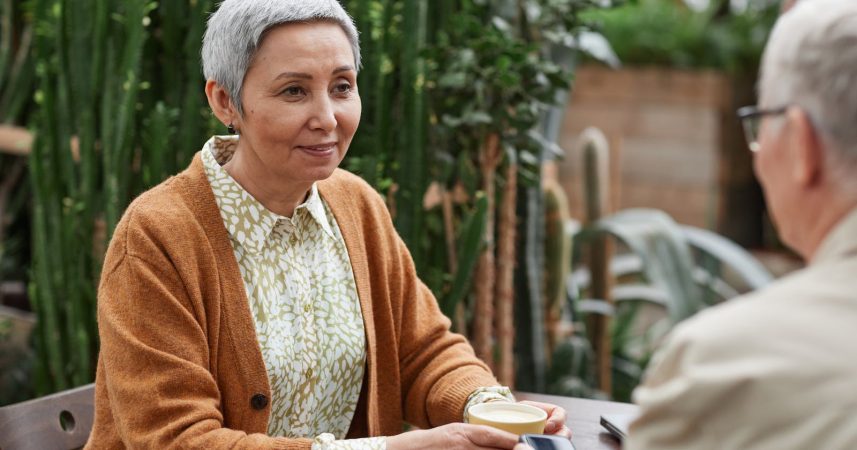
In a corner booth, four women share coffee and careful silences, navigating the unspoken rules of a generation that learned to nod at pain rather than name it — but what if breaking those rules could save us all?
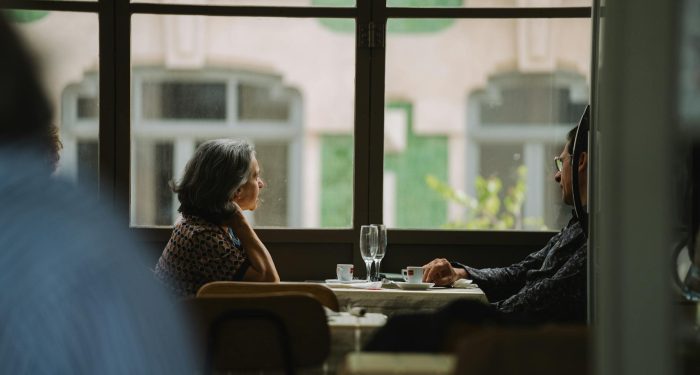
I watched them yesterday morning, those four women at the corner booth. When one said quietly, "I think my husband is depressed," the others nodded in perfect synchronization, like birds on a wire responding to an invisible signal. Not one of them asked what she meant, how long it had been going on, or what she planned to do about it. The check came. They split it evenly. They hugged goodbye in the parking lot, and that was that.
But that silence wasn't indifference. It was recognition. It was the sound of my generation, women who learned that acknowledging problems out loud somehow made them more real, more permanent, more impossible to bear.
The language we inherited
I spent 32 years teaching high school English, watching teenagers struggle to put words to their pain. But it wasn't until I retired at 64 and started writing about these things that I understood how much my own generation struggles with the same silence. We inherited it from mothers who pressed their sorrows into pie crusts and fathers who came home from wars with stories locked so deep inside that they calcified into kidney stones and heart attacks.
When I was 28, my first marriage fell apart. I had two toddlers and a half-finished teaching degree. Not once did I tell my mother I was drowning. She knew, of course. Mothers always know. But we danced around it in conversations about grocery prices and potty training, never touching the raw center of the wound. It was how we protected each other, or so we believed.
Lao Tzu wrote that "Silence is a source of great strength." For years, I believed this meant enduring without complaint, carrying our burdens like invisible backpacks that grew heavier with each passing year. But I wonder now if he meant something different. Perhaps the strength isn't in keeping silent about our struggles, but in the quiet spaces where we gather courage to finally speak.
When depression comes calling
Depression isn't just sadness. Anyone who's lived through it knows this. It's the weight that pins you to your bed at 3 PM on a perfectly good Wednesday. It's looking at your garden, the one that usually brings such joy, and feeling nothing but exhaustion at the thought of picking up a trowel. It's the fog that makes your own life feel like a movie you're watching from very far away.
My second husband battled Parkinson's for seven years before he died. Some mornings, I'd find him staring at the bedroom ceiling with such intensity, as if the answers to questions neither of us could voice might suddenly appear in the plaster. We never called it depression. We called it "having a hard day" or "feeling under the weather." Even as I watched him disappear into himself, layer by layer, we maintained our careful distance from the word.
After he died, I spent six months barely leaving the house. Friends would call and I'd say I was fine, just tired, just adjusting. They'd accept this because it's what we do. We honor each other's right to privacy, even when privacy becomes a prison.
The cost of keeping quiet
What does all this silence cost us? In my widow's support group, we'd sit in a circle talking about selling houses and managing finances, while the real conversation happened in the trembling hands reaching for tissues, in the sudden guilty laughter that would crack and then fade. We were experts at talking around the thing that hurt most.
I think about my students over the years, the ones whose grades suddenly dropped, whose jokes turned sharp as glass. I learned to approach them sideways, the way you'd approach a wounded deer, offering help without naming the wound directly. How many of them needed someone to simply say, "I see you're struggling with depression, and that's okay"?
Dr. Kate McGraw, a psychologist, puts it perfectly: "The act of using language to express our thoughts and feelings links our well-being directly to the words we choose." When we choose silence, when we nod instead of asking questions, we're choosing a kind of isolation, even when we're surrounded by people who understand.
Learning to translate love
At 70, I'm finally learning to translate the love that lives in silence into actual words. It's not easy. My generation shows care by splitting checks evenly even when someone only had tea. We show love by holding each other a beat longer in parking lot hugs. We show understanding through synchronized nods and knowing glances.
But I'm trying to do better. When my evening walks help clear the fog, I tell people. When journaling at 5:30 AM empties the worry from my mind onto paper, I share that too. When my weekly supper club saves me from drowning in my own thoughts, I name it for what it is: a lifeline disguised as a recipe exchange.
I've written before about finding purpose after retirement, about rebuilding life after loss. But this might be the most important lesson: that naming our struggles doesn't make them more real. They're already real. They're already sitting at the table with us, taking up space, drinking coffee. Naming them is the beginning of making them smaller, more manageable, less lonely.
Breaking the pattern
Last week, I called my son. He had to become the man of the house too young when his father left, and I watched him swallow so much silence over the years. This time, instead of our usual dance around difficult topics, I said directly: "I love you, and I know some days are harder than others, and that's okay." The pause on the other end of the line lasted forever and an instant. Then he said, "Thanks, Mom. I needed to hear that."
My granddaughter is 22 now, the age when the world feels too big and too small simultaneously. When she tells me she's anxious about work, about friends, about the future, I don't minimize it or redirect the conversation. I sit with her in it. I tell her about my own anxious moments, about the arthritis that some mornings makes me want to give up gardening altogether, about the grief that still visits unexpectedly two years after losing my husband.
This is how we break the pattern: one conversation at a time, one honest moment building on another. We can honor the strength our mothers and grandmothers found in silence while also recognizing that strength can sound like words too. It can sound like "I'm struggling" and "me too" and "let's talk about it."
Final thoughts
Those four women at the diner, they're my peers, my generation. We learned to carry pain quietly, to nod in recognition rather than probe with questions. That silence held its own kind of love, its own form of witness. But we can do both now. We can hold space for quiet understanding while also learning to speak the words that our children and grandchildren need to hear. The check may come, we may split it evenly, but we don't have to split the burden of silence anymore. We're old enough now to know that some rules were meant to be broken, especially the ones that keep us isolated in our struggles. And that's a lesson worth naming out loud.
What’s Your Plant-Powered Archetype?
Ever wonder what your everyday habits say about your deeper purpose—and how they ripple out to impact the planet?
This 90-second quiz reveals the plant-powered role you’re here to play, and the tiny shift that makes it even more powerful.
12 fun questions. Instant results. Surprisingly accurate.