When my young daughter pointed out that I'd finally stopped pretending everything was perfect, I realized two years of morning meditation hadn't transformed me into someone new — it had given me permission to stop performing the exhausting daily charade of being "fine."
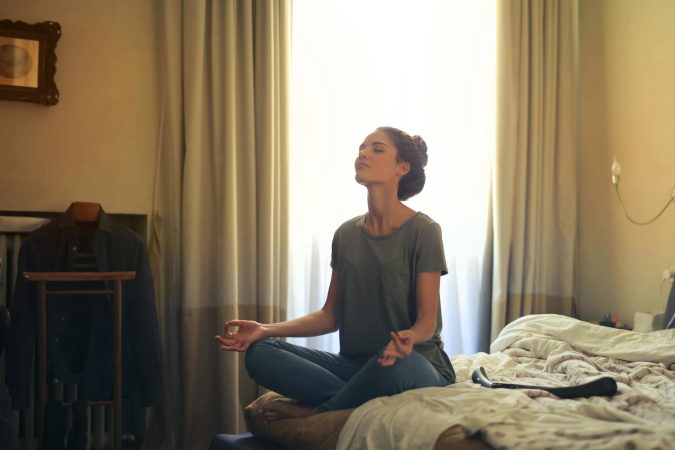
Seven minutes into the morning sit, my left knee started screaming. Not the dull ache I'd learned to breathe through — a sharper protest, the kind that demands you move, fidget, end it. I didn't move. I watched the thought form: *this hurts, I should stop, I'm bad at this*. Then I watched it pass, the way you'd watch a car go by outside a window.
Somewhere in the middle of that ordinary Tuesday, something quiet happened. Not a revelation. Not a breakthrough. Just a small gap between the sensation and the story I kept telling about it. When I opened my eyes, my baby daughter was in the doorway, studying me with that intensity only babies can muster. And in the way she was looking at me, I realized: I was the same person I'd always been. I'd just stopped trying to seem fine.
Two years of mornings had brought me here. Sometimes five minutes before the chaos of the day began, sometimes a luxurious thirty when I could steal the time. But watching her watch me made something click — something profound had shifted, something I hadn't even noticed happening.
The exhausting performance of being okay
Before I started meditating, I was putting on a show every single day. Not consciously, but there it was: the constant effort to appear collected, successful, together. The fake smile at work meetings. The "I'm great!" when anyone asked. The relentless positivity that masked an undercurrent of anxiety.
Sound familiar?
Most of us are performing this exhausting charade without even realizing it. We've been conditioned to believe that showing struggle is weakness, that admitting we're not okay somehow makes us less worthy.
In my mid-20s, I was the poster child for this performance. By all conventional standards, I was doing everything "right." Psychology degree from Deakin University, decent apartment, active social life. But underneath? I was lost, anxious, and profoundly unfulfilled. The gap between who I was pretending to be and who I actually was grew wider every day.
The Buddhist concept of "wearing a mask" isn't just metaphorical. We literally change our facial expressions, body language, and energy to project an image. And it's exhausting. As I explored in my book Hidden Secrets of Buddhism: How To Live With Maximum Impact and Minimum Ego, this constant performance is one of the greatest sources of modern suffering.
What meditation actually changed
Here's what nobody tells you about meditation: it doesn't make you a different person. It strips away the need to be anyone other than who you are.
When I first sat down to meditate, I expected transformation. Enlightenment. Peace. What I got instead was an uncomfortable front-row seat to my own mental circus. Thoughts racing, body fidgeting, constant judgment about whether I was "doing it right."
But something interesting happens when you show up every day, even imperfectly. You start to observe your thoughts without believing every single one. You notice patterns. You realize that the voice in your head telling you to perform, to pretend, to perfect - it's just noise.
Buddhist teacher Pema Chödrön calls this "making friends with yourself." Not the idealized version you present to the world, but the messy, complicated, beautifully flawed human you actually are.
The shift was gradual. I stopped rehearsing conversations in my head. Stopped crafting the perfect response to seem witty or wise. Started saying "I don't know" when I didn't know. Started admitting when things were hard.
My daughter notices because babies are brilliant at detecting authenticity. They haven't learned to overlook the subtle signs of someone trying too hard. When I stopped performing, she felt the difference immediately.
The paradox of letting go
There's a beautiful irony in all of this. The more I stopped trying to seem okay, the more okay I actually became.
Think about it. How much energy do you spend managing other people's perceptions of you? Crafting the right image for social media? Maintaining the facade of having it all together?
What if you just... stopped?
This isn't about becoming careless or unprofessional. It's about recognizing that the constant effort to appear a certain way is a prison of our own making. When you drop the act, something remarkable happens: you free up enormous amounts of mental and emotional energy.
Recently, I became a father to a baby daughter, stepping into what feels like the most creative role of all: parenthood. And here's the kicker - she's teaching me more about presence and letting go than any meditation retreat ever did. Babies don't care about your achievements, your carefully curated image, or your five-year plan. They care about whether you're actually there with them, fully present, mask off.
The practice of being real
So how do you stop trying to seem fine? How do you drop the mask you might not even realize you're wearing?
Start by noticing when you're performing. That automatic "I'm good!" when someone asks how you are. The Instagram post that took seventeen attempts to look "effortless." The meeting where you nod along despite being completely lost.
Meditation helps because it trains you to observe without immediately reacting. You create a small space between stimulus and response, between feeling something and needing to hide it or dress it up.
But you don't need to meditate for two years to start this process. You can begin today, right now, with radical honesty in small moments. Tell a friend you're struggling with something. Admit when you don't understand. Share an unfiltered photo. Say "actually, it's been a rough week" when someone asks how you are.
The world won't end. In fact, you might find that people are relieved. Your authenticity gives them permission to drop their own masks.
I had to unlearn the belief that happiness comes from achievement. Turns out, it comes from presence. From being fully who you are without apology or performance. From allowing yourself to be seen, struggles and all.
The ripple effect
What I recognized wasn't that I'd become some enlightened being. I saw that I'd stopped the exhausting performance of pretending everything was perfect. And in that authenticity, I found something I could trust.
Our kids, our partners, our friends - they don't need us to be fine all the time. They need us to be real. They need to see that it's okay to struggle, okay to not have answers, okay to be human.
When you stop trying to seem fine, you model something powerful: that worth doesn't come from perfection. That strength isn't about never falling apart. That true connection happens when we show up as we actually are, not as we think we should be.
The meditation cushion taught me this, but life confirms it daily. Every genuine conversation, every moment of real connection, every time I choose authenticity over image - these are the moments that actually matter.
Conclusion
Still, I catch myself wondering. Some mornings the mask slips back on before I've finished my coffee — a reflex I can't quite name. And I wonder whether the performance was protecting something, too. Whether the people in my life signed up for the polished version, and what it costs them when I stop delivering it.
Maybe authenticity isn't a destination you arrive at. Maybe it's a door that keeps swinging shut, and the practice is just noticing, again and again, that you've drifted back behind it. I don't know if I've really stopped pretending, or if I've just gotten quieter about the ways I still do.
What I know is this: my daughter saw something that day. Whatever it was, I'd like to keep it. I'm just not sure yet whether it's something you keep, or something that keeps leaving and returning, like breath. Ask me again in another two years. I might have a different answer. I might not have an answer at all.
What’s Your Plant-Powered Archetype?
Ever wonder what your everyday habits say about your deeper purpose—and how they ripple out to impact the planet?
This 90-second quiz reveals the plant-powered role you’re here to play, and the tiny shift that makes it even more powerful.
12 fun questions. Instant results. Surprisingly accurate.