
Growing up unsupervised and overlooked in the 1970s and 80s taught Gen X self-reliance, but the world mistook their competent independence for coldness and called it cynicism instead of survival.
Nobody throws Gen X a parade. There's no cultural conversation about what it was like to be ten years old in 1982 with a house key on a shoelace, no think pieces about the specific psychological weather of being the last generation raised before parenting became a verb. Boomers get blamed, millennials get studied, Gen Z gets marketed to. The cohort in the middle gets silence, and then periodically gets called cold, or sarcastic, or checked out at work, as if those traits arrived by accident rather than as the logical end point of a very specific childhood.
The conventional read on Gen X goes something like this: they're the cynical ones, the eye-rollers, the people who seem vaguely allergic to enthusiasm. Watch them in a meeting. Watch them at a family gathering. Notice how they often arrive, assess, and stay three feet back from the emotional center of the room.
That read isn't wrong exactly. It's just shallow.
The decade that told them to figure it out
People born between 1965 and 1980 were raised in a very specific set of conditions. The U.S. divorce rate roughly doubled between 1960 and 1980, peaking at around 5.3 per 1,000 people in 1981, the highest it has ever been. Maternal workforce participation climbed from about 47% in 1975 to over 60% by 1990. And by some estimates, as many as a third of school-age children in the late 1970s and early 1980s came home to an empty house. Latchkey wasn't a quirky lifestyle, it was the default. The cultural message, delivered with varying degrees of affection, was: you'll be fine, figure it out, don't make a big deal of it.
And they did figure it out. That's the part that gets missed. A whole generation of kids walked home from school, made themselves a snack, did their homework, answered the phone like small adults, and managed entire emotional landscapes without adults knowing or asking. They became competent early because the alternative was chaos.
Then they grew up and were told they were guarded.
What self-reliance actually looks like as an adult
There's a research literature on this, though it rarely gets framed generationally. Kids whose caregivers were less available, less warm, or more harsh tended to develop what attachment theorists call avoidant attachment patterns. They become adults who believe people can't reliably be counted on, so they don't ask.
That's not cynicism. That's a strategy that once worked.
The reframing that's most useful here comes from clinicians who study attachment patterns and suggest that behaviors often develop as adaptive responses to childhood environments. As Dr. Dan Siegel, a clinical professor of psychiatry at UCLA who has written extensively on attachment, has put it, children develop strategies that are "the best possible adaptation to a less-than-optimal situation." If the adults in your life were overwhelmed, distracted, or dealing with their own unprocessed stuff (and a lot of 1970s adults were), your developing brain learned that self-reliance was the only reliable strategy. Not because you were defective. Because you were paying attention.
Why competence gets read as coldness
Here's the part that gets people who grew up this way in trouble as adults.
When you've been managing your own emotional life since you were eight, you don't perform distress the way people expect. You don't announce that you're overwhelmed. You don't text a group chat about your hard week. You just handle it, because that's the muscle you built, and the muscle has been running for forty years.
To a younger colleague or a more expressive partner, this can look like stonewalling. It can look like not caring. It can look like being emotionally unavailable, a phrase that gets thrown around with very little curiosity about where unavailability comes from.
But the internal experience is usually the opposite of cold. It's often someone who cares intensely and has simply never been taught that caring gets expressed out loud. There's a specific kind of exhaustion that builds up when you're the one who handles things, and it rarely gets named because from the outside it just looks like you've got it together.
The blame that came later
The second half of the sentence in the title matters as much as the first. Raised themselves, then blamed for being guarded.
Watch how Gen X gets talked about in workplaces right now. They're the generation accused of being resistant to feedback culture, uncomfortable with vulnerability at work, reluctant to share their feelings in team meetings. The framing is always that they're behind: behind on therapy-speak, behind on emotional literacy, behind on whatever the current vocabulary of wellness demands.
What's rarely acknowledged is that these are the same people who weren't allowed to have feelings in the first place. A kid whose parents were both working two jobs in 1978 and whose big emotional outlet was the television didn't get coached on naming their inner experience. They got coached on not being a burden. Generational researcher Jean Twenge, who has tracked cohort differences for decades, has noted that Gen X came of age in a period of unusually low adult supervision and high cultural individualism, a combination that produced adults who are, in her framing, independent to the point of isolation.
When someone's protective adaptations get criticized later in life, the most common internal response isn't anger. It's a deepening of the original belief that there's something fundamentally wrong with them. Tell a Gen X adult they're emotionally closed off and they usually don't argue. They just quietly file it as more evidence.

The mother variable
One of the more interesting findings from attachment research is that early relationships with mothers tended to predict adult attachment patterns more strongly than relationships with fathers, largely because mothers were still doing most of the caregiving during that era. For the generation we're talking about, this matters. A lot of Gen X mothers were the first wave of women entering the workforce in large numbers, often without the infrastructure, childcare support, or social permission to be both working and present in the way their own mothers had been.
This isn't a criticism of those mothers. Most of them were doing something historically unprecedented with very little support. But the effect on the children was real. Warmth became rationed. Time together became efficient. And the kids, being adaptive little organisms, adjusted.
They learned to need less. And needing less, as any therapist will tell you, is its own kind of wound.
What this looks like at fifty
The Gen X adult at midlife often presents as extremely capable. They're the ones in the family who organize the parent's hospital visits. They're the ones at work who quietly keep the systems running while everyone else discusses culture. They're the friend who will help you move but won't call to say they're struggling.
The link between early adversity and adult attachment patterns isn't deterministic, but it is meaningful. People who learned early that emotional support was unreliable often build lives that don't require much of it, and then feel strangely unseen when their lives look, from the outside, like they're doing fine.
This is why a lot of Gen X people describe a specific kind of midlife loneliness that's hard to articulate. It's not that they don't have people. It's that they've trained everyone around them not to worry about them, and now nobody does.
The judgment going both ways
There's a generational piece to this too. Some observers have noted that Gen X parents often watch millennials parent with a mix of admiration and quiet disbelief — at the hours of direct engagement, the narration of feelings, the commitment to being present in ways their own parents weren't. Millennials now appear to spend considerably more direct time with their children than parents did in the 1970s.
The Gen X reaction to this isn't simple. Part of it is genuine respect. Part of it is grief for what they didn't get. And part of it, honestly, is the quiet thought that they turned out fine without all that, and maybe a generation of kids being emotionally tracked every waking moment isn't going to produce the outcome everyone thinks it will.
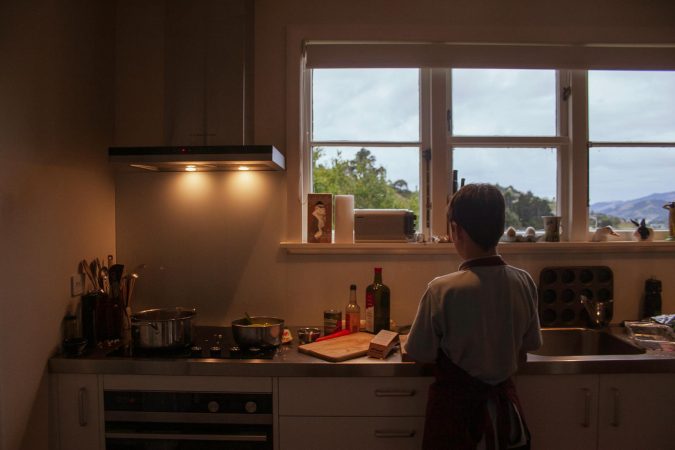
I wrote recently about how resilience tends to develop when nobody is coming to soften the world for you. Gen X got a double dose of that education. The question worth asking isn't whether the education was fair. It's what gets lost when the only adults in the house are the eleven-year-olds doing homework at the kitchen table while dinner reheats.

Reading the quiet correctly
If you know someone in this generation (a parent, a boss, a partner, a friend), here's what's worth understanding. The flat affect isn't apathy. The reluctance to share feelings isn't repression for its own sake. The competence isn't a flex.
It's a kid who learned that the adults weren't coming, and built a whole personality around making sure nobody else would have to wait the way they did.
Attachment styles aren't destiny. The research is consistent that they can shift across life in response to new relationships, new experiences, and being around people who take the time to read you correctly. A Gen X adult who finally gets asked the right question, by someone who actually wants the answer, can soften in ways that surprise everyone including themselves.
How to actually ask
If you want to recognize this dynamic in someone you love, or in yourself, here are three places to start.
First, skip the generic check-in. "How are you?" will be met with "fine" every time, because fine is the answer that kid learned to give at age nine. Try something specific instead: "What's been the hardest part of this week?" or "What's something you've been handling alone that you wish someone knew about?" The specificity signals that you actually want the answer, and that you're not going to be overwhelmed by it.
Second, notice the silences rather than the words. A Gen X adult is often most distressed in the moments they're most composed. If someone shrugs off a major life event, that's usually the moment to sit down, not the moment to move on. Stay in the room longer than feels natural. Competence can be a signal to keep asking, not a signal to stop.
Third, if you are the one carrying this, try saying the small thing out loud once. Not the whole story. Not the therapy version. Just one sentence to one person about one thing that's been heavy. The muscle for this has atrophied, and it rebuilds slowly, but it does rebuild.
Here's the uncomfortable part, and it's aimed at you. You have a Gen X person in your life right now whose quiet you've been reading as distance, whose competence you've been using as permission not to check in, whose "I'm fine" you've accepted because it was easier than sitting with the version where they weren't. You told yourself they liked it that way. You told yourself they're private, self-sufficient, not really the sharing type. That story was convenient, and convenient stories are almost always a little bit of a lie.
The generation raised to raise itself did the job they were given. They're not going to come to you. That's the whole point — the adaptation that built them is the same one that keeps them from asking now. So the question isn't whether they'll eventually open up. The question is whether you're willing to be the person who stops treating their silence as consent, who asks the harder question and doesn't flinch at the answer, who stays in the room the extra five minutes it takes for "fine" to turn into something true. Most people won't. Most people will keep reading the quiet as cynicism because it's cheaper than reading it correctly. Prove you're not most people, or admit you're comfortable with the arrangement exactly as it is.