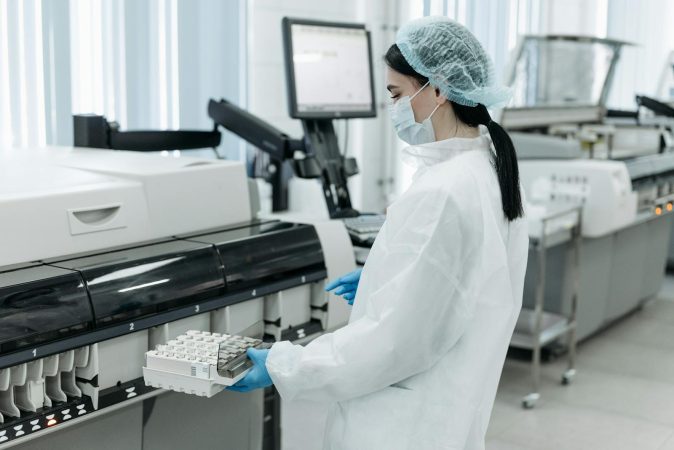
JBS has opened a $37M biotech facility in Brazil focused on developing 'superproteins' through cultivated, microbial, and plant-based technologies — betting on functional ingredients and precision nutrition even as alternative protein funding declines.
JBS, one of the world's largest meat producers, has opened a $37M biotech facility in Florianópolis, Brazil, dedicated to developing what the company describes as superproteins through cultivated, microbial, and plant-based cell technologies.
The easy read on this move is that a meat giant is hedging its bets. But that framing misses what's actually happening. JBS isn't building burger patties or cultivated steaks at this facility. Housed in the Sapiens Parque innovation hub, the labs are focused on functional ingredients for supplements, precision nutrition, and bioactive compounds — and critically, on extracting new value from the byproducts of JBS's existing slaughter operations. This isn't a pivot away from meat. It's the world's largest meat company using biotech to make its current supply chain more profitable and more defensible, wrapping industrial optimization in the language of innovation. Whether you call that strategic brilliance or sophisticated greenwashing depends on how much credit you give the framing — but the investment itself tells a clear story about where JBS sees its future.
CEO Gilberto Tomazoni framed the investment as a knowledge play, focused on developing technology rather than immediate commercial products, with goals of accelerating proof-of-concept projects for future industrial applications. The facility represents a portion of JBS's $100M acquisition of Spanish food tech startup BioTech Foods. The remaining funds have been earmarked for a cultivated beef factory in San Sebastián, Spain, which has been described as the world's largest facility of its kind. JBS also purchased The Vegetarian Butcher from Unilever, merging it with its existing plant-based brand Vivera.
The timing reinforces the thesis. Funding for alternative proteins has declined significantly, and most pure-play startups are scrambling for survival. JBS's continued investment isn't a bet against the current market mood so much as a bet that only incumbents with deep pockets and existing infrastructure will be left standing when the dust settles. Fernanda Berti, CEO of JBS Biotech, described the work as operating at the molecular level to develop solutions with nutritional and functional characteristics tailored to different consumer needs.
The facility's circular model is where the industrial optimization argument becomes hardest to dismiss. Part of the work involves turning byproducts from conventional meat processing into high-value bioactive compounds for food, pharmaceutical, and cosmetic applications. According to Berti, the facility is working to map current byproducts and develop new industrial applications for them. This isn't biotech as disruption — it's biotech as margin expansion. JBS sees cultivated and microbial technologies not as replacements for its existing supply chain but as tools to extract more revenue from every animal it already processes.
The move also looks shrewder against the backdrop of cultivated protein's growing political resistance in the United States. Multiple states have now banned or imposed moratoriums on cultivated meat sales. Wisconsin Governor Tony Evers recently vetoed a bill that would have banned cultivated meat sales in his state, calling the legislation vague and contradictory. But farm industry groups have signaled the issue will return. By investing in the underlying science now — in Brazil and Spain, beyond the reach of U.S. state legislatures — JBS positions itself to move fast once regulatory clarity arrives, while competitors who paused spending during the political backlash will need years to catch up. It's the kind of long game only a $70 billion incumbent can afford to play, and it reveals the real function of that $37 million facility: not a bridge to a post-meat future, but a moat around the meat business JBS already dominates.
What’s Your Plant-Powered Archetype?
Ever wonder what your everyday habits say about your deeper purpose—and how they ripple out to impact the planet?
This 90-second quiz reveals the plant-powered role you’re here to play, and the tiny shift that makes it even more powerful.
12 fun questions. Instant results. Surprisingly accurate.