Hershey is leaning on diversified cocoa sourcing and supplier resilience to absorb historic price shocks, even as reformulated products and shrinking cocoa content draw scrutiny from longtime fans.
Hershey is betting that a deeper, more diversified cocoa sourcing strategy can shield the company from the kind of price shocks that turned 2024 into one of the most punishing years in chocolate's modern history. But the company's response — and the broader industry's — is quietly redefining what the word "chocolate" actually means on American shelves, and who pays the price for that redefinition. Food Dive reports that the confectionery giant is leaning on supplier resilience and procurement flexibility as its primary defense against a market that saw cocoa prices surge dramatically during the year.
The conventional read on Hershey's playbook has been simpler: raise prices, shrink bars, ride it out. The reality is messier, and it reveals a deeper truth about how corporate sourcing decisions ripple outward into product formulations and farm-level livelihoods.
Food Dive frames the company's response as a multi-year shift toward longer-term supplier relationships, regional diversification beyond West Africa, and greater visibility into farm-level conditions, rather than relying on spot-market buying alone.
That sourcing pivot is happening alongside a quieter, more controversial change on the product side — and the two are directly connected. When procurement gets harder, the bar itself changes. According to The Guardian, Hershey has reformulated several seasonal items, including Reese's Unwrapped Peanut Butter Creme Mini Hearts, Take 5, Mr. Goodbar, and Heath bars, replacing milk chocolate with coatings made largely from sugar and vegetable oil. Labeling standards in the US differ significantly from stricter requirements in the UK and EU.
Brad Reese, who identifies as the grandson of Reese's founder HB Reese, has written an open letter to Hershey leadership criticizing the company for allegedly changing the brand's original ingredients. Hershey, which did not respond to The Guardian's request for comment, has publicly defended the integrity of its core Reese's Peanut Butter Cups while acknowledging experimentation in other shapes and formats.
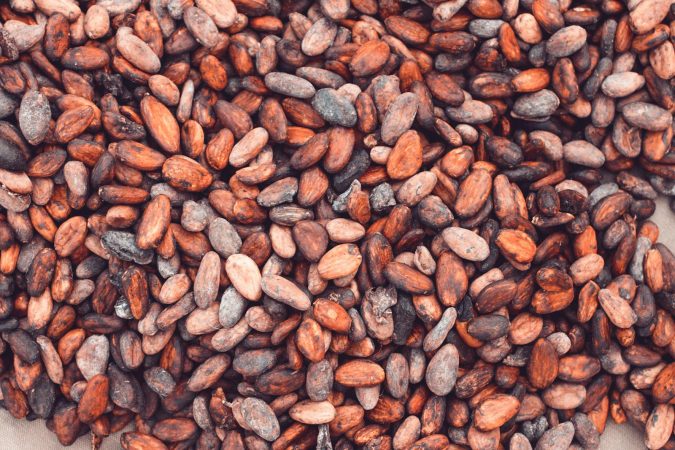
The macro picture explains the squeeze. Ghana and Côte d'Ivoire produce the majority of the world's cocoa, and a cycle of droughts, floods, and disease since 2020 has gutted yields. Companies are turning to strategies including shrinkflation and reformulation with milk, almonds, or alternative coatings. Some manufacturers have gone further still, launching product lines that use fermented sunflower-and-grape-seed substitutes in place of cocoa entirely.
Prices eventually softened as West African harvests improved, but cheaper bars aren't necessarily coming. Manufacturers are still working through inventory bought at peak prices, rebuilding margins they absorbed during the worst of the shock, and contending with stricter EU deforestation rules that keep supply tight.
What gets lost in the price-shock framing is who actually carries the cost — and this is where the sourcing-strategy question becomes a moral one. BBC reporting on Ivory Coast's cacao sector found that women perform roughly 70% of farm labor but receive about 20% of the income, with female family members surviving on an estimated $0.30 a day. Resilience strategies that stop at the procurement desk don't reach those farms. A diversified supplier base looks like progress on a corporate slide deck, but if it simply spreads the same exploitative economics across more regions, it isn't resilience — it's risk management for shareholders.
That's the conclusion worth sitting with. VegOut has previously covered how Mondelēz is testing cell-cultured cocoa butter as a hedge against exactly this kind of supply crisis, and how climate change is redrawing the global coffee map in much the same way. Cocoa is on the same trajectory. The companies that own the shelves are quietly deciding what "chocolate" will mean a decade from now, and the answer they're converging on — cheaper coatings on the label, unchanged poverty wages on the farm — should trouble consumers more than any single reformulated Reese's product. The real test of Hershey's sourcing pivot isn't whether it stabilizes margins or preserves the chocolate in our chocolate. It's whether any of that resilience reaches the women holding up the supply chain at thirty cents a day. Until it does, "diversified sourcing" is just a more sophisticated way of passing the cost down.