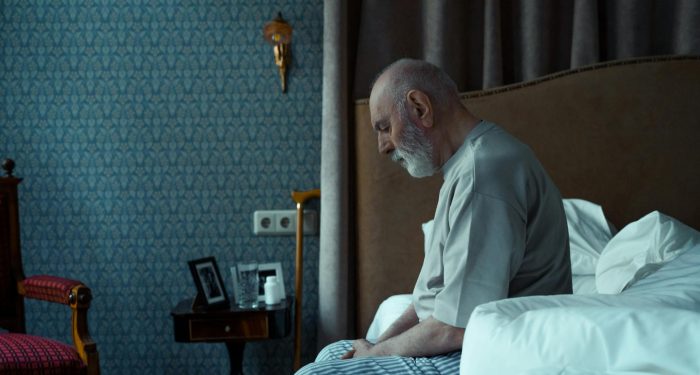

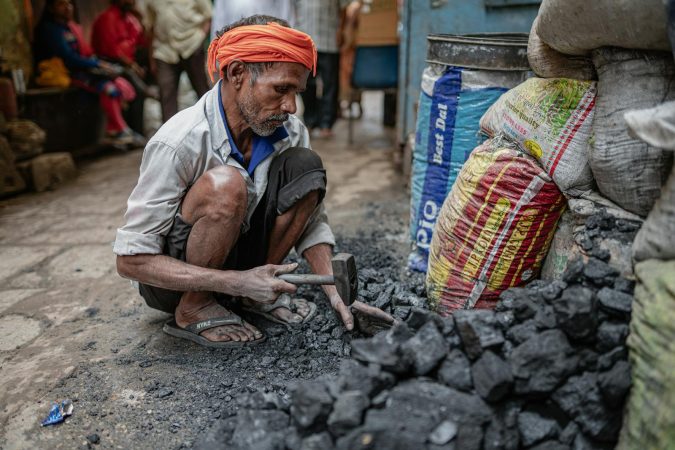
Generosity isn't determined by wealth—some of the poorest people possess a grace and dignity that the richest struggle to match, treating others with kindness that costs nothing but means everything.
The shoe repair man in our neighbourhood worked out of a shop the size of a closet. He knew everyone's name, and more impressively, he knew which of his customers were embarrassed about how worn their shoes had gotten before they brought them in. For those people, he would take the shoes, examine them with genuine interest, and say something like "good leather, this — worth keeping going." Then he'd charge them less than he'd quoted. He never made a thing of it. I only understood years later, sitting at a long table in some restaurant where the wine cost more than that man's weekly takings, watching a man with everything make the waiter feel small.
There's a particular kind of dignity in people who never had much but never made anyone feel it, and you usually only notice it years later when you meet wealthy people who can't manage the same. The proof is in the asymmetry: the shoe repair man, the aunt who hosted Christmas on a fraying tablecloth and somehow made you feel like the most important person in the room, the neighbour who shared what little she had without ever announcing it.
The conventional wisdom is that money makes people generous because they have more to give. The lived experience of a lot of us is the opposite. I want to be careful here. Not every wealthy person is graceless, and not every poor person is gracious. Plenty of difficult people grew up with nothing, and plenty of wealthy people are unobtrusive and kind. The pattern I'm pointing at isn't a rule. It's a tendency. And the tendency is interesting because it inverts what most of us were told about what comfort is supposed to do to a person.
The dignity that doesn't announce itself
The thing about people who had very little but never weaponised it is that you usually can't tell. They don't perform humility because performing anything takes a kind of energy they've already spent elsewhere. They listen more than they speak. They notice when your glass is empty before you do. They never make a story about themselves the centrepiece of a meal.
I think of my grandfather, who worked in a factory for forty years and never once complained about it in front of us. When he came to our house for dinner, he would stand up to clear plates before anyone asked, and if you tried to stop him he would smile and say he liked moving around after sitting all day. It took me until I was in my twenties to understand that this was a small kindness invented on the spot, every time, so that no one at the table would feel they were being served by him.
Years later, when you meet people who never had to think about money, you start to see the shape of what those earlier people were doing. The shape becomes visible by its absence. I've sat across from men who could buy the building we were eating in and still managed to make the woman pouring water feel like an obstacle. I've watched a woman in expensive shoes interrupt a story her own mother was telling, three times, until the mother stopped talking altogether.
Why scarcity sometimes builds grace
Part of what's going on here is attentional. When you grow up watching your parents calculate what they can afford, you develop a sensitivity to the room that more comfortable people never need to develop. You learn what discomfort looks like on someone else's face because you've worn it yourself. You learn not to ask questions that will embarrass someone. You learn the cost of a careless comment because you've been on the receiving end of one.
I remember being twelve and watching my mother decline a dinner invitation from a wealthier neighbour with such elegance that the neighbour walked away thinking she'd done my mother a favour by understanding. The truth was we couldn't afford the bottle of wine you were expected to bring. My mother spared everyone, including the neighbour, the awkwardness of that fact. I didn't know I was being taught anything at the time. But I was.
That's not a virtue, exactly. It's a recognition mechanism. People who've been hurt in particular ways often recognise that hurt in others faster. What you do with the recognition is what becomes character.
The thing wealth can quietly erode
What sustained material comfort can do, slowly, is dull the part of you that scans for other people's discomfort. You don't have to track the cost of the meal anymore, so you stop noticing when someone else is. You don't have to read the room for who can afford what, so you stop reading the room at all. The skill atrophies because you don't need it.
This is the architecture of why some wealthy people, even kind ones, can come across as graceless. It's not that they've become bad people. It's that the muscle of small attentiveness, the muscle that gets developed when your survival depends on reading other people accurately, has gone slack from disuse.
I think about humility as a virtue a lot, partly because it's treated as weakness in so many corners of contemporary life, when in fact it's the precondition for almost every other social good. You can't be generous to someone whose reality you can't see.

What dignity actually is, when you watch it closely
The dignity I'm talking about isn't martyrdom. It isn't pride either. It's something closer to a refusal to let your circumstances become other people's burden.
You see it in the woman who buys her grandchildren small gifts she clearly couldn't afford and waves off any acknowledgment of it. You see it in the man who keeps showing up to work with a clean shirt and a steady mood when his home life is falling apart. You see it in the friend who, after losing a job, asks how you're doing first.
What's underneath that posture is a kind of self-respect that doesn't need other people's recognition to stay intact. The people who held themselves together did so by having something internal that wasn't for sale. A set of values, a sense of who they were, a refusal to let scarcity define them. They affirmed themselves quietly, in the choices they made every day, without ever using that language.
The wealthy person who can't manage it
Here's the part that's harder to say without sounding bitter, so I'll try to say it carefully. Wealth doesn't strip dignity from people. But it can remove some of the conditions that built dignity in the first place.
If you've never had to apologise for something you couldn't help, you may not know how to receive someone else's apology gracefully. If you've never been embarrassed about your circumstances, you may not know how to spare someone else that embarrassment. If you've never been on the wrong side of a power gap, you may not know what your presence does in a room.
I once watched a man at a dinner correct the pronunciation of a server's name three times before the server, gently, told him that his version was the correct one. The man laughed and moved on. The server's face did a small thing that I doubt anyone else at the table noticed. But I'd worn that face myself, years earlier, in a different uniform, and I recognised it instantly. The man wasn't cruel. He just couldn't see the room he was in.
Not a moral story, a structural one
I don't want this to read as a story about virtuous poor people and graceless rich people. That's a sentimental reading and it's not quite true. There are graceless poor people. There are gracious wealthy people, often the ones who remember what it was like before, or who have made a deliberate practice of staying connected to it.
The honest version is that comfort is a kind of insulation, and insulation, over time, makes you less aware of what's outside. The people who develop dignity from scarcity have done so because the alternative was unbearable. They built the muscle because they had to. The wealthy person who can't manage the same hasn't failed morally. They've just lived a life that didn't ask the muscle of them.
This is also why I'm wary of stories that treat suffering as automatically ennobling. It isn't. Whether suffering makes someone gentler or harder seems to have less to do with the suffering itself and more to do with what the person did inside it. Plenty of people grow up poor and become cruel. Plenty grow up rich and become tender. The conditions tilt the odds. They don't determine the outcome.
What you do with this observation
So here's the question, and I think it has to be asked directly. When was the last time you actually noticed the person pouring your water? Not in the abstract, not as a category — that specific person, that specific shift, that specific face. If you can't remember, that's the answer to whether the muscle is still there.
Guilt is useless here. Nostalgia for the people who taught you better is also useless if it doesn't change how you walk into the next room. The shoe repair man and the aunt with the fraying tablecloth aren't asking to be admired in retrospect. They're asking, if they're asking anything, whether the way they treated you survived in how you treat the people who can't do anything for you.
That's the only honest test. Watch yourself this week — at a counter, in a cab, on a phone call with someone whose job is to absorb your impatience. See what the muscle does. See whether it's still there. And if it isn't, stop telling yourself the story that you're one of the good ones. Start being one instead.