
The difference between people who crave silence and those who flee it isn't just introversion—it's a fundamental gap in how our brains respond to stillness, and understanding which type you are might explain more about your life than you realize.
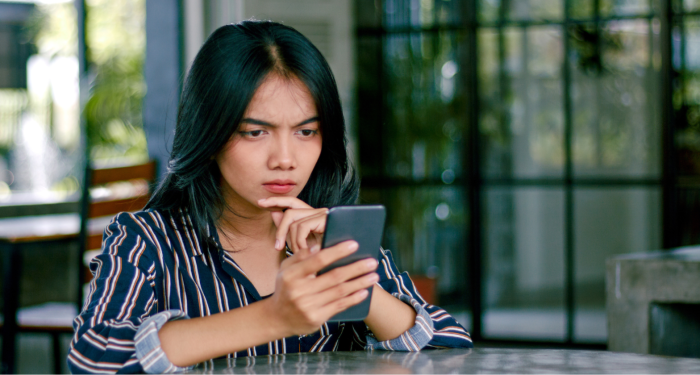
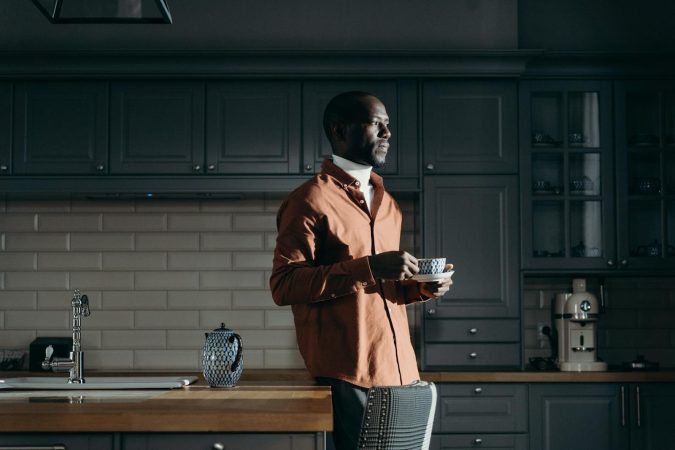
The kettle clicks off, you pour the water, and the kitchen goes quiet in a way you weren't expecting. No music, no podcast, no one in the next room. Just the sound of the tea steeping and the fridge humming and a magpie outside doing whatever magpies do at 4pm. Some people will stand there and feel something close to contentment settle into their shoulders. Others will have their phone in their hand before the tea has finished brewing, not because they wanted to check anything, but because the silence felt like a question they didn't want to answer.
That gap between those two responses is one of the most underrated dividing lines in adult life.
The conventional explanation is that some people are introverts and some are extroverts, and that's the whole story. It isn't. I know plenty of extroverts who can sit alone with a book for three hours and feel like they've been refilled, and plenty of introverts who can't be in their own kitchen for ninety seconds without reaching for stimulation. The introvert/extrovert frame is too clean. What's actually going on is older and stranger than that.
What silence actually does to the brain
When you stop feeding your brain external input, a particular network switches on. It's called the default mode network, and it's the part of you that handles remembering the past, imagining the future, thinking about yourself, and turning over unresolved feelings. The default mode network isn't a single uniform thing. It contains different subregions that handle different kinds of internal work. Some pull in perception, others drive memory-based thought.
Translation: when the room goes quiet, your brain doesn't just go quiet with it. It starts running the inner program. For some people that program is mostly pleasant. Memory, daydream, the soft drift of a Sunday afternoon mind. For others it's mostly unfinished business. Old conversations, anxieties, things they meant to do, people they meant to call.
The phone reach isn't a character flaw. It's a person trying to outrun their own default mode network.
Why some default modes feel like home and others feel like a haunted house
Here's the part most people don't want to hear. Whether silence feels nourishing or threatening has very little to do with willpower and quite a lot to do with what your inner world has been allowed to settle into.
People who can sit alone in a quiet house for hours tend to share something specific. They've made some kind of peace, somewhere along the way, with the contents of their own mind. Not all of it. Nobody has all of it. But enough that when the inner program starts running, it's mostly stuff they can stand to be in the room with.
People who reach for the phone within ninety seconds tend to have an inner world that hasn't been processed so much as outrun. The silence isn't the problem. The silence is just the door that opens to whatever they've been keeping busy enough not to feel.
This isn't a moral observation. It's mechanical. The default mode network activates the moment external demands drop away, and what comes up is whatever's been waiting.
The childhood layer nobody mentions
I notice this pattern across generations in my own family. My grandmother could sit on a verandah for an entire afternoon without speaking and look like the most settled person on earth. My cousins, raised on iPads from the age of three, can't make it through a car ride without input. The difference isn't moral. It's that their nervous systems were trained on different baselines.
Children who grew up with stretches of unfilled time, long car trips before screens, summer afternoons with nothing to do, the boredom that adults of my generation talk about with weird nostalgia, learned that silence was survivable. They built the muscle without knowing it. Early environmental exposures and developmental experiences shape later capacity for regulation and reflection.
I've written before about how the 1960s and 70s produced resilient children almost by accident, mostly through boredom and consequence and the absence of constant emotional management. The capacity to sit alone in a quiet house is one of the quieter inheritances of that era. It wasn't taught. It was simply allowed to develop.
The real cost of never being alone with yourself
There's a study by Netta Weinstein and colleagues, covered in Psychology Today, that found something I keep thinking about. Solitude both helps and harms wellbeing, depending on whether it's chosen or imposed. Chosen solitude was linked to autonomy, peace, and a sense of self. Imposed solitude was linked to loneliness and lower wellbeing. Same physical condition. Completely different inner experience.
This is the bit most people miss. The question isn't whether you're alone. It's whether you're alone on purpose.
People who fill every silence with input often think they're avoiding loneliness. They're not. They're avoiding the moment of choosing. The moment of deciding whether they actually want to be in this life, this job, this relationship, this version of themselves. The phone is faster than that decision. The phone always has somewhere else to be.
The ninety-second window
The first minute or two of quiet is often the hardest, because that's the threshold. Push through it and most people find the silence opens up. Don't push through it and you never find out.
What I notice in people who can't make it past that threshold is that they often don't know they're not making it past it. They reach for the phone automatically. They turn on the TV without deciding to. They put a podcast on the moment they get in the car. The reach is so habitual it doesn't register as avoidance. It just registers as normal life.
What changes when you can sit with it
People who can sit alone in a quiet house for hours and feel full tend to have a few things in common, in my observation. They know what they think. Not on every topic, but they have a sense of their own positions because they've had time to develop them, away from the noise of other people's opinions. They're harder to manipulate. When you've spent real time in your own company, you have a baseline. You know what you feel like when you're settled. You can tell when something is pulling you off-centre, because you remember what centre feels like. They make slower decisions, which is a feature, not a bug. The capacity to not act, to sit with a question for a week before answering it, to let a feeling unfold rather than name it immediately, comes from being comfortable with unresolved interior states.
And they tend to need less from other people. Not in a cold way. In the sense that their relationships aren't load-bearing for their sense of self. They can enjoy company without requiring it.
I've written before about the woman who took herself out to breakfast alone and exchanged a knowing smile with another solo diner. That smile was the recognition of a particular skill. Not loneliness. Not introversion. The skill of being good company for yourself.
The economy that profits when you can't sit still
Worth naming who benefits from the ninety-second reach. Every app on your phone is engineered around the assumption that you cannot tolerate ambient silence for more than about a minute. The notification system, the infinite scroll, the autoplay. None of those features exist because users demanded them. They exist because attention is the product, and attention is most easily harvested from people who can't be alone with themselves.
The capacity to sit in a quiet house is not just a personal trait. It's also, increasingly, a form of resistance to a system that needs you to be reachable, scrollable, and never fully at rest. Global mental health frameworks increasingly recognise that wellbeing requires conditions that the modern attention economy actively works against.
I'm not saying throw your phone in the river. I'm saying notice the reach. Notice the ninety seconds. Notice what you're avoiding, when you avoid it.
The practice nobody calls a practice
If you're someone who reaches for the phone within ninety seconds, the way back isn't dramatic. It's not a meditation retreat or a digital detox or a cabin in the woods. It's smaller than that.
It's making a cup of tea and not putting anything on while you drink it. It's sitting in the car for two minutes after you park, before going inside. It's letting the kitchen be quiet while you cook dinner once a week.
So decide which one you are. Not in theory. In the next quiet moment that arrives in your day, watch what your hand does. If it reaches, ask yourself honestly what you're walking away from, and how long you've been walking. Because the people who can sit in a quiet house aren't lucky and they aren't built differently. They simply stopped running, at some point, and stayed in the room long enough to find out what was actually in there.
Most people will not do this. They'll read an article like this one, nod, feel briefly seen, and reach for the phone before the next silence finishes asking its question. The cost of that isn't dramatic either. It's just a whole life lived one notification away from yourself, and no one will ever tell you that's what happened.