Your family home triggers an automatic version of yourself—recognizing this pattern is where emotional intelligence actually begins, before any conflict even starts.
The single most reliable predictor of how you'll behave at your next family gathering has almost nothing to do with what happens there and almost everything to do with the doorway itself — specifically, walking into a kitchen that smells exactly like it did when you were twelve, before you ever questioned what was on the plate. Research on emotional intelligence and its effects consistently shows that people who can perceive and regulate their own emotional responses in real time perform better across every measurable domain of life, from health outcomes to decision-making under pressure. But the family kitchen is rarely where we bring our sharpest self-awareness. It's where we lose it. And for anyone who has adopted a plant-based lifestyle that differs from the one they grew up in, the loss is felt in a very specific place: the table, the plate, and everything those objects represent about belonging.
The conventional wisdom says emotional intelligence at family gatherings is about managing your reactions in tense moments: staying calm when your uncle brings up politics, not snapping when your mother critiques your life choices, keeping the peace. And that's part of it. But what gets lost in that framing is something quieter and, honestly, harder — especially for those of us whose food choices have become a visible, three-times-a-day marker of how we've changed. The most emotionally intelligent move at a family gathering isn't managing a reaction to your aunt's comment about protein. It's catching the shift that happens before you've even sat down, the moment your nervous system starts negotiating between the person you are now and the person this kitchen remembers you as.
The version of yourself that walks through that door is often a version you haven't been in months. Maybe years. And most people never notice the change — until they're three bites into something they stopped eating a long time ago, or nodding along to a joke about "rabbit food" with a laugh that doesn't belong to them.
The automatic self at the table
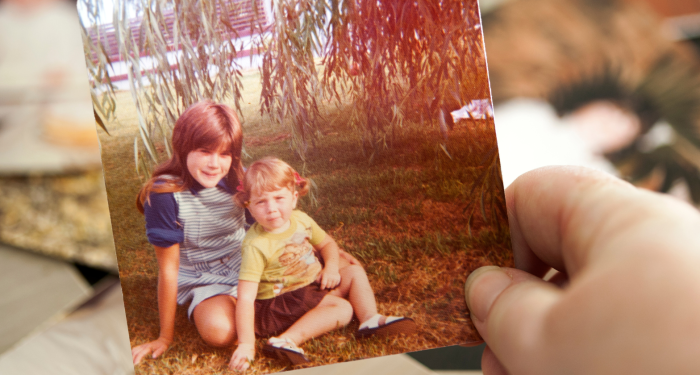
There's a specific phenomenon in family systems therapy where adults who function with total competence in every other area of their lives find themselves reverting to childhood roles the moment they enter a family context. The peacekeeper. The achiever. The invisible one. The comedian. These aren't chosen. They're activated, the way a smell — roasting meat, butter browning in a pan, a particular spice blend — can return you to a room you haven't been in for twenty years. And for anyone who has shifted to a plant-based diet, the activation is doubly loaded: you're not just reverting to an old emotional role, you're reverting to an old relationship with food itself.
Research on unconscious versus conscious processing has shown that the brain processes enormous amounts of sensory input without that input ever reaching conscious awareness. Emotional appraisal and behavioral priming can happen below the threshold of what we notice. Walk into a house where you grew up, smell whatever's been simmering on the stove since morning, sit in the chair where you ate every meal until you left for college, and your nervous system doesn't need your conscious mind to weigh in. It already knows what to do — including what to eat, how to eat it, and what role to play while eating it.
The behavioral shift is fast. The awareness of it is slow, if it comes at all. You said you'd bring your own dish. You said you wouldn't make a big deal about it. But now you're here, and your grandmother made the thing she always made, and she's watching you, and the person you were before you went plant-based is already reaching for the serving spoon.

I think about this through the lens of geography and food culture, because both have always been the things that reorganize me most. Growing up between Stockholm and Melbourne, I learned early that who I was changed depending on which parent's house I was walking into. Language changed. Volume changed. And what I ate changed — the flavors, the rituals, what counted as a proper meal. The version of myself that was easygoing about food in Australia became more rigid in Sweden, where food traditions carried a particular weight. When I eventually shifted toward plant-based eating, neither family's kitchen quite knew what to do with me, and I didn't quite know which version of myself to be in either one. Neither version was fake. Both were real. But neither was the whole picture, and the switching happened without my permission.
That's what a family gathering does to most plant-based eaters, regardless of whether they crossed hemispheres to get there. You walk through a door and an older operating system loads — one that was programmed around food rituals you no longer follow.
Emotional intelligence is not emotional performance — especially around food
Part of the confusion around emotional intelligence is that people assume it means being good with emotions, being warm, being the person who hugs everyone and graciously eats whatever is served. Psychologist Daniel Goleman, who popularized the concept, was specific about its components: self-awareness, self-regulation, social awareness, and relationship management. As Psychology Today has outlined, emotional intelligence is not about how much emotion you feel but how you interact with and manage those emotions. It's the difference between reacting defensively when someone questions your food choices and recognizing the defensiveness, pausing, and choosing how to respond.
Being emotional and being emotionally intelligent are different things. People conflate them because both involve feelings. But one is raw experience. The other is a skill set.
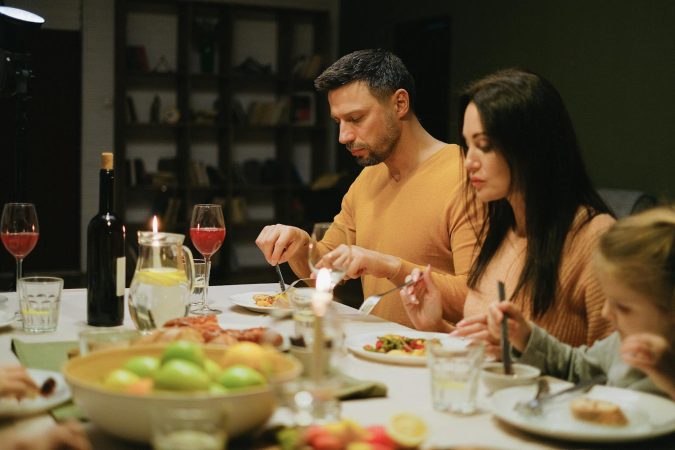
And the family dinner table is the testing ground where that skill set either shows up or doesn't. Because the trigger isn't a stranger at a restaurant asking why you're vegan. The trigger is your mother, who spent hours cooking, looking at you with genuine hurt when you decline the main dish. The trigger is your brother making the same sarcastic comment about your "phase" that he made two years ago. The trigger is the implicit accusation — present in so many food-centered families — that rejecting the food is rejecting the family. The trigger is being thirty-three and suddenly feeling fifteen, caught between who you are and who this table needs you to be.
The emotionally intelligent response isn't to suppress the feeling, or cave and eat what's served, or launch into a speech about factory farming. It's to notice you've shifted. That's it. That's the whole thing.
Why noticing is the hard part
Self-awareness sounds simple. It's the kind of thing people nod at in therapy and assume they already have. But the research tells a different story. Studies on emotional intelligence and cognitive control have found that individuals with higher EI show enhanced neural markers associated with conflict monitoring and inhibition when processing emotional information. In other words, they don't just feel differently. Their brains process emotional data differently, catching conflicts between what they're feeling and what the situation actually requires.
Most people at a family gathering aren't doing this. They're running on autopilot. The food roles were established decades ago — who cooks, who compliments, who eats seconds, who clears the plates — reinforced through repetition, and at this point they operate below conscious awareness. Food is never just food in a family. It's love, it's control, it's tradition, it's identity. And when you change what you eat, you disrupt all of those channels at once.
Internal Family Systems therapy, a model gaining traction in clinical practice, frames this as the activation of "parts," distinct sub-personalities that developed in response to specific relational dynamics. Comparisons between IFS and cognitive behavioral therapy have highlighted how IFS uniquely addresses these role-based behavioral patterns, looking not just at the thought distortion but at the whole protective system that built it. The kid who learned to eat everything on the plate to avoid conflict didn't develop a "bad habit." They developed a survival strategy. The teenager who learned to compliment Mom's cooking as a way to keep the peace didn't develop people-pleasing out of nowhere. They developed it at the dinner table. And those strategies don't retire just because you've spent the last three years building a thoughtful plant-based life.
So the difficulty isn't recognizing you have patterns around family food. Everyone knows that, abstractly. The difficulty is recognizing the pattern while it's running. In real time. At the table. Between the moment your grandmother serves her signature dish and the moment you have to decide, in front of everyone, whether to eat it or hold your boundary.
What the shift actually looks like
Say you're someone who, in your daily life, is clear and confident about your plant-based choices. You meal-prep with intention. You know your reasons — ethical, environmental, health-related, maybe all three. You navigate restaurants with ease. You've done the reading. Maybe you've even done therapy.
Then you walk into your parents' house for Sunday lunch and within twenty minutes you're accepting a bowl of soup you're pretty sure has chicken stock, laughing off a joke about tofu that isn't funny, and assuring everyone that "it's fine, really, I can just eat the side dishes." You're performing ease. You're managing everyone else's comfort around your choices. You're doing the thing you always did — making yourself smaller so the family system doesn't have to accommodate you.
This is the version of you that loads automatically.
Or maybe you go the other direction. Maybe you walk in already armored, already defensive, already scanning for the first comment about protein or B12 that will prove you were right to dread coming. You're braced for judgment that hasn't happened yet. You're sixteen, anticipating a fight at the table.
Neither of these is about what's happening in the room. Both are about what happened in the room before, years ago, when the patterns were laid down. The research on unconscious sensory processing makes this concrete: the brain can perform complex emotional appraisals without explicit awareness. You don't decide to abandon your values at the dinner table. Your nervous system decides for you, based on pattern recognition that's faster than thought — the smell of the food, the sound of dishes being set out, the particular weight of your mother's silence.

The emotionally intelligent move is the moment you catch it. Not fix it. Not fight it. Just see it. Oh, I'm about to eat something I don't want to eat because I'm afraid of the silence if I don't. That's the shift. That's enough.
The gap between noticing and performing
There's a version of emotional intelligence that looks perfect from the outside but hollows you out from within. You read the room. You adjust. You bring a plant-based dish but don't mention it's vegan. You eat before you arrive so you won't need much. You deflect every food question with humor. Everyone thinks you're the easy one, the mature one, the one who "doesn't make a big deal about it." But you haven't actually been present at a family meal in years. You've been managing one — managing the tension between who you are and who this family still expects you to be around food.
We've explored this paradox before: people who score unusually high in emotional intelligence sometimes use that skill not for connection but for perpetual performance. They learned to read rooms so well that they never stopped reading and never started being known.
This is why noticing which version of yourself activates matters more than performing a calm, collected, emotionally literate response to your family's food expectations. Performance is still performance, even when it looks like growth. The person who calmly deflects every comment about their plant-based plate might be demonstrating real emotional skill. Or they might be doing what they've done since they were nine, keeping everyone comfortable at their own expense, swallowing their truth the way they once swallowed food they didn't want. The behavior looks identical. The internal experience is completely different.
As USA Today has reported, self-awareness is the foundation on which every other emotional intelligence skill rests. Without it, empathy becomes people-pleasing. Self-regulation becomes suppression. Social skill becomes a mask. And at the family dinner table, the mask often looks like someone cheerfully eating whatever is served to keep the peace.
What to do with the noticing
The temptation, once you see the pattern, is to announce it. To name it out loud, to tell your family you've realized you always abandon your food values at their table and you're not doing it anymore. This almost never goes well. Family systems don't like it when one member changes the script without warning — especially when food is the script's central text.
A subtler approach: notice, and then just stay with it. Don't correct. Don't perform the new version of yourself. Don't turn the gathering into a lecture on animal agriculture or a therapy session. Just notice. Oh, I'm doing the thing again. I'm about to say "a little bit won't hurt" even though I decided months ago it matters to me. I'm shrinking my choices to fit the room. I'm making myself responsible for everyone's comfort around what I eat.
That's enough. That awareness, practiced over time, starts to loosen the automatic response. Not dramatically. Not in a way anyone else at the table would notice. But inside, something shifts from unconscious compliance to something closer to choice. You might still eat the side dishes and skip the main. You might still bring your own food. But you're doing it as the person you are now, not as the child this kitchen remembers.
This is what the research on conscious versus unconscious processing actually points toward: the possibility that some of what drives our behavior can be surfaced, examined, and gradually redirected. Not all of it. The brain will always process more than we can consciously track. But the gap between stimulus and response can widen. The old role at the table doesn't have to run the show.
The small behavioral shifts people with high emotional intelligence make at group dinners often come down to this one thing: they've learned to observe themselves in social food situations with the same attention they give to observing others. They notice when they're about to abandon a boundary to smooth over an awkward silence. They notice when they're about to over-explain their choices because they've slipped into the defensive teenager. They notice — and in noticing, they give themselves a fraction of a second to choose differently.
The door is a threshold, not a time machine
You are not the person you were at fourteen, even when your nervous system briefly insists otherwise. The kitchen may smell the same. The chairs may be the same. The dynamics around the table may run along the same grooves they've run along for decades.
But you are not the same. Your relationship with food has changed. Your understanding of what you put into your body and why has changed. And the proof is that you can notice it now — the pull of the old pattern, the urge to comply, the flicker of guilt for choosing differently than the family tradition demands.
The most emotionally intelligent thing you can do at a family gathering won't be visible to anyone else. It won't win you praise for being the easygoing vegan or the one who "doesn't make it weird." It won't resolve the tensions around food that have been simmering since before you could articulate your values. It's private, and it's small, and it happens in the first thirty seconds: the moment you walk through the door, smell what's cooking, feel yourself begin to shift toward the old version who ate whatever was served without question, and instead of going with it on autopilot, you watch it happen.
You watch it happen, and you stay in the version of yourself that chose plants, chose intention, chose to eat differently than this kitchen taught you to. Not loudly. Not defensively. Just clearly.
That's where emotional intelligence actually lives. Not in the performance. In the pause before it — the pause where you remember that you can love this family and still feed yourself like the person you've become.
If You Were a Healing Herb, Which Would You Be?
Each herb holds a unique kind of magic — soothing, awakening, grounding, or clarifying.
This 9-question quiz reveals the healing plant that mirrors your energy right now and what it says about your natural rhythm.
✨ Instant results. Deeply insightful.

Tessa Lindqvist
She/Her
Tessa Lindqvist is a travel and culture writer born in Stockholm, Sweden, and raised between Scandinavia and Australia. She studied journalism at the University of Melbourne and spent four years as a travel editor at Kinfolk magazine, where she developed a narrative approach to writing about places that goes far beyond best-of lists and hotel reviews. When the print edition folded, she moved into freelance writing full-time.
At VegOut, Tessa covers food cultures, sustainability, urban living, and the human stories within cities. She has lived in five countries and has a permanent outsider’s perspective that makes her particularly attuned to what makes a place distinctive, how food traditions reveal local identity, and why the way a city feeds itself says everything about its values.
Tessa is currently based in Los Angeles but considers herself semi-nomadic by temperament. She travels with a single carry-on, calls her mother in Stockholm every Sunday, and believes every place deserves a proper narrative, not a ranking.
More Articles by Tessa