Some friendships are built on invisible labor: one person carries everyone else's pain while their own struggles go unwitnessed. This asymmetry isn't thoughtfulness—it's often survival learned young.
There is a friend in most lives who remembers the date your father died three years ago, who texts on the anniversary of your worst diagnosis, who knows that October is hard for you because of something you mentioned once, in passing, in 2019. They are also, very often, the person who shows up at your door with soup when you're sick, who remembers you went plant-based last year and quietly reworks the Thanksgiving menu so you have something real to eat, who texts the recipe before you ask.
And there is a version of that same person, sitting at home, who could not tell you the last time anyone cooked for them on a hard day.
Both can be true. The thoughtfulness can be real. So can the asymmetry.
The cultural read on this kind of friend is flattering and incomplete. They get called emotionally intelligent, a unicorn, the glue of the group, the one who hosts. The compliments may be sincere, but they can also keep everyone from looking too closely at the labor underneath the gift.
Because the friend who tracks everyone else's grief calendar, dietary restrictions, food sensitivities, and exact coffee order is not always someone who simply decided, at twenty-three, to become more attentive than their peers. Sometimes they are simply organized and generous. Sometimes they love people through details. And sometimes, their attentiveness was shaped early, in a home where noticing other people's moods and needs helped keep things steady.
The role they may have learned early
Psychologists often use the term parentification for a family dynamic in which a child takes on responsibilities that should belong to an adult. In some cases, that responsibility is practical: cooking, caring for siblings, managing household tasks. In other cases, it is emotional: becoming a parent's confidant, comforter, or steady presence.
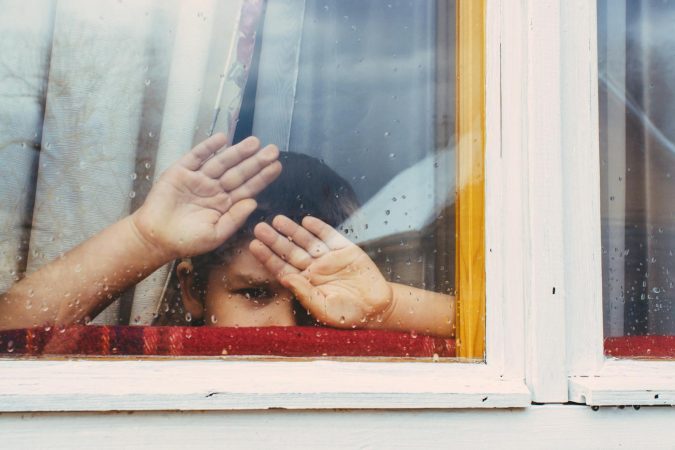
Clinicians describe one version of this as a child being pulled into the role of a parent's emotional anchor. The child may be praised for being mature, wise, easy, or unusually understanding. The praise may feel good. The arrangement can still place a child in a role they were never meant to carry.
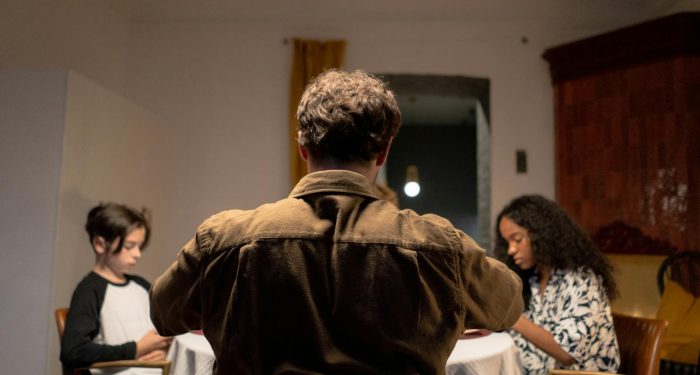
For some children, that caretaking first shows up in ordinary rooms: the kitchen, the hallway, the dinner table, the car ride home. They learn which foods keep the house calm. They learn when to speak and when to disappear. They learn who needs soothing, who needs space, and what subjects will make the evening harder.
The psychoanalyst Sándor Ferenczi, writing in the 1930s, described how a parent's constant misery could create a lasting caretaking role for a child: a "nurse for life." The phrase is old-fashioned, but the pattern it points to is recognizable. Some people learn, very early, that care means anticipating what someone else cannot say directly.
By adulthood, that attention may no longer feel like labor. It may feel like personality. It may feel like being the friend who hosts.
Why the dates and dietary restrictions can stick
Memory is shaped by meaning. People tend to remember what has mattered, what has repeated, and what once seemed important to keep track of. For a child who grew up scanning the room for tension, other people's needs can become unusually easy to catalogue.
The diagnosis date. The anniversary of the miscarriage. The friend who's allergic to nuts. The cousin who went vegan after the cancer scare. The mother-in-law who won't say it but does not actually like mushrooms.
This is not necessarily magical thoughtfulness. It may be a trained form of attention, sharpened by years of practice. Longitudinal attachment research has found that early relationships with caregivers and close peers can shape how people relate to others in adulthood, although not in a simple or predetermined way.
That nuance matters. Not everyone who remembers your hard year is carrying an old family role. Some people are sentimental. Some are meticulous. Some simply know that grief has a calendar, and they care enough to mark it.
But when the remembering is paired with exhaustion, resentment, difficulty asking for care, and a habit of minimizing one's own needs, it may be pointing to something more complicated than kindness.
The compliment that can hide the cost
"You are so thoughtful" is one of those phrases that can sit comfortably on both sides of a complicated truth. It may name a real virtue. It may also describe the visible part of an old survival pattern: being useful, attentive, easy, and needed.
Writers on adverse childhood experiences and perfectionism have described how early disruptions in care can contribute to a chronic sense of not being good enough. In adulthood, that can sometimes appear as over-functioning, high competence, and a tendency to earn approval through doing things well.
In a friendship group, that may look beautiful from the outside. The thoughtful text. The perfectly adjusted dinner menu. The remembering of every birthday, every allergy, every hard week, every soft spot.
And the people around that friend, mostly, accept the gift without asking what it costs.
The thesis, plainly
Here is the argument: the cultural ideal of the thoughtful friend, the one who hosts, feeds, remembers, and quietly adjusts, can be romanticized in a way that hides a labor pattern. Caretaking through food and feeling is real care. It can also, for some people, be a role learned early and carried long after childhood ended.
The plant-based dinner party with seven personalized accommodations may be generous. It may also be the adult version of a childhood job: keep everyone comfortable, keep everyone fed, keep everyone from needing too much from the person who is supposed to be holding the room.
The asymmetry no one names
There is a particular loneliness that can live inside this dynamic. It is the loneliness of being known as the one who feeds everyone.
That role can make a person socially central and emotionally peripheral. People love them. People rely on them. People may also not know what is hard for them right now, what date they quietly dread, or what they would actually want for dinner if someone else were paying attention.
The old training may have taught them the opposite of asking. It may have taught them: your feelings are a complication. Your hunger is secondary. Bring the regulated version of yourself, and bring something useful to the table.
So the friend who texts you on the anniversary of your mother's death, and who made sure there was a vegan option at the memorial, may have an anniversary of their own that nobody texts about, and a meal of their own that nobody thought to make.
What it can look like in adulthood
The pattern is not hard to recognize once it has been named. A person finds it easier to give support than to ask for it. They notice what everyone else likes but become vague when someone asks what they want. They say I'm easy so often that people eventually believe them.
They may gravitate toward friendships or relationships where they get to be the steady one. They may feel a low-grade resentment that is hard to explain, because nobody is technically doing anything wrong. After all, people are simply accepting the version of them that has been offered for years.
It is worth being precise. Not every thoughtful friend was parentified. Not every host is hiding pain. Not every person who remembers your hard dates is trying to earn love.
The more useful question is not do they remember other people's hard dates and food rules? It is can they receive the same attention back without deflecting it?
People who flinch, change the subject, insist they do not need anything, or say oh, I'll just eat whatever may be revealing something about what they learned care was allowed to look like.
The patterns are durable, not destiny
Early relationship patterns can be powerful, but they are not a life sentence. Attachment researchers have found that adult attachment styles can change in response to later relationships and life events. A person who learned to be the family's emotional keeper at seven is not locked into that role at thirty-seven.
The friend who remembers your diagnosis date and cooks around your restrictions can become someone who also lets you remember theirs and cook for them.
The harder skill is being fed
People who carried the role early often describe a strange friction in adulthood when they try to ask directly for the thing they have spent years giving away: to be checked on, to be cooked for, to name a craving without apologizing for having one.
The words can feel awkward. They can feel too exposed. They can feel like a violation of the unspoken contract that they would be the one feeding, not asking.
This is the quieter version of the self-containment problem: when a person spends years signaling that they do not need anything, the people who love them may take that signal at face value. They may not be failing them. They may simply be following the instruction they were given.
Changing the instruction is harder than it sounds. It requires saying, out loud, what you actually want for your birthday dinner. It requires letting someone else cook, even if they do it imperfectly, and not rushing into the kitchen to rescue the moment.
What the friend deserves to know
If you are the person being remembered and fed, the useful move is small and specific. Ask them what their hard dates are. Ask what they actually like to eat, not what they cook for everyone else, but what they would order if no one were watching. Write it down. Cook it for them. Send the text on the day, the way they have been sending texts to you.
And if you are the friend with the long memory, the thoughtful texts, and the dinner party where everyone's restrictions are quietly handled, the work is not to become less caring. The remembering, feeding, and hosting may be some of the genuinely good things you carried out of a difficult house.
The work is letting the care go in both directions.
It is telling someone the date. Naming the dish. Letting them get it slightly wrong the first year and not treating that imperfection as proof that you should never have asked.
The capacity to feed other people's grief is rare and valuable. It just was never supposed to be a one-way street. It was supposed to be shared across the adults, friends, and families who know how to hold one another.
When that distribution fails, someone usually picks up what fell. Sometimes it is a child. Sometimes that child becomes the adult still carrying the casserole.
They are allowed, now, to let someone else hold the dish.