

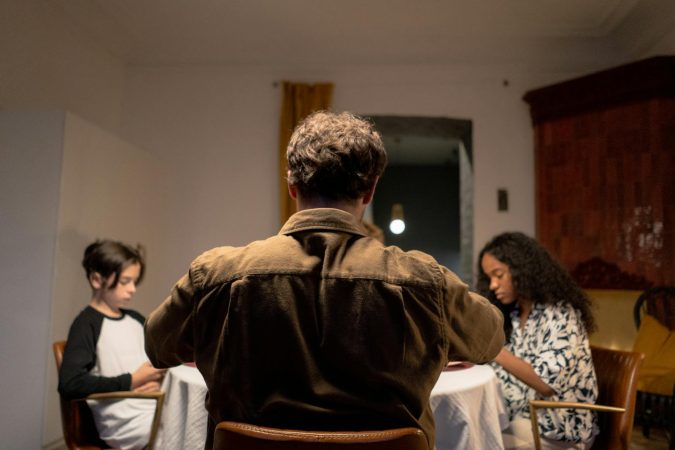
Some people find silence at the dinner table deeply threatening while others embrace it without hesitation—and the difference usually traces back to what silence meant in their childhood home.
Picture two people at the same dinner table. The pasta is half-eaten. Nobody has spoken for twelve seconds. One person leans back in their chair, turns the stem of a wine glass between two fingers, and watches a candle flicker. The other is already halfway through a sentence: a question about someone’s weekend, a story about traffic, anything that keeps the air moving.
That twelve-second pause is the same pause. To one person, it feels like part of a nice meal. To the other, it can feel like something has gone wrong.
The difference is not always personality in the way people usually mean the word. Sometimes it has more to do with what silence meant in the house someone grew up in.
What silence was, when you were small
For some children, silence at the family table was simply the sound of people eating. Forks against plates. A chair shifting. Someone asking for the salt. Nothing was happening because nothing needed to happen. The quiet was just quiet.
For other children, silence carried more meaning. It could mean a parent was angry but not yet speaking. It could mean tension was building in the room and might break later, sometimes loudly, sometimes through withdrawal, sometimes in a way nobody named but everybody felt.
A pause was not always a pause. It could feel like a forecast.
Children are often very good readers of atmosphere. They notice footsteps, tone, doors closing, plates being put down too hard. Research on early-life adversity does not prove that dinner-table silence creates a specific adult habit, but it does support the broader point that early unpredictability and stress can have lasting effects on brain development and emotional regulation into adulthood.
So if silence often arrived before conflict, withdrawal, or punishment, it makes sense that silence might not feel neutral later on. A person may grow up, leave the old table behind, and still feel an urge to keep the room warm.
The dinner-table tell
Adults who grew up around safe quiet often do something that looks unremarkable from the outside. They let the quiet sit there. They take another bite. They look out the window. They watch the candle. They are not waiting for anyone to perform.
Adults who grew up around loaded quiet may do the opposite. They fill it. Sometimes with a question, sometimes with a joke, sometimes with a story they have already told once before. The content is not always the point. The function is often comfort. As long as someone is talking, the room feels less uncertain.
This does not mean every talkative person had an unpredictable childhood. It also does not mean every quiet person had a secure one. Human beings are messier than that.
But the way someone reacts to silence can reveal what they have learned to expect from other people.
Why this is closer to an attachment story than a personality story
The mainstream version of attachment theory has been flattened into Instagram-friendly categories: secure, anxious, avoidant. The actual picture is more complicated. Attachment is less a fixed type stamped onto a person in childhood and more a moving pattern shaped by ongoing relationships.
Still, early relationships matter. Reporting on a large study of childhood relationships and adult attachment, Scientific American noted that people who felt closer to their mothers and had less conflict with them in childhood tended to feel more secure in their adult relationships, including with friends and romantic partners.
Security, in this everyday sense, is not about being cheerful or social. It is about having enough trust in the room to tolerate a small absence of stimulation. It is the ability to sit with someone and not need constant proof that everything is fine.
That is the dinner-table skill. Not a diagnosis. Not a fixed identity. Just a small relational comfort that some people had more chances to practise than others.
The people who fill the gaps
The person who cannot let a pause exist is not necessarily shallow. They are not necessarily addicted to the sound of their own voice. They may be doing something more ordinary and more tender: scanning the room and trying to keep it steady.
As outlined in Medical News Today’s overview of emotional attachment types, people with anxious attachment patterns may seek repeated reassurance from a partner as a coping mechanism. Filling silence can sometimes become a quieter version of that same impulse.
The compulsive filler is often someone who learned that quiet needed managing. Talking became a way of keeping the room from cooling down. It may even have worked. A joke softened a parent’s mood. A question redirected tension. A story made everyone look up from their plates.
By adulthood, the strategy can become so familiar that it no longer feels like a strategy. Pauses just feel wrong.
What the comfortable version looks like
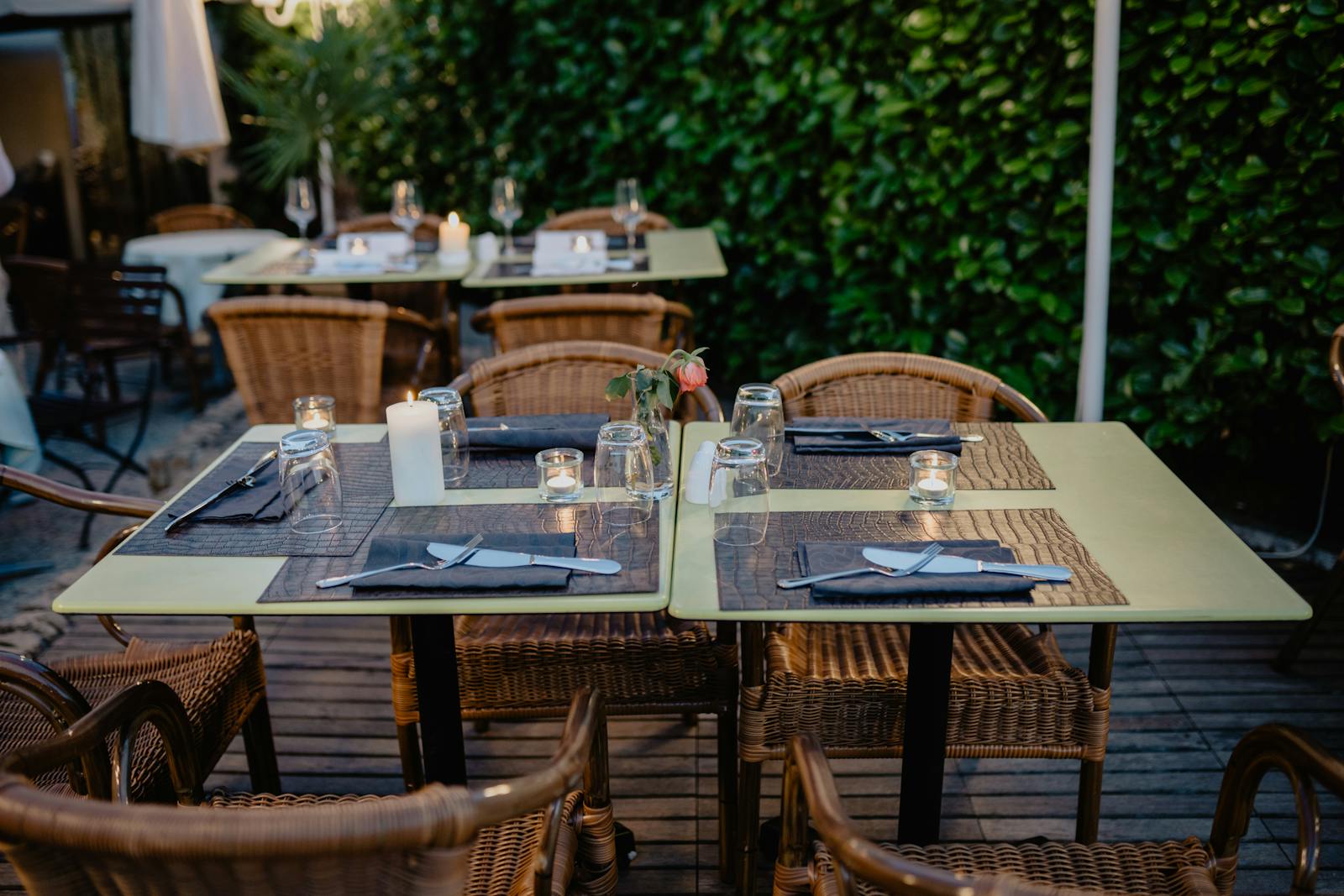
The person who can sit through a long silence at dinner is doing something that, from the outside, looks like nothing. From the inside, it may reflect a quiet assumption: this room is safe enough. These people do not need to be entertained every second. Nothing has to be rescued.
That kind of assumption is often learned slowly, through repetition. It can come from hundreds of ordinary meals where nobody punished the quiet, nobody used silence as a weapon, and nobody made a child responsible for changing the emotional weather.
This is what people often mean, in plain language, when they talk about having a secure base. Not a perfect childhood. Not a permanently calm personality. Just enough repeated evidence that calm rooms really can be calm.
Back to the table
Adults who can sit with silence are often easier to be around in ways that are hard to articulate but easy to feel. Their partners do not have to perform. Their friends do not have to keep the conversation aloft. Their children may get to grow up at tables where pauses are allowed.
The opposite is worth saying gently. Adults who cannot tolerate silence may experience relationships as exhausting without quite knowing why. They may feel responsible for the energy of every room. Children who grow up around unpredictable emotional weather can internalise the job of managing it, a pattern discussed in Psychology Today.
They become, in effect, the family barometer. That role does not always disappear when they leave home. Sometimes it follows them into restaurants, friendships, first dates, marriages, and ordinary Tuesday dinners.
The encouraging part is that adult patterns are not sealed shut. Attachment researchers and clinicians often emphasise that people can change in response to relationships, life events, and repeated new experiences. A person who learned that silence was dangerous can gradually learn that this room, with this person, is not that room.
That learning is usually slow. It rarely happens because someone tells themselves to relax. It happens through repeated experiences of quiet that do not end badly. A friend who does not punish the pause. A partner who keeps eating peacefully. A therapist who lets the room breathe. A table where nobody needs to save the moment.
So the next time a long silence opens at a table, notice what happens. Does the body settle into it, or does it scramble to close it? If someone is a filler, they are not a bad guest. They may simply be someone who learned early that warmth was their job. If someone is a sitter, they are not necessarily aloof. They may have had the luck of growing up around quiet that did not threaten anything.
Either way, the dinner table tonight is not the same table as the one from childhood. The people across from it are not the people who shaped the first lessons. The silence between courses is not always a forecast.
Sometimes it is just silence.