
Some kitchen staples we inherit become invisible anchors to the people who taught us to use them, a quiet form of loyalty that outlasts memory itself.
The conventional read on someone who has bought the same green-labeled bottle of olive oil for thirty years is that they are stuck in their ways, brand-loyal in a slightly embarrassing, slightly small-c conservative way. The marketing world even has a name for it: habitual purchasing. The assumption is that the shopper has stopped paying attention, that inertia is doing the work, that a savvier consumer would be comparing price-per-ounce and antioxidant content. That read is almost entirely wrong. What looks like inertia in the olive oil aisle is often something much more deliberate, and much more tender. It is a way of refusing to let a person fully leave the kitchen.
The bottle is not a purchase. It is a placeholder.
Most people who keep buying the same olive oil their mother used could, if pressed, name three reasons it is the right choice. The price is fair. The taste is familiar. The bottle fits behind the stove. None of these are the actual reason. The actual reason is that picking up that bottle in a fluorescent grocery aisle in a city their mother has never visited produces, for half a second, the sensation of being cooked for.
What sensory memory is actually doing
The mechanism here is not sentiment in any vague sense. It is a specific feature of how human memory is built. Sensory cues, particularly taste and smell, create powerful connections to emotion and autobiographical memory. This is why a single whiff of a specific brand of dish soap can drop someone into their grandmother's kitchen with a force that no photograph can match. Sensory memory operates as the briefest and most automatic form of recall, the one that operates before conscious thought catches up.
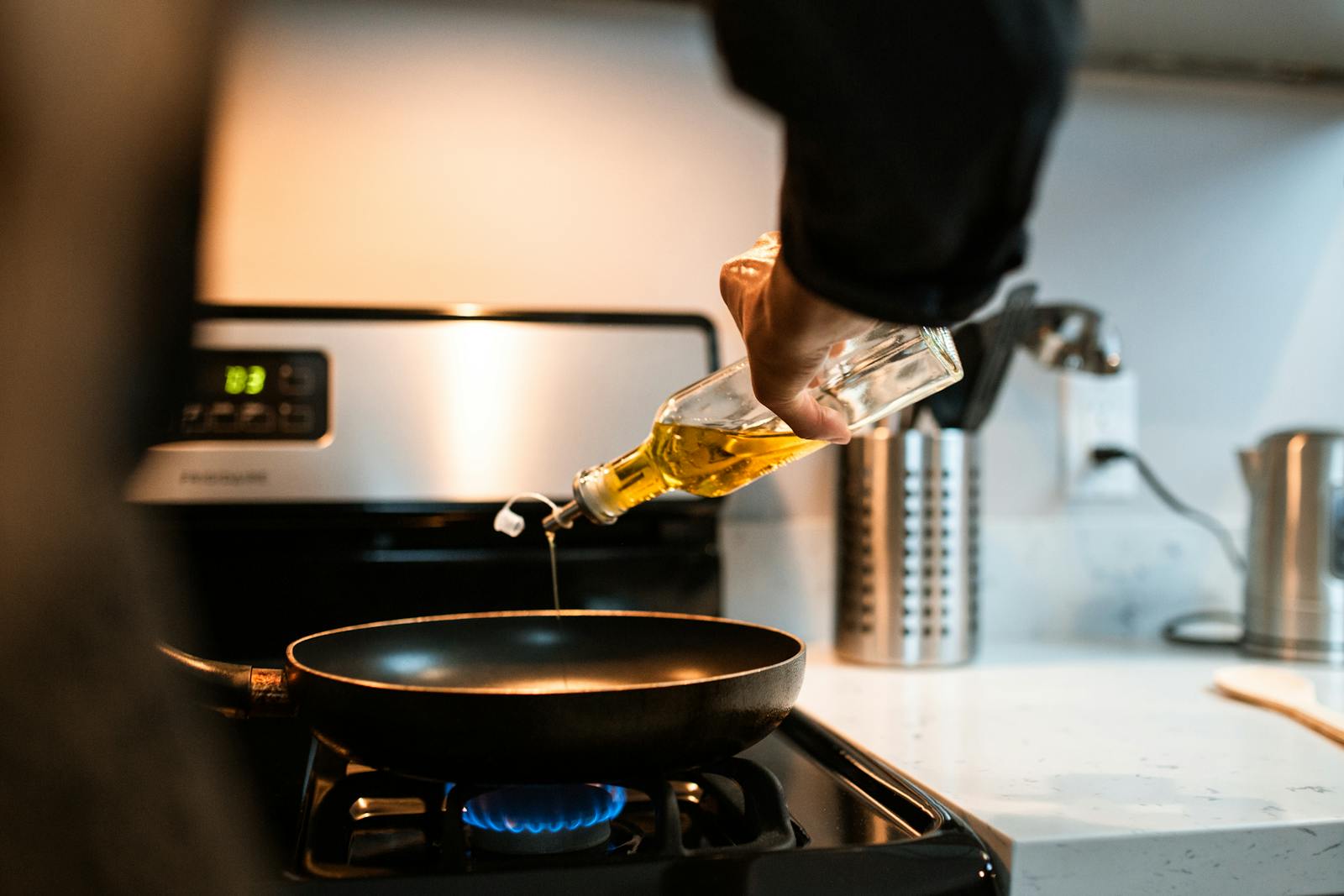
The olive oil is doing something photographs cannot. A photograph requires you to look at it. A bottle of oil requires nothing. It just sits in the cabinet, waiting, and three or four times a week it gets picked up and tipped into a pan, and for the duration of that pour, the kitchen smells the way it smelled when someone else was in charge of dinner.
That is not sentimentality. Sentimentality is decorative. This is functional. This is a person engineering, without quite admitting it, a daily encounter with someone who is no longer reachable any other way.
Grief lives in the pantry
Grief rarely stays in the obvious places after the funeral is over and the casseroles stop arriving. It migrates. It tucks itself into routines, into objects, into the small repeated gestures of daily life. The assumptive world — the unconscious framework of cognitions and beliefs that organize ordinary life — cracks when a primary attachment figure dies, and the bereaved person spends years rebuilding it in pieces. The work of attachment-informed grief therapy looks at how people reconstitute that framework, and one of the consistent findings is that healthy grief does not mean letting go. It means staying meaningfully connected to the person who died while authentically re-engaging with life.
The same olive oil, week after week, is one form of that connection. It is small enough not to derail anyone's day, reliable enough to count on, and intimate enough to do real emotional work.
It also costs almost nothing. Eight dollars, twelve dollars, sometimes twenty for the fancy version. Compared to therapy, compared to a flight home, compared to the expensive choreography of remembrance, a bottle of oil is the cheapest available technology for keeping someone in the room.
Why it is almost always the kitchen
It could in theory be anything. A laundry detergent. A specific shampoo. A brand of coffee. And sometimes it is. But the kitchen tends to win, and there is a reason for that.
The kitchen is where most people first learned what care looked like in practice. Not the abstract idea of being loved, but the daily evidence of it: someone deciding what you would eat, someone standing at a stove on your behalf, someone handing you a plate. For most adults, the earliest, most repeated, most embodied experience of being taken care of happened in a room where food was being made. Which is also why, as VegOut has previously explored, the dinner table is where so much of our adult emotional architecture gets installed.
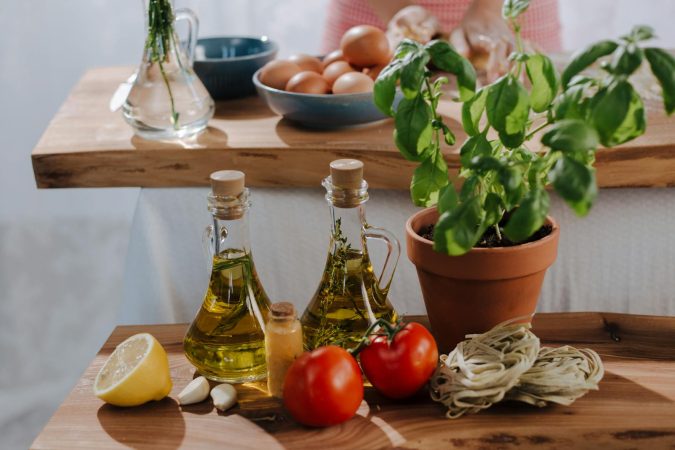
Olive oil in particular sits at the intersection of so many small acts of feeding that it accumulates more emotional weight than almost any other pantry item. It goes into the pan before nearly anything else. It coats the salad. It glosses the bread. It is the medium through which most home cooking happens. To buy a different brand is, in a quiet way, to cook in a different language.
The myth of the autonomous adult shopper
Marketing has long treated the adult consumer as a rational agent making fresh decisions in each aisle. The data does not support this. Inherited consumer preferences turn out to be remarkably durable across generations, and not because adults are lazy. They are doing identity work that the marketing models do not measure.
A study on intergenerational habit transmission found that parental influence on the everyday choices of their children persists well past the age at which those children become independent decision-makers. The walk-to-school pattern of a fifty-year-old's parent shows up in how that fifty-year-old's own kids get to school. Habits travel. They travel through demonstration, repetition, and the quiet pressure of what felt normal in childhood.
Research on parental spending patterns goes further, arguing that whether a person sees themselves as fundamentally independent or fundamentally connected to others shapes their consumer behavior more reliably than ethnicity or income. People with an interdependent self-construal spend differently because they are not really making decisions alone. They are making decisions with the people who shaped them, including the people who are no longer here.
This is why telling a forty-five-year-old that there is a better olive oil at Trader Joe's tends to land flat. They are not optimizing for olive oil. They are optimizing for presence.
The difference between attachment and dependence
One of the more useful distinctions in the attachment literature is between healthy continuity and a kind of stuck loop. People with secure attachment patterns can hold a connection to someone who is gone while also building new connections, new tastes, new traditions. The bottle of oil is one ritual among many. It anchors them, but it does not define them.
People with more anxious attachment patterns sometimes get stuck. The bottle becomes load-bearing in a way it was never meant to be. Switching brands feels like a betrayal. Running out feels like a small panic. Attachment styles across the lifespan are not fixed for life, and close adult relationships can soften them over time. But for some people, the inherited objects in the pantry carry more weight than they can really hold.
The healthy version is more like a wave than an anchor. The oil shows up, the memory shows up, the cooking happens, and the person moves on with their day. The grief is metabolized in tiny, manageable doses, three or four times a week, instead of saved up for the anniversaries.
What this looks like outside the kitchen
Once you start noticing this pattern, it appears everywhere. The specific brand of laundry soap a person buys despite living three time zones from where they grew up. The drugstore moisturizer that is objectively not the best moisturizer but is the one their grandmother kept on the bathroom counter. The brand of crackers that no nutritionist would recommend.
It also appears in the rituals around pets, where grief is socially permitted to be specific and material. Guides on processing pet loss often recommend keeping a small unchanged object, the food bowl in its place, the leash on its hook, as a way of letting grief move at its own speed instead of trying to clear it out all at once. The same instinct shows up in human grief, just less openly. People do not advertise that their olive oil is a memorial. They just keep buying it.
And it shows up in how people structure the small companionable hours of a life that has gotten quieter. The familiar sound of a particular news anchor at six o'clock. The same mug, the same chair, the same route on a morning walk. VegOut has written about how repeated, predictable companions often do quiet emotional work for people who have lost the running commentary of a shared life. The mechanism is the same. Familiarity is doing the work that a person used to do.
What to do with this information
There is no action item here. This is not a problem to solve. The point is not to talk anyone out of their olive oil, and certainly not to talk anyone into a more curated, more aspirational pantry. The opposite, if anything.
The point is to notice. The next time you reach for the bottle that has been on the same shelf since you moved into your first apartment, you might give yourself half a second of credit for what you are actually doing. You are not failing to optimize. You are not being basic. You are running a small private ritual that keeps a person, or a kitchen, or a whole era of being cared for, present in your life on a Tuesday night.
And if you find yourself in someone else's kitchen and notice that they have the same olive oil their mother had, the same vinegar their grandfather used, the same spice jar with the faded label, resist the urge to suggest an upgrade. They know. They have known the whole time. They are not shopping. They are visiting.
The ordinary objects in a kitchen carry more than their function. They carry the people who handed them down. Buying the same bottle, year after year, is one of the gentlest forms of keeping company that a person can manage in a world where most of the people we love eventually leave the room.
The bottle stays. That is the whole point.