
When your safety net is threadbare, calculated caution isn't fear—it's survival math. The wealthy call it risk aversion; those without cushions call it knowing exactly what you stand to lose.
A friend of mine who grew up wealthy once told me that money is just a tool, the way you might describe a hammer. The same week, my mother called from Miami to tell me she'd skipped a dental appointment because the co-pay felt like too much that month, and she's been working full-time for forty years.
Both of these things are true at once, and the gap between them explains something about risk that most career advice columns get wrong.
There is a particular look I've seen on the faces of people who grew up comfortable when someone from a working-class background turns down an opportunity that looks, on paper, like a no-brainer. A job with equity instead of salary. A move across the country for a role that might not work out. An investment that requires putting up savings. The wealthier person sees hesitation and reads it as small-thinking, as a failure of imagination, as someone who simply doesn't know how the game is played.
What they're actually watching is math.
The calculation nobody else can see
When you grow up watching a parent decide between the electric bill and the grocery run, you develop a cognitive operating system optimized for one thing: not falling through the floor. The floor, for people with family money, is a metaphor. For everyone else, it's literal. It's a relative's couch. It's a car you sleep in for two weeks. It's the credit card debt that takes a decade to crawl out from under.
Financial precariousness reshapes cognition itself. Scarcity orients the mind toward immediate threats and forces a kind of trade-off thinking that people with financial slack simply don't have to do. Every dollar spent is a dollar measured against rent. Every hour at one job is an hour not at another.
The wealthy describe this as "scarcity mindset" with a vaguely pitying tone, as though it were a bug to be debugged. It's not a bug. It's a feature shaped by reality.
What "caution" actually means
I worked for three years at a sustainable fashion startup in Brooklyn that eventually collapsed when the founders couldn't agree on whether to chase profit or impact. I watched two kinds of people make decisions during that slow-motion implosion. The ones from money treated the company's instability like a fascinating problem to solve. The ones without it started quietly updating résumés in month two, took freelance work on the side, kept their apartments cheap.
From the outside, the second group looked less committed. From the inside, they were doing risk math the first group didn't have to do. If the company folded, no one was wiring them six months of rent. There was no buffer. There was the work, and then there was nothing.
Calling that caution flattens it. It's closer to what an experienced sailor does when reading weather. You learn to see the storm earlier because you've been caught in one before, and you remember exactly what it cost.
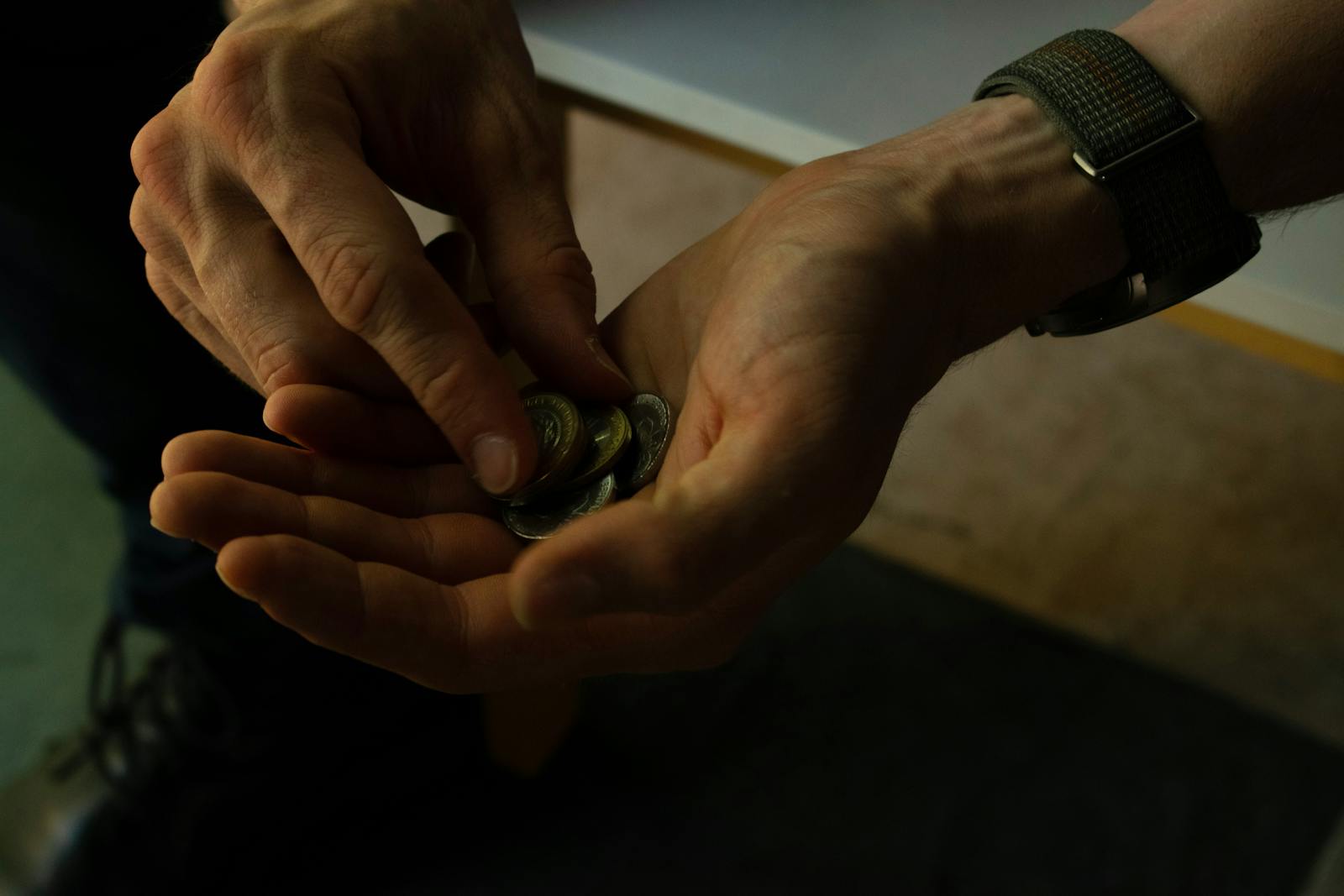
The body keeps the receipt
This kind of vigilance isn't only psychological. It shows up in the body. Childhood socioeconomic status has been linked to earlier puberty onset, which in turn predicts higher cardiometabolic risk in adulthood. The stress of growing up without enough writes itself into biology before a child even has language for what they're sensing.
Poverty in early childhood is associated with measurable differences in brain structure, including the surface area and thickness of the cortex in regions tied to cognition and emotional regulation. Small income increases for the lowest-earning families produce disproportionately large developmental gains, which tells us something obvious that the culture keeps wanting to forget: it isn't a deficit of character. It's a deficit of resources.
And those neural patterns don't simply evaporate when a person eventually starts earning a comfortable salary. They become the ambient logic of how that adult evaluates every future opportunity.
Why wealthy people misread it
Here's the part that fascinates me, because it's where culture and class collide in ways nobody likes to talk about. People who grew up financially secure tend to interpret risk through a frame I'd call recoverable. Most setbacks are recoverable for them, because their networks recover them. A failed business is a story for the next dinner party. A bad investment is a tax write-off. A year of unemployment is a sabbatical.
For someone whose parents stretched a dollar, the operative frame is terminal. Some setbacks end things. Not careers — lives. Health. Housing. The relationship with the relative you'd have to ask for help, which costs something you can't put a number on.
Writing about growing up in public housing for City Journal, Edward Latimore describes this as a kind of mental inheritance that doesn't lift just because the bank account does. The pattern of evaluating every choice against worst-case outcomes was installed early, and it kept him alive. Asking him to stop running that calculation in adulthood is asking him to disable the operating system that worked.
This is the part wealthier people genuinely cannot see, because the cost-of-failure variable in their equation is so much smaller that they've effectively rounded it to zero.
The instinct that looks like wisdom later
The flip side, and this is what doesn't get said enough, is that this instinct is often startlingly accurate. People who grew up watching their parents stretch a dollar tend to be exceptional at sniffing out things that won't work. They notice when a business model relies on assumptions that haven't been stress-tested. They notice when a friend's "can't-miss" opportunity is built on optimism rather than evidence. They notice when an apartment lease has a clause that will hurt later.
I've written before about the quiet habits people from lower-middle-class backgrounds carry into adulthood long after they technically don't need them: keeping receipts, fixing things twice before replacing them, knowing the price of staples without checking. These habits look quaint to people raised differently. They are actually a form of expertise.

I still wear the same black leather jacket I bought when I was nineteen. Not because I can't afford a new one, but because something in me knows that the jacket I have works, and the jacket I might buy is a gamble. That instinct (keep what works, replace only when forced) is the same instinct that makes someone hesitate before quitting a stable job for a startup with shaky fundamentals. It's the same software running different applications.
The shame braid
What complicates this further is that the people who carry this risk literacy often experience it as a flaw. They've been told, sometimes overtly and sometimes through a thousand small cues, that their hesitation is what's keeping them from a bigger life. They watch peers leap and seem to land, and they wonder if they've been too careful, too small, too tied to where they came from.
This is where the cost gets really interesting. As I wrote in a recent piece on ambition and class, wanting more starts to feel like a betrayal of the people who taught you to be careful. So you either underachieve to stay loyal, or you overachieve to escape, and almost no one gets to simply want what they want.
The risk instinct gets caught in that braid. It can be hard to tell, in any given moment, whether you're saying no to something because it's actually a bad bet, or because you've absorbed a script that says people like you don't get to take that bet.
What the culture gets wrong
There's a whole genre of business writing that treats risk tolerance as a virtue to be cultivated, as though everyone has equal access to recovery. The advice (bet on yourself, embrace failure, fail fast) is built for people whose floor is high. It's not bad advice. It's just incomplete advice, presented as universal.
The honest version would be: your appetite for risk should be calibrated to your actual safety net. If you have one, take swings. If you don't, the careful person you've been called your whole life is doing exactly what they should be doing.
The work of researchers studying adverse childhood experiences shows again and again that the people who emerge from genuine hardship with adaptive strategies aren't broken. They are, in the most literal sense, better calibrated to the world as it actually is for them.
The reframe that matters
I think a lot about a line my Brazilian grandmother used to say when someone in the family was offered something that sounded too good. She'd squint slightly and ask, e o que vai custar? And what is it going to cost?
Not in money. In everything. In time, in distance from the people you love, in the version of yourself you'd have to become. She wasn't being pessimistic. She was being thorough.
People who grew up watching their parents stretch a dollar tend to be thorough in this way. They run the full equation, not the highlight reel. They factor in what wealthier people don't have to factor in, because their lives have given them no choice but to know.
That isn't fear. It isn't smallness. It isn't a failure to dream big. It's a particular form of intelligence about consequences, developed in the only school where consequences are the syllabus.
The kindest thing the rest of the culture could do is stop calling it caution and start calling it what it is. A literacy. One that, in a world of increasingly precarious work and shrinking safety nets, more of us are going to need than we'd like to admit.