In the silence after her world shattered three times—through divorce, cancer, and widowhood—a retired teacher discovered that the blank stare of devastation wasn't an ending, but the pause before an unexpected transformation.
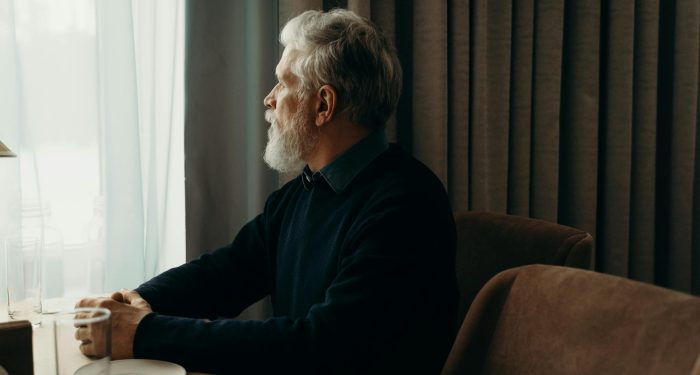
Fitzgerald's observation about the loneliest moment in life identifies something specific about how the mind responds to catastrophe. The blank stare isn't passivity. It's the neurological signature of a brain encountering more information than it can process: "The loneliest moment in someone's life is when they are watching their whole world fall apart, and all they can do is stare blankly."
What he captured wasn't tragedy. It was accuracy. That stillness on the outside is overwhelm on the inside, every circuit firing at once, producing a kind of static that mimics calm.
I've been in that state three times. Each time taught me something different about what it actually is.
When the ground gives way
The first collapse came at 28. I was holding divorce papers while my toddlers napped upstairs. I remember staring at the kitchen linoleum for so long that I memorized every scratch and scuff. The loneliness wasn't just about losing a marriage. It was the recognition that a specific future had evaporated — the one where my children had two parents at every school play and birthday party.
What followed was fifteen years of single motherhood that taught me the difference between loneliness and being alone. Yes, there was no one to celebrate with when my daughter finally conquered long division or when my son stood up to bullies. But there was also no one to tell me I was doing it wrong when I served breakfast for dinner three nights in a row because that's all I had energy for after teaching all day and tutoring in the evening to make ends meet.
The clarity that comes after
Here's what I've discovered about watching your world fall apart: in that moment of blank staring, something profound happens. All the things you thought were essential reveal themselves. The decorative pieces of life fall away, and you're left looking at the actual foundation. It's terrifying and liberating in equal measure.
When I faced a cancer scare at 52, sitting in that sterile office waiting for results, the blank stare returned. But this time, I recognized it as an old companion. For six months, I lived in a suspended state, teaching Fitzgerald to high schoolers while contemplating my own mortality. The irony wasn't lost on me, discussing the symbolism in "The Great Gatsby" while my own life had become a walking metaphor for uncertainty.
That scare passed, thankfully, but it rearranged me. I understood, suddenly, that postponing joy was a luxury I couldn't afford. The blank stare had clarified what mattered: not the perfect lesson plans I'd obsessed over, but the students who needed someone to see them. Not maintaining a spotless house, but having a home where people felt welcome.
Learning to rebuild differently
After each collapse, I've noticed something curious. You don't rebuild the same structure. You can't. The materials have changed, you've changed, the ground itself has shifted. So you build something different, often smaller, but somehow more honest.
Three years after the cancer scare, I met my second husband at a school fundraiser where we accidentally got into a bidding war over a weekend getaway. I won, he bought me a coffee to apologize for driving up the price, and somehow that turned into 25 years of quiet, steady love. He understood that love lived in small acts: coffee appearing beside my morning papers, my car mysteriously always full of gas, fresh flowers from the garden when insomnia had kept me up all night.
But even that solid foundation couldn't prevent the third collapse. Parkinson's disease took him in increments over seven years. Watching him disappear piece by piece — unable to hold the garden tools he loved, too shaky to hold my hand — I found myself back in that blank stare Fitzgerald described. This time I recognized the function of it. The mind processes loss in real-time by going still, attempting to hold onto what is already slipping away.
The unexpected gifts of devastation
Would you believe me if I told you that each of these devastating moments gave me unexpected gifts? Not immediately, of course. First came the blank stare, then the grief, then the slow, exhausting work of continuing to exist. But eventually, something else emerged.
From my divorce and years of single motherhood, I gained a fierce self-reliance and the knowledge that I could survive anything. I learned to find joy in small victories, to be both soft and strong, to ask for help when I needed it even when my pride screamed against it.
From the cancer scare came urgency, a refusal to wait for "someday" that led me not just to my second husband but to a hundred other brave choices. I started saying yes to things that scared me, no to obligations that drained me.
And from losing my second husband? That's still fresh, still teaching me. But already I've learned that grief doesn't shrink; you grow larger around it. My widow's support group has become a lifeline, five women who understand that sleeping alone after decades of sharing a bed requires its own kind of courage. We meet weekly for dinner, though it's really about connection, not cooking. Together, we're learning to navigate being single women at social events, to find ourselves again at an age when society often considers us invisible.
Standing in the ruins
At 70, with arthritic hands and two replaced knees, I've earned the right to say this: Fitzgerald was only half right. Yes, there's that moment of watching everything fall apart, of staring blankly at the wreckage of what you thought your life would be. But he missed what comes after the stare.
You blink. You breathe. You notice you're still standing.
And then, because humans are miraculous in their stubbornness, you start picking up pieces. Not to rebuild what was, but to create what might be. My life now includes Italian lessons for a trip I finally took, badly played piano that brings me joy, essays that my granddaughter says make her cry. I wake at 5:30 for tea and journaling, tend my garden with modified tools that accommodate my arthritis, volunteer at the women's shelter teaching interview skills.
My four grandchildren and one great-grandchild have taught me that legacy isn't about perfection but presence. Every other Saturday, we go to the library together. I let them make messes in my kitchen, write them letters they'll receive when they turn 25. With them, I can be the grandmother I couldn't be as a survival-mode mother, and that's its own form of redemption.
Final thoughts
The loneliest moment Fitzgerald described is real. I won't diminish that. When your world falls apart, that blank stare is your mind's way of protecting you from feeling everything at once. But here's what I know after three collapses and three rebuilds: that stare isn't an ending. It's a pause between lives, the intake of breath before you learn to speak again.
These days, I walk my neighborhood every evening regardless of weather, read two books a week in my sunroom, maintain my garden with whatever modifications my body requires. The world has fallen apart three times, and three times I've learned to reassemble it. Each version has been a little wiser, a little more grateful, and surprisingly, a little less afraid of the next collapse.
Because now I understand what Fitzgerald didn't mention: even in that loneliest moment, staring at ruins, you're still there. And as long as you're standing, even if you need new knees to do it, you can take the next step.