Standing in my attic surrounded by forty-two years of possessions, I discovered I wasn't just storing old clothes and papers — I was maintaining elaborate shrines to people I'd once been, each box a small denial that those lives had already ended.
What did you expect to feel the day you finally let go of half your belongings? Relief, probably. Lightness. The clean satisfaction of a life trimmed down to what matters.
That isn't what happened to me. What I felt was startled. Startled that I'd been quietly storing this much evidence of who I used to be, startled that the cabinets had been holding people I no longer know, startled that decluttering at seventy isn't really about the objects at all.
It's about realizing how much of your house has become a museum of a life that already ended. I climbed into my attic last spring intending to clear some space, maybe donate a few old coats. Instead I found forty-two years of accumulated life and a curator nobody had hired.
The archaeological layers of a former self
What struck me first wasn't the volume of things, though that was staggering. It was how perfectly preserved everything was, as if I'd been preparing for some future archaeological dig where scholars would want to examine the lesson plans of a high school English teacher from 1987. Thirty-two years of color-coded binders, each one representing September hopes and June exhaustions. I kept pulling them out, these artifacts of a woman who believed that organizing Shakespeare's sonnets by theme would somehow matter forever.
The shoebox labeled "School Days" in my younger handwriting nearly undid me. Inside were report cards and certificates, dried corsages from school dances, ticket stubs from plays I'd directed. But whose school days were these? My children's? My own? After a moment, I realized they were my students'. Thank you cards, graduation announcements, wedding invitations from teenagers I'd taught who were now older than I was when I taught them. I'd been saving other people's milestones as if they were my own.
Have you ever noticed how we keep things not because we need them, but because throwing them away feels like admitting something has ended? Every object in that attic was a small denial. A tiny insistence that maybe I'd need those size 10 dresses again, maybe I'd finally read those Italian cookbooks, maybe someone would want to see the photographs from the faculty Christmas party in 1994.
That's when it occurred to me that the attic wasn't storage. It was confession.
Meeting the women who lived in my closets
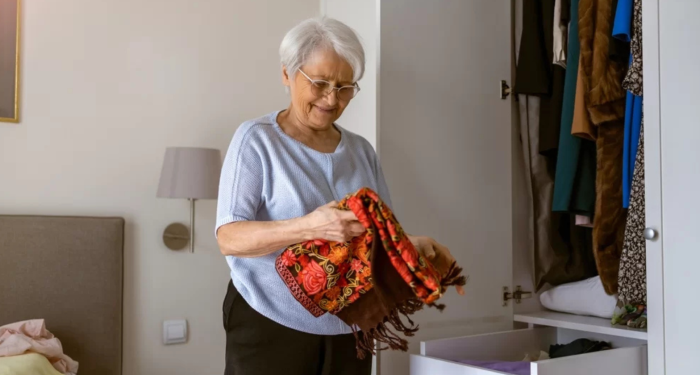
The closets were time capsules of women I'd been. The professional blazers with shoulder pads that could double as armor. The heels I wore to parent conferences, believing height would give me authority when what I really needed was sleep. The dress I wore to my daughter's college event, when I sat there and realized I'd worked so hard to help her succeed that I'd missed most of the journey.
Virginia Woolf wrote about having a room of one's own. But what about when that room becomes crowded with the ghosts of who you used to be? I found the watercolor set I'd bought four years ago, the brushes still pristine, the paper untouched. Next to it, a yoga mat rolled tight as a confession. A bread maker still in its box. Each purchase had been a promise to myself about who I would become in retirement. Each untouched item was proof that becoming is harder than buying.
The wedding dress from my first marriage hung in a garment bag so old the zipper had rusted shut. I had to cut it open. Inside was a size 6 confection of hope and inexperience. Twenty-two years old, I'd believed that love meant never having to be strong. By twenty-eight, I was teaching full-time while raising two children alone, grading papers at the kitchen table after bedtime, strong in ways that young bride could never have imagined.
The weight of other people's stories
Do you know what's heavier than your own past? Everyone else's. I'd become the keeper of my mother's recipe box, my father's watch, my grandmother's sewing kit, my first husband's letters (why did I still have those?), my second husband's reading glasses, my children's childhood. Every surface in my house held someone else's story. I was disappearing under the weight of being everyone's historian. The recipe box stopped me cold. "Church Supper Casserole" in my mother's careful script. "Birthday Cake for Hard Times" with a note about using mayonnaise when eggs were too expensive. I sat on the attic floor and cried, not because I missed her, though I did, but because I realized I'd been keeping her recipes while forgetting her voice. The objects had become substitutes for memories. Poor substitutes at that.
My children's rooms were shrines to people who no longer existed. The baseball trophies, the prom dress, the certificates of achievement, all gathering dust while the actual humans they belonged to were living full lives elsewhere, becoming people I was still learning to know. I'd preserved their childhoods so carefully that I'd almost missed their adulthoods.
The surprising grief of letting go
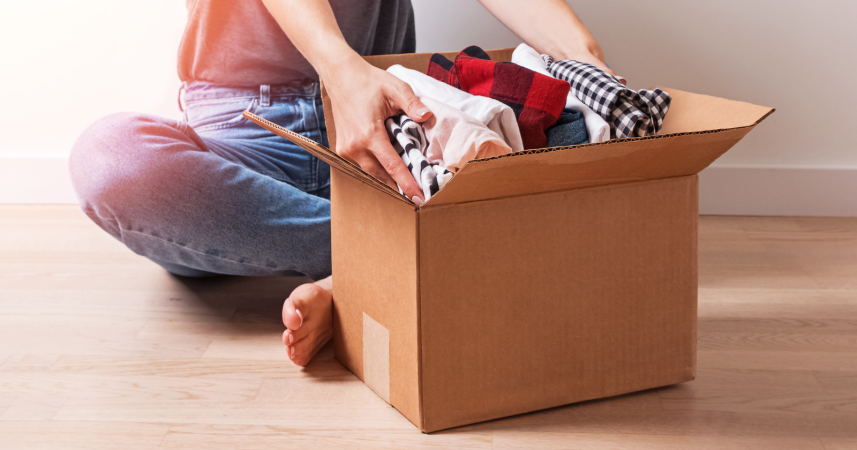
I expected liberation. What I felt was vertigo. Each box I carried to the donation center was a small funeral for someone I'd been or thought I'd be. The travel guides to places I'd never visit. The dinner party dishes for gatherings I'd never host. The books about hobbies I'd never pursue. It turns out that giving things away at seventy isn't about decluttering. It's about accepting that most of your choices have already been made.
The photograph albums were the worst. Page after page of posed smiles, everyone arranged just so, while behind the camera stood a woman too busy directing the perfect shot to be in it. Now I'm the only one who knows she was there at all. I kept six photos and donated the rest. Let someone else wonder who these smiling strangers were.
But here's what surprised me. As I released each item, I felt not lighter but more real. Without the props and evidence and documentation, I had to face who I actually am versus who I'd been storing. The woman who actually lives in this house doesn't need forty-seven scarves or lesson plans from 1985. She needs reading glasses and comfortable shoes and a good chair by the window where she watches the birds.
What remains when the museum closes
After six months of sorting and donating and releasing, my house looks like someone actually lives here rather than someone who's archiving a life. The empty spaces feel like breathing room. The surfaces hold only what serves today: the tea kettle, the journal where I write each morning, the book I'm actually reading, the flowers I cut from my own garden.
I kept my grandmother's thimble. Not her entire sewing kit, just the thimble that wore the groove from her thumb. I kept one of my mother's recipes, written on an index card stained with what might be chocolate or might be time. I kept the note my daughter left on my pillow when she was seven: "You are the best mama even when you're tired." These aren't exhibits. They're talismans.
Last week, my neighbor asked why I'd given away so much. "I was tired of being a museum guard," I told her. She laughed, but it was the kind of laugh that holds recognition.
Final thoughts
Here's the part nobody warned me about. My hand still reaches.
I'll walk past the corner where the cedar chest used to sit and feel my fingers move toward a lid that isn't there. I open the closet looking for the blazer with the shoulder pads, not because I want to wear it, but because some part of me still expects to find her hanging there waiting. I went to look up a recipe last Tuesday and remembered, halfway across the kitchen, that the box has been gone for months.
I don't know what to do with that. I thought the reaching would stop once the objects were gone. It hasn't. Maybe it will. Maybe at seventy you don't get to finish the sentence, you just keep saying it, with fewer and fewer props, into a house that holds less of you every year. I made bread on Sunday the way my mother did. I caught my grandmother's eyes in my granddaughter's face. And then I turned, out of habit, toward a shelf that no longer exists, to look for something I no longer own.