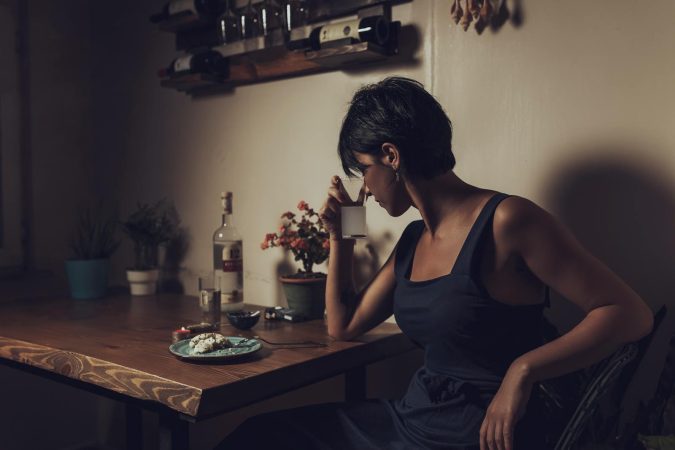
Solitude gets pathologized as trauma or shyness, but for many people it's simply the most honest company available. Quiet preferences aren't always symptoms—sometimes they're just accurate assessments about where peace actually lives.
A friend mentioned recently that her therapist spent their first session trying to locate the origin of her "avoidance." She'd told him she liked spending weekends alone. He'd written it down as a symptom. By the end of the hour she was being gently walked through a childhood inventory, looking for the event that had supposedly taught her to hide.
She didn't have one. She just liked weekends alone.
Solitude is the most pathologized preference in modern psychology, and also one of the most statistically normal. Somewhere between those two facts is where most quiet people actually live. The cultural script keeps wanting to make solitude a symptom. Every introvert gets handed a backstory they didn't write. Withdrawal becomes a clue, quietness becomes a red flag, and anyone who turns down a dinner invitation twice in a row gets asked, with real concern, if everything is okay.
Sometimes everything is okay. Sometimes a person just figured out, earlier than most, that their own company was less exhausting than performing company for others.
The assumption we keep making
The default frame in most conversations about solitude is recovery. People alone are assumed to be recovering from something: a breakup, burnout, childhood, a bad year. The preference gets read as a wound with a preference wrapped around it.
That frame isn't always wrong. It's just wildly overused. Introversion isn't one thing at all. It involves multiple dimensions including thinking preferences, social preference, and inhibition, and most of these aren't pathological.
The thinking introvert, in particular, isn't hiding from anything. They're just somewhere more interesting than the room they're in.
What the research actually says about being alone
The wellness industry has built a lucrative story around the idea that solitude is dangerous. Loneliness is a crisis, we're told, and the solution is almost always something you can buy: an app, a class, a retreat, a subscription, a coach.
The research is messier than the marketing. A 2021 study from the University of Reading, tracking over 2,000 adolescents, found that those who actively sought out solitude for its own sake showed no elevated risk of depression or social anxiety, and reported higher autonomy and self-acceptance than peers. A separate line of work from psychologist Thuy-vy Nguyen at Durham University has shown that even brief periods of chosen solitude measurably lower high-arousal emotions like stress and anger, a calming effect that kicks in within about fifteen minutes. The distinction the research keeps drawing is between chosen solitude and imposed isolation. Christopher Long and James Averill, whose foundational work on solitude is still widely cited, put it plainly: the benefits depend almost entirely on whether a person selected the aloneness themselves. Forced isolation correlates with the harms people warn about. Self-selected solitude correlates with creativity, emotional regulation, and a stronger sense of self. That's a boring headline. It doesn't sell a product, so it doesn't get repeated the way warnings about loneliness dangers get repeated.
There's also the question of how media shapes the experience itself. In work by Robert Coplan and colleagues, people who held more negative beliefs about being alone reported worse moods during solitude than those with neutral or positive beliefs, even when the actual time alone was identical. The framing creates the wound. You take someone content in their own company, tell them often enough that they should be worried about it, and eventually they are.
The kids who figured it out early
Some people learn young that a quiet room is more honest than a loud one. The reasons vary. A house where adults performed affection they didn't feel. A school where social belonging came with a tax most couldn't afford. A family where talking meant managing someone else's mood.
If your early environment rewarded reading the room over having a self, being alone was where your actual personality got to show up. That isn't trauma, exactly. It's calibration. You learned where the signal was clearest.
There's a related observation worth pulling in here. Kids who served as emotional translators between their parents often become adults who can read any room instantly. Their own company becomes the one place where they don't have to translate anything. That's not pathology. That's relief.
The honesty premium
When people who prefer solitude describe why, honesty comes up more often than recovery as their reason. Not because they think other people are lying, but because they find the maintenance of social performance exhausting in a way that doesn't match what they get back.
Most social interaction requires a small, constant editing job. You soften a reaction. You pretend interest. You laugh at a joke that wasn't funny because the alternative is a weird pause. Multiply that by every interaction in a day and some people end up with a running tab their nervous system can't pay.
Solitude removes the editing job. That's the honesty. Not some grand philosophical truth, just the relief of not performing.
The difference between solitude and hiding
None of this is an argument that all solitude is healthy. There's a version of preferring solitude that's actually a slow retreat from people who've hurt you, and you stop being able to tell the difference after a while.
That's the version worth watching. Loneliness often arrives dressed as preference, and the costume can get convincing. People may insist they prefer their own company for years before realizing they miss having anyone to say it to.
The test I've found useful isn't a feeling. It's a question: when an opportunity to connect with someone you actually like shows up, do you feel a small lift, or do you feel dread? The first is solitude as preference. The second is avoidance wearing preference as a costume.
This is also where the research gets careful, and rightly so. The same Durham studies that document the calming effects of chosen solitude note that the benefits depend on the aloneness being voluntary and time-limited. The goal isn't to valorize total withdrawal. It's to stop treating a normal preference as a warning sign, while still paying attention to when it stops being preference. One of the underrated rewards of getting older is learning the difference, related to something worth noting in how people build a self over time: the ones who settle well into adulthood tend to be the ones who stopped arguing with their own temperament and started working with it.

What honest solitude actually looks like
It looks unremarkable. A morning where nobody expects anything from you. A meal you didn't have to explain. An afternoon where the only voice in your head is your own, and it turns out you like what it says.
It includes people. That's the part the lonely introvert stereotype misses. People who prefer solitude mostly still want a few close relationships: a partner who's comfortable with silence, a couple of friends who don't need constant contact, family who don't confuse quiet with distant. The math is just different. Fewer connections, deeper ones, more recovery time between.
That's not a deficit model of socializing. It's a different model. And the evidence, when you actually read it instead of the headlines about it, supports that difference rather than pathologizing it.
The quiet conclusion
Here's the harder question, though. Why is it so difficult to watch someone be content without you? When a friend declines the invitation, when a sibling spends the holiday alone on purpose, when a partner asks for a weekend of their own, the reflex is to look for what's wrong. Most of the time, what's wrong is the watcher, not the watched.
The people who prefer solitude aren't the ones who need to explain themselves. The explanation is owed in the other direction, by whoever keeps insisting that a life lived quietly must secretly be a life that's broken. That insistence says more about the person making it than the person being diagnosed.
Stop looking for the wound. Some people are just fine in the room by themselves. The discomfort with that is yours to sit with.