


Your childhood bedroom isn't frozen in nostalgia—it's a holding pattern, a quiet agreement that you haven't yet earned the right to become someone different than the version someone else approved of.
The bed is still made with the comforter she picked out at fourteen. There's a thin layer of dust on the dresser, a yearbook on the shelf turned spine-out, and a poster above the headboard that's curled slightly at the corners from twenty years of the same thumbtack. Nothing has moved. Nothing has been added. The light switch plate still has the sticker she put on it in middle school.
I've been in rooms like this more than once, and the first thing I notice is that it doesn't feel like a museum. Museums are intentional. This is something else — a kind of pause button pressed so long ago that nobody remembers pressing it. The person who slept here hasn't slept here in a decade, and yet the room is still arranged for her return.
Most people would call this nostalgia. I don't think it is. Nostalgia has a softness to it, a willingness to let the past stay past. What I'm describing is closer to a holding pattern. The posters stay on the wall not because you love them but because taking them down would require admitting you're the one who gets to decide what goes on the wall now, and some part of you isn't sure that's true yet.
I want to write to the people who live in that holding pattern. Not to push them out of it, but to name what's actually happening.
The room is a contract
When you leave a childhood bedroom intact, you're preserving more than objects. You're preserving a version of the relationship between you and the people who raised you. The trophies, the yearbooks, the stuffed animals sitting in the exact arrangement they sat in when you were fourteen: these aren't memories. They're evidence that the original agreement still stands.
The agreement goes something like this: I will be the person you recognize, and in return, you will keep loving me the way you did when I was small.
That agreement works beautifully for a child. It becomes a prison somewhere around twenty-five.
Why permission matters more than we admit
There's a whole body of research on the psychology of adult children and their parents that suggests many of us underestimate how much weight parental approval still carries, even decades after we've moved out. Work on family estrangement and repair points to something most of us already know but rarely say aloud: the way we relate to our parents has shifted from a model of obligation to what sociologists have described as pure relationships, bonds sustained by emotional alignment rather than duty.
That sounds like freedom. It often isn't. When the relationship is no longer held together by obligation, the approval becomes the glue. And if you never quite feel you've received it, you keep the bedroom intact as a kind of collateral. Proof that you haven't left.
People who grew up with emotionally generous parents tend to redecorate without noticing. People who grew up under a subtler kind of conditionality tend to leave the room exactly as it was, and they tend not to know why.
The difference between memory and suspension
A memorial shelf is fine. A time capsule is fine. Keeping your grandfather's watch in the drawer it's been in for twenty years is fine. These are objects with weight, kept because they mean something specific.
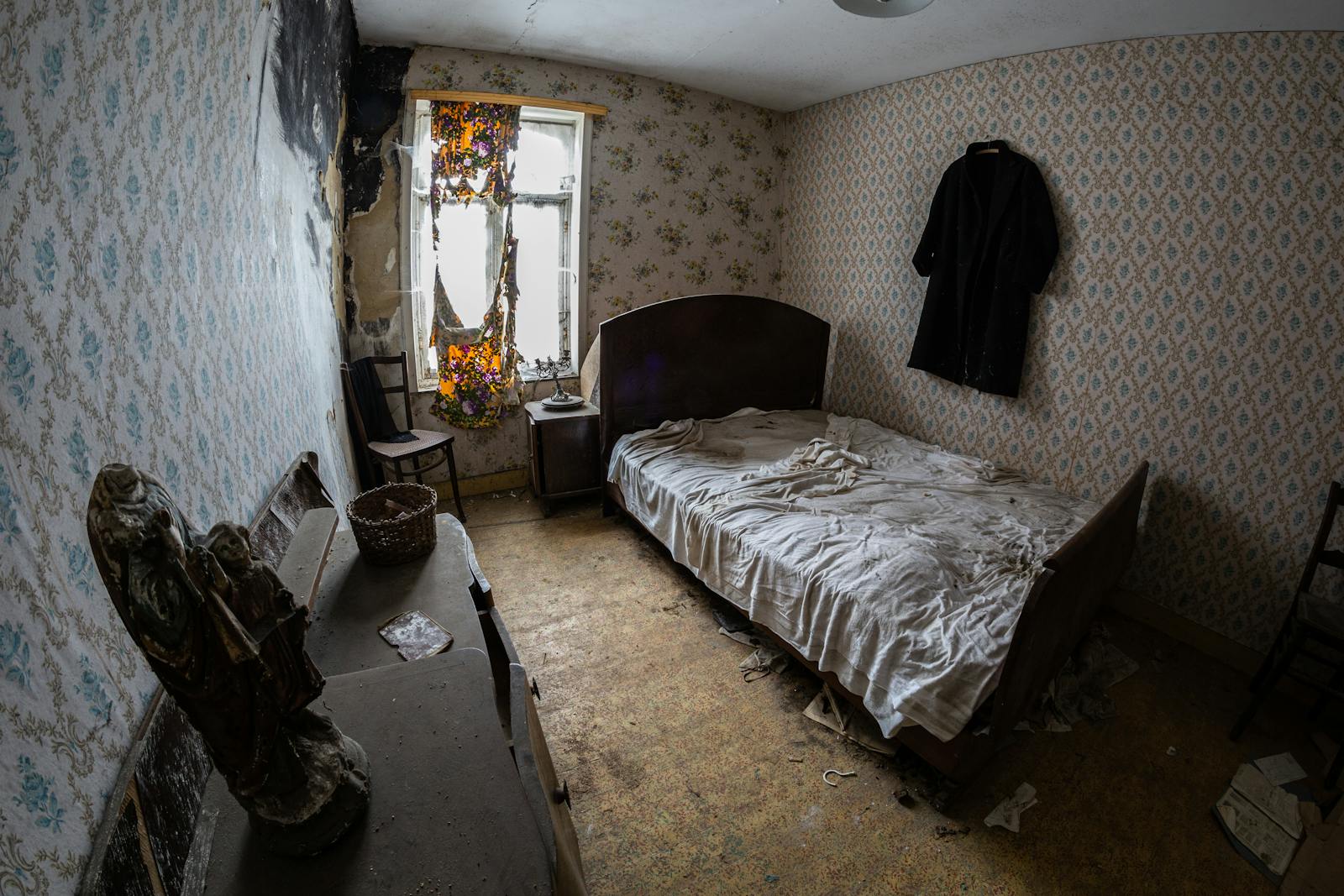
What I'm describing is different. It's the whole room. The comforter you picked out at fifteen. The books you outgrew in high school. The closet full of clothes from a body you no longer have. When the entire environment is preserved, you're not honoring a memory. You're suspending a self.
And suspended selves are expensive. They cost you the energy it takes to maintain two identities at once: the one you're becoming, and the one you keep available in case the becoming doesn't work out.
The waiting has a shape
I've noticed that the people who keep their old rooms intact often describe a vague sense of waiting. Waiting for what, they can't always say. Waiting to feel ready. Waiting for a conversation that will clarify things. Waiting for one of their parents to notice they've changed and acknowledge it out loud.
That last one is the most common, and the most rarely spoken. You are waiting for permission that will probably never be issued, because the people you're waiting on don't know they're supposed to issue it. They think everything is fine. They think you're still the person in the photographs on the dresser.
This isn't their failure. Parents aren't trained to offer their adult children a formal handover ceremony. They're not expecting you to need one. The grief of this (and it is grief) is that you've been waiting for a ritual that was never on anyone's calendar.
January anxiety and the waiting self
There's an interesting overlap between this kind of waiting and the wider cultural pattern researchers have begun calling identity anxiety around transitions. Psychologists have described how people freeze when faced with the prospect of becoming someone different, because the threat isn't just behavioral change. It's a rewrite of the self.
Research suggests that anticipating future loss of the present state raises anxiety and reduces enjoyment, because the brain has to reconcile the person you are with the person you want to be. The bedroom is a physical version of that reconciliation refusing to happen. As long as the room stays the same, the old self stays available, and the new self doesn't have to be chosen.
Choosing is the hard part. Not the change itself.
What the generational data suggests
None of this is happening in a vacuum. Research on millennials and delayed adulthood has noted that the traditional markers of adulthood (moving out, marriage, financial independence, stable career) have shifted later compared to previous generations. The economic reasons for that are well-documented and real.
But there's a psychological residue to the economic story. When the external markers arrive late or don't arrive at all, the internal markers get foggy too. If you didn't buy a house at twenty-eight, if you haven't had the wedding, if your career is still in flux at thirty-five, then the old room back home becomes one of the few stable reference points you have. You keep it partly because you can't afford to replace the furniture. You keep it partly because it's the only fixed address your identity has.
The quiet version of estrangement
Most people don't formally cut off their parents. Research has found that a significant proportion of adults are estranged from a family member, but that leaves many who are technically still in contact. Inside that majority, there's a huge grey zone of people who haven't severed anything but haven't quite fully arrived either.
Keeping the bedroom intact is one of the artifacts of that grey zone. You're not rebelling. You're not performing autonomy. You're also not becoming yourself. You're in the waiting room, and the room is literal.
I wrote recently about the guilt of outgrowing the version of yourself other people still prefer, and I think that guilt is the engine underneath all of this. The bedroom is a way of managing that guilt without ever having to resolve it. As long as the room exists, no one has to be disappointed.
The autonomy-safety tension
There's a useful concept from research on adult children who become caregivers for aging parents. The idea is that in any close family relationship, there's a constant negotiation between the pull toward independence and the pull toward the security of being known.
That tension doesn't only run one direction. When you keep your childhood bedroom intact, you're doing your parents' side of the negotiation for them. You're holding the safety pole steady so nobody has to grieve the loss of the you they raised. It may feel generous. I think it's mostly a way of deferring your own autonomy indefinitely, and calling the deferral kindness.
What permission actually looks like
Here's the part nobody tells you. The permission you're waiting for is not going to arrive in the form you're expecting. Your parents are not going to walk into that bedroom one afternoon and grant you explicit permission to become someone different or release you from expectation.
It doesn't work like that. Permission, in adulthood, is something you issue to yourself, usually without fanfare, often while cleaning out a closet. You take down a poster and discover the wall underneath is just a wall. You donate a box of clothes and discover you don't actually miss them. You paint over a color you chose at thirteen and the world does not end.
The people who've done this describe it not as a transformation but as a subtraction. You didn't become someone new. You stopped maintaining someone old.
A note for the parents reading this
If your adult child's room in your house still looks the way it did when they were seventeen, consider that this might not be their choice alone. You may be holding it intact too. The room is a joint project, and both parties usually know, on some level, that disassembling it would mean admitting something has shifted between you.
This isn't an argument for throwing everything out. It's an argument for having the conversation. Ask what they want to keep. Ask what they'd like to change. Offer the shift instead of waiting to be asked for it.
What to do with the letter
If you recognize yourself in any of this, I'm not going to tell you to go home and redecorate the room this weekend. That's not the point. The point is noticing that the room is doing something for you, and asking whether you still need it to do that.
Some people will read this and take a poster down next weekend. Some will read it and leave everything exactly where it is for another ten years. I don't know which of those will turn out to be the harder life. I suspect it's the second one, but I've been wrong before about what people can carry.
What I'm more certain of is that the waiting has a cost, and the cost compounds quietly. Whether that cost ever becomes large enough to move you is not something I can answer from here. Some rooms stay frozen for a lifetime. Some get dismantled on an ordinary Tuesday. I don't know which one yours will be.