Ferrara Candy Company, maker of Nerds and SweeTARTS, will invest $675 million in a new South Carolina plant — a bet on sugar demand that reveals where certainty still lives in the food industry.
Capital in the food industry flows toward certainty, not toward hope. That single observation explains more about what Americans actually eat than any wellness trend piece or alt-protein press release. Want proof? Look at where the nine-figure checks are being written this month.
Ferrara Candy Company, the Ferrero-owned maker of Nerds, SweeTARTS and Jelly Belly, is pouring $675 million into a new manufacturing plant in Orangeburg County, South Carolina. The site is projected to create jobs over the next decade and open its first production lines in the coming years. On paper, it's the kind of announcement that reads as a straightforward win — a legacy candy maker betting big on American manufacturing, a rural county landing the kind of employer economic development offices dream about.
The framing is familiar. The subtext is what I want to sit with.
The headline numbers
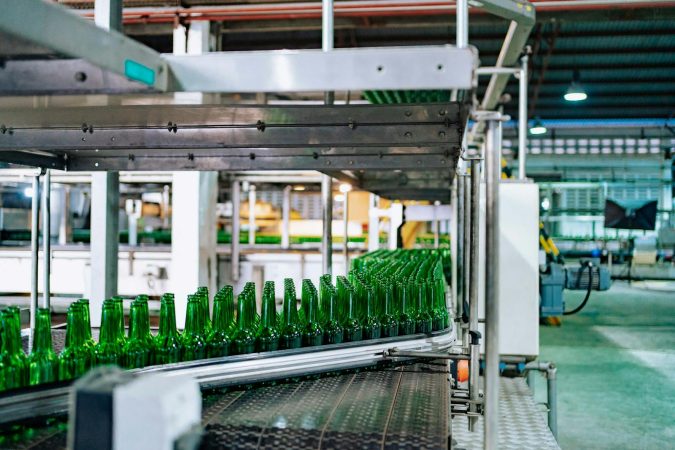
According to reports, the Orangeburg County facility will span hundreds of thousands of square feet and house processing, packaging, warehousing for raw and packaging materials, and administrative offices. Ferrara confirmed this is its first operation in the state.
Officials said Ferrara chose Orangeburg in part because of the local workforce pipeline and proximity to higher education institutions — two universities and a technical college. Company officials indicated those institutions would provide a diverse talent pool for various factory roles.
County officials described the deal as the product of years of courtship and infrastructure spending on water, sewer, broadband and utilities. They're satisfied, understandably so. Ferrara, in their telling, is a source of quality jobs and a key component of future economic development.
Why candy, why now
The conventional story about American food manufacturing is one of contraction: plants closing in the Midwest, production migrating to Mexico, automation thinning payrolls. Ferrara's announcement cuts against that narrative — and not for sentimental reasons.
Sugar confectionery has been one of the more resilient categories in packaged food. Industry observers note that candy sales, particularly in novelty and nostalgia segments, have held up through recent inflation cycles. Nerds Gummy Clusters, launched in recent years, became one of the fastest-growing confectionery items in the U.S. and pushed the parent brand back into cultural relevance. When a product line runs that hot, capacity becomes the constraint.
A $675 million greenfield plant is, in effect, Ferrara telling the market it expects sugar-forward, highly processed candy demand to keep climbing for at least another decade. That's a long bet in a food industry where the loudest conversations — ultra-processed foods, added sugars, GLP-1 drugs reshaping appetite — all point the other way.
The sugar question the press release won't answer
Orangeburg will celebrate new jobs. State officials will cut ribbons. None of that changes the fact that the plant exists to produce products sitting at the center of several overlapping public health debates.
The candy category has been largely untouched by the reformulation pressure that reshaped yogurt, cereal and beverages over the past decade. Where Danone reduced sugar and PepsiCo expanded zero-sugar lines, confectionery companies have mostly doubled down on the original formula. The logic is defensible on its own terms — people buy candy precisely because it's candy. But it puts the category on a collision course with evolving regulatory attention to added sugars and children's marketing.
So who benefits from framing a $675 million sugar plant primarily as a jobs story? Almost everyone in the immediate transaction. The county gets its tax base. The state gets its press conference. Ferrara gets its incentives and its workforce. The costs, if any, are diffuse, deferred, and borne by people who aren't in the room.
A tale of two food economies
Ferrara's expansion lands in the same week that alternative protein and climate-focused food companies continue to struggle for capital. VegOut has covered the philanthropic dollars flowing into next-generation food research, but philanthropic commitments sit in a different universe from a $675 million corporate capex line item backed by a decade of cash flow projections.
Here's the uncomfortable part. Alternative food occupies a cultural footprint wildly disproportionate to its actual scale. Plant-based meat, precision fermentation, cell-cultivated protein — they get the magazine covers, the conference keynotes, the venture slide decks. Legacy confectionery gets the factory. One of those is shaping what America eats. It isn't the one with the better press.
This connects to broader questions about how legacy food companies have systematically shaped nutritional science and market structures to protect their profit models, which helps explain why investors treat candy manufacturers and alternative protein startups so differently. The patterns of industry influence on food policy over recent decades reveal significant structural advantages for established players.
What happens next
Construction timelines point to production beginning in the coming years, with hiring expected to ramp across the next decade. Ferrara has not disclosed the incentive package from South Carolina, though announcements of this scale typically involve tax abatements, infrastructure credits and workforce training subsidies. Reports suggest the Department of Commerce has not released those figures publicly.
For Orangeburg, the facility represents a genuine shift. Rural South Carolina counties have spent two decades watching manufacturing bypass them for metro corridors or cheaper labor markets abroad. Landing a Ferrero-scale tenant validates years of infrastructure investment and recruitment work.
Here's what I keep coming back to. The food system producing most of what Americans eat is not retreating, apologizing, or waiting for the alternative-protein sector to catch up. It's laying foundations with ten-year horizons while much of the climate-food conversation operates on grant cycles and pitch decks. Pretending otherwise is a kind of wishful thinking the movement can't afford anymore. The candy plant will get built. Whether anything gets built at comparable scale to challenge it is, right now, an open question — and the honest answer is probably no.