When your Sunday sadness feels like grief rather than dread, your nervous system may be mourning the freedom it briefly experienced before returning to five days of structure and obligation.
Sunday evening sadness is not a productivity problem. It is a small, recurring grief: the nervous system mourning a version of time it briefly got to inhabit, before being pulled back into the structure it spends five days enduring.
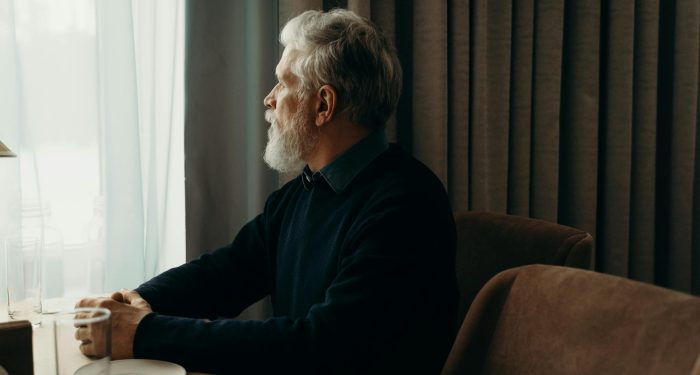
The standard explanation is that we dread Mondays because work is hard. That is true and also incomplete. Dread is a future-facing emotion, sharp and anxious. What many people describe on Sunday at six p.m. is heavier and stranger than that. It feels closer to loss.
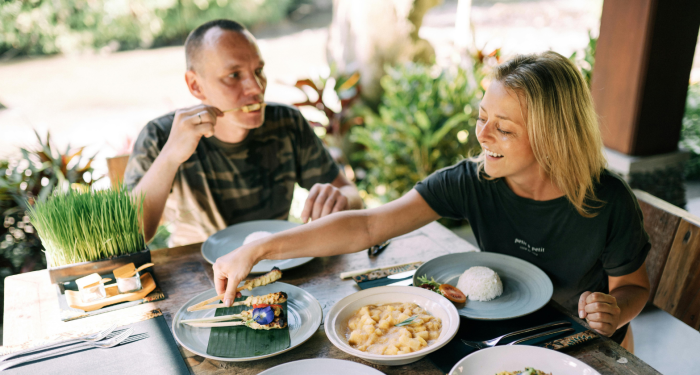
The conventional framing focuses on workplace pressure, blurred work-life boundaries, and the dopamine cliff after a weekend of social media scrolling. All real. But it treats the feeling as a forward-looking fear about Monday, when the texture of it is something else entirely. It is grief about Saturday. About what Saturday morning felt like when you woke up without an alarm and your body remembered, briefly, what it was designed to do.
The brain treats lost time like lost connection
Neuroscientist Matthew Lieberman has mapped what happens in the brain during social rejection and loss. His work established that the anterior cingulate cortex and the right ventral prefrontal cortex (regions long associated with physical pain) also activate when humans experience social exclusion or the severing of meaningful bonds. The brain, in other words, processes the loss of connection using the same circuitry it uses to process a stubbed toe.
That framework matters here. Because what most of us call "Sunday scaries" might be the same circuitry firing about a different kind of loss: not the loss of a person, but the loss of a state of being. The unstructured Saturday self, the one that picked up a book without checking the time, gets severed every Sunday at dusk. The brain registers it as something departing.
This is not a metaphor. The neural overlap between social pain and other forms of loss has been documented in affective neuroscience. Sadness is what happens when the brain notices something is gone.
What the default mode network does on a slow Saturday
There is a second piece of the picture, and it comes from neurologist Marcus Raichle, who identified the default mode network: the constellation of brain regions that lights up when a person is doing nothing in particular. Daydreaming. Letting the mind wander. Staring at a wall.
The default mode network is suppressed during focused, externally directed work. It comes online when there is nothing demanding our attention, when we are showering, walking aimlessly, lying on the couch on Saturday afternoon with no agenda. It is associated with self-referential thinking, memory consolidation, creative insight, and the construction of a coherent sense of self.
For five days a week, most of us suppress it. The structure of contemporary work (calendar invites, Slack notifications, the constant availability that a recent Forbes piece describes as a productivity environment with almost no transition time) leaves very little room for the default mode network to do its work.
And then Saturday arrives. The network finally activates. The self gets to wander. By Sunday evening, the body knows it is about to be suppressed again for another five days. The grief is real because the loss is real.
Circadian rhythms and the body's quieter mourning
There is a third layer, and it is biological in the most literal sense. Oxford circadian neuroscientist Russell Foster has argued that modern work schedules are misaligned with the actual sleep-wake preferences of most human bodies. The gap between when our biology wants to sleep and wake, and when our calendars demand we do, creates a chronic mismatch.
On weekends, many people drift toward their natural chronotype. They sleep later, wake more gently, eat at different intervals. The body's central stress response system gets a brief reprieve. Cortisol curves soften. The nervous system, briefly, gets to operate on its own rhythm.
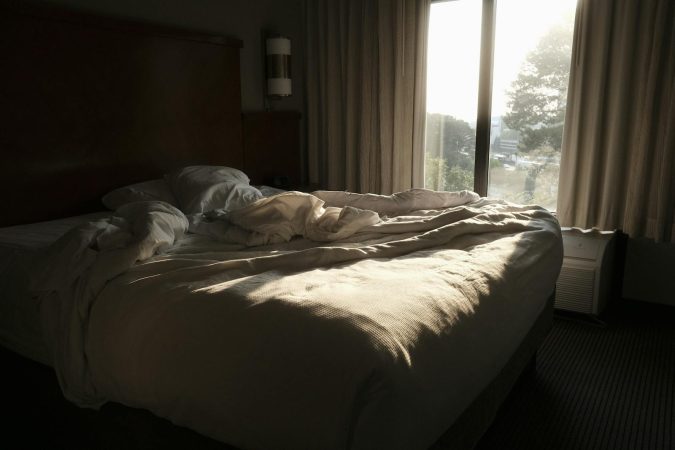
Sunday evening is when the body realizes the reprieve is ending. The anticipatory cortisol spike begins before Monday morning even arrives. This is part of why the sadness can feel so somatic: tightness in the chest, a heaviness in the limbs, a flatness behind the eyes. The autonomic nervous system, as Healthline's overview of nervous system dysregulation describes, governs heart rate, digestion, and emotional balance through a delicate negotiation between sympathetic and parasympathetic branches. When the parasympathetic state of a slow weekend gets yanked away, the body registers it.

Why this is grief, not anxiety
Anxiety is forward-leaning. It points at a threat. Grief looks backward. It mourns something that existed and is now gone.
The Sunday evening feeling has elements of both, but the grief component is the one most often missed. Dread of Monday's inbox is anxiety. The quiet sadness that descends around dusk, the sense that something good is slipping away — that is closer to mourning. A Psychology Today essay on dread notes that the emotion gets stuck when we feel preoccupied and unable to control what's coming. Grief, by contrast, is what happens when we recognize what we had.
The reason most of us conflate them is that the feelings arrive together. By 7 p.m. on Sunday, the body is grieving the unstructured self while simultaneously anticipating the structured one. The sadness gets labeled as dread because dread is the more legible emotion in a culture that doesn't have language for mourning your own time.
The economic context worth naming
Sunday sadness is not just a neural phenomenon. It is the product of a specific arrangement of labor and time, and it is worth naming who benefits from that arrangement and who carries its cost.
The five-day workweek is not a law of nature. It is an artifact of industrial scheduling, recently amplified by the always-on architecture of digital work. The blurred boundaries between personal time and professional time (the Slack ping at 9 p.m., the email that arrives during dinner) are not accidents of technology. They are features of a system that has economic incentives to keep workers psychologically available beyond the hours they are paid for.
This matters because the discourse around Sunday anxiety often individualizes the problem. The advice tends to be: take a bath, plan your week, journal. These are not bad suggestions. But they treat a structural mismatch between human nervous systems and modern scheduling as a personal regulation challenge. The body is responding correctly to an environment that is asking too much of it.
What actually helps
The interventions that work are the ones that give the nervous system more (not less) access to the unstructured state it briefly tasted on Saturday.
That can mean small things. A morning walk before checking a phone. A weeknight evening with no agenda. The deliberate cultivation of pockets of time that resemble weekend texture, scattered through the workweek so the contrast on Sunday is less violent. Psychology Today's guide to nervous system regulation describes these as small acts of returning the body to baseline. The goal is not to eliminate stress but to learn to work with the system rather than against it.
It also means taking transitions seriously. The brain has not evolved to match the chronic, low-grade stressors of modern life. We were built for acute threats followed by recovery. We have built a world of constant low-level activation with no recovery built in. Sunday evening is when the absence of recovery makes itself felt.

The cultural dimension
I grew up between two countries that hold time very differently. In São Paulo, where my father lives, Sundays are slow and long. Lunches stretch into late afternoons. No one is in a hurry. In Miami, where my mother settled, Sunday is a productivity ramp: meal prep, errands, the soft panic of getting ahead. The first version doesn't produce the same Sunday sadness. The second version does.
This is not nostalgia. It is a structural observation. Cultures that protect unstructured collective time produce less Sunday grief because the nervous system isn't being yanked between two incompatible states. The contrast is less violent because the weekday isn't as aggressively scheduled in the first place.
The ability to be content in slower rhythms is, as we explored recently, less a personality trait than a recovered capacity. Many of us have to relearn it. The Sunday feeling is, in some ways, the body asking to relearn it.
Reframing the feeling
If Sunday evening sadness is a small grief, the question changes. The goal is not to eliminate it. Grief is a reasonable response to loss. The question becomes: how do you live in such a way that the loss is smaller? How do you let the unstructured self exist for more than 36 hours a week, so the contrast on Sunday is gentler?
Sometimes that looks like a slower morning. Sometimes it looks like rewatching the same comfort show, which (as we've written about before) is one of the ways the nervous system regulates itself in an over-stimulating world. Sometimes it looks like protecting one weekday evening as fiercely as you'd protect a Saturday.
The feeling is information. It is not a flaw in your character or evidence that you hate your job. It is your body, briefly given access to its preferred state, registering the loss of it. The right response is not to feel ashamed of the sadness. It is to listen to what it is telling you about how you've structured your time and to ask what small piece of the weekend texture you might be able to carry into the rest of the week.
The grief is real because the loss is real. And the loss is real because the unstructured self, the one your nervous system briefly remembered on Saturday morning, is the version of you that most of modern life is designed to suppress. Sunday evening is just the moment when the body notices.