

The version of discipline that actually changes your life doesn't photograph well and rarely gets talked about.
I went through a phase a few years ago where I was very publicly disciplined. I posted about my morning routine. I talked about cold showers and meditation streaks and my running habit. People noticed. People said things like "you're so consistent" and "I wish I had your discipline." It felt good.
Then the audience moved on, the way audiences do. And that's when I found out what my discipline was actually made of.
Not much, it turned out.
The discipline that performs well
There's a version of discipline that looks great from the outside. The 5am alarm. The meal prep. The before-and-after photo. The streak counter. The gym selfie. The reading list posted at the end of the year.
None of that is bad. Some of it is genuinely useful. But it comes with a built-in reward that has nothing to do with the habit itself: attention. Approval. The sense that someone is watching and thinking well of you.
That reward is a kind of fuel. It gets you started. It keeps you going for weeks, sometimes months. But it's borrowed energy. And the moment the attention fades, which it always does, the habit either stands on its own or it doesn't.
Most of the visible discipline I see online is propped up by an audience. Remove the audience and the habit collapses. That's not discipline. That's performance with a good routine attached.
The part nobody talks about
The harder thing, the thing I've struggled with more than any alarm clock or diet, is doing the work when no one cares.
Meditating on a Tuesday morning when nobody knows you meditate. Going for a run along the Saigon River in the heat when you stopped posting about running months ago. Reading a difficult book slowly, a few pages at a time, with no plan to mention it to anyone. Working on your patience with your kids without turning it into a lesson you share online.
This kind of discipline has no audience. There's no feedback loop. No one is going to praise you for the argument you didn't start, the phone you didn't check, the ego you swallowed at the dinner table. The growth is invisible, and because it's invisible, it's easy to wonder whether it's happening at all.
I've written before about how real discipline is less about restriction and more about alignment. But alignment with what? That's the question that only gets answered when the applause stops.
Why the quiet version is harder
Public discipline has momentum. You announce a goal. People cheer. You feel accountable. You hit milestones. People cheer again. The whole thing has a structure that carries you forward, and inside that structure, the hard parts feel manageable because they're witnessed.
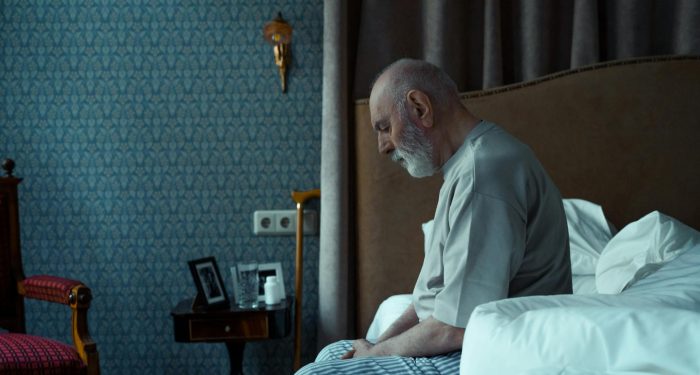
Private discipline has none of that. It's just you, alone with the gap between who you are and who you're trying to become, doing the small, unglamorous thing again. No one is counting your streak. No one is going to notice if you skip today. The only person who knows is you, and you're very good at letting yourself off the hook.
This is where most self-improvement quietly dies. Not in the dramatic failure. Not in the public slip-up. In the silent Tuesday where nothing is forcing you to keep going and you have to find the reason inside yourself.
What I've learned from sitting still
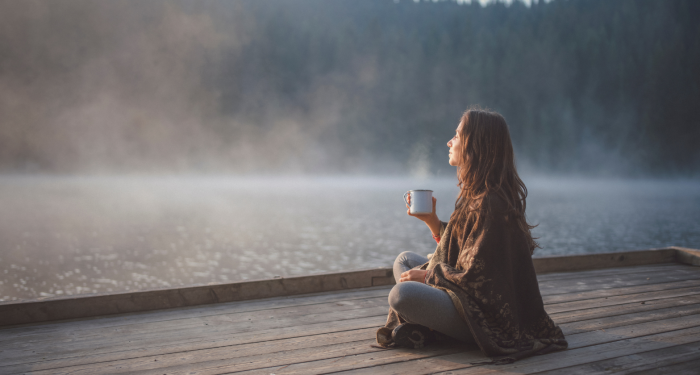
My meditation practice has taught me more about this than anything else.
When I started meditating seriously, it was partly because I'd read about the benefits and partly because it fit the identity I was building. Mindful founder. Buddhist-curious writer. The kind of person who sits in silence before the day begins. That identity carried me for a while.
But there came a stretch, maybe eight months in, where the novelty was gone, the identity boost had faded, and I was just a man sitting on a cushion in a hot apartment in Saigon at 6am, watching my thoughts loop and wondering if this was doing anything at all.
That stretch was the practice. Everything before it was the warm-up.
One of the things that shaped my understanding was the Buddhist concept of right effort: not the burst of energy that launches something, but the steady, patient continuation of it after the excitement has worn off. The willingness to keep showing up when the showing up has become ordinary.
That's where the real change lives. In the ordinary repetition that nobody, including you, finds interesting anymore.
The growth that matters most
The changes I'm most grateful for in my own life are all invisible ones.
I'm more patient with my daughter than I was two years ago. Not because I read a parenting book, but because I kept catching myself in the moment of impatience and choosing differently, over and over, in situations no one else saw. I'm better at listening to my wife without immediately trying to fix things. I'm slower to react when something frustrates me at work. I let my brothers finish their sentences before I jump in with my own take.
None of that showed up on a tracker. None of it earned a compliment. The people around me may not even have noticed, or if they did, they wouldn't know it took two years of quiet, undramatic effort to get there.
That's the discipline that actually changes a life. Not the kind that looks good on a timeline. The kind that reshapes how you move through a room, how you hold a conversation, how you sit with discomfort instead of running from it.
Staying in it when no one claps
If you're in a phase right now where you're doing the work and nobody is noticing, I don't have a trick to make it easier. It doesn't get easier. It just gets more honest.
The applause version of discipline is a good starting point. Use it if it helps. But know that the real test comes later, when the audience leaves and the only question left is whether you were doing it for them or for you.
Most mornings I still run along the river. Nobody knows. Nobody asks about it. It doesn't go anywhere except into the quiet accumulation of a life I'm trying to build on purpose. And that, I think, is the only kind of discipline that actually lasts: the kind that doesn't need anyone else to believe in it.