

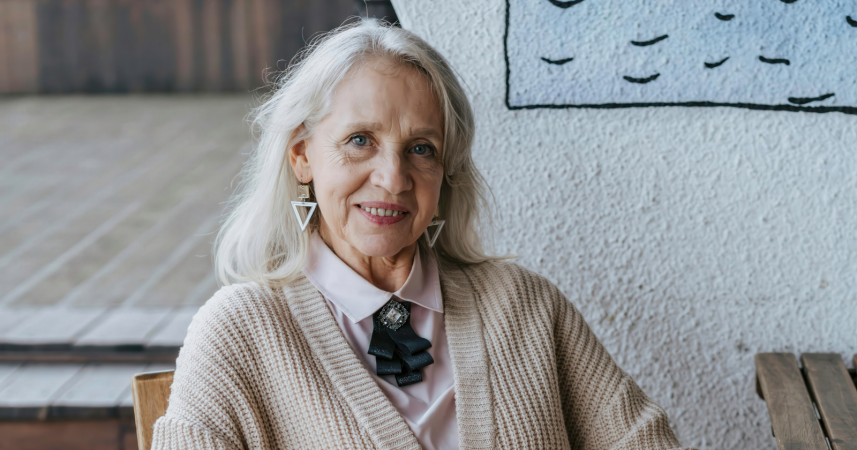
At 30, success often means proving yourself to the world. By 60, it can become something quieter: peace, honesty, family, and the ability to notice what still matters.
When I was thirty, I had a very different idea of what success would look like.
I don’t think I was unusual in that. At thirty, you tend to imagine life as something that keeps getting bigger. A bigger house. A better job. More recognition. More certainty. More proof that you have done something worthwhile with your years.
You look ahead and picture yourself at sixty with a kind of confident authority. You imagine that by then you will have worked most things out. You will know who you are. You will have stopped worrying about money, status, mistakes, other people’s opinions, and all the small doubts that crowd the mind when you are young.
But life has a way of softening those ideas.
By sixty, success didn’t look anything like the picture I once carried around in my head.
It was quieter than that. Smaller, too. But not in a disappointing way. More in the way a bird’s nest is small. Or a garden path is small. Or the first cup of tea in the morning is small. The kind of small that holds more than you expected.
The old version was louder
At thirty, I think success is often measured by noise.
You want life to announce itself. You want achievements people can see. You want some evidence that all the effort is leading somewhere. You want to feel that you are moving forward, preferably faster than the people around you.
There is nothing wrong with that, really. Ambition has its place. When you are younger, you need a bit of hunger. You need to build, provide, try, fail, recover, and keep going.
But there is a subtle trap in that stage of life. You can start believing that success has to be visible to count.
If nobody notices, did it matter?
If nobody praises you, was it worthwhile?
If your life doesn’t look impressive from the outside, have you somehow fallen short?
I don’t think I would have admitted to thinking that way when I was younger. But looking back now, I can see how much of my energy went into trying to become a version of myself I thought would be acceptable, respectable, and successful.
At sixty, I began to understand that some of the most meaningful parts of life don’t make much noise at all.
The new version is more honest
The older you get, the harder it becomes to lie to yourself.
That is one of the unexpected gifts of ageing. Not always a comfortable gift, but a useful one.
By sixty, you have usually had enough disappointments to know that life does not follow a tidy script. You have seen plans change. You have lost people. You have made mistakes you cannot entirely undo. You have watched your children become their own people. You have discovered that some things you once thought mattered greatly do not matter much at all.
And in that process, success becomes less about performance and more about truth.
Are you living in a way that feels honest?
Can you sit quietly with yourself?
Do the people close to you know they are loved?
Are you still able to notice beauty, even when life is not perfect?
Those questions would have sounded a bit vague to me at thirty. At sixty, they felt practical. Maybe even urgent.
Because by then you know time is not theoretical. It is not something waiting somewhere in the future. It is moving through the room with you. It is in your knees when you stand up. It is in the faces of your children. It is in the old photos you suddenly find yourself looking at for longer than you expected.
Success becomes less about becoming someone and more about finally making peace with the person you already are.
I started noticing smaller things
Bird watching has taught me a lot about this.
To watch birds properly, you have to slow down. You cannot rush into a place and demand that nature perform for you. You have to wait. You have to listen. You have to let your eyes adjust.
A younger man might walk through the bush and see nothing much.
An older man might stand still for five minutes and notice the flick of a wing in the branches, the shape of a small bird against the light, the sudden call that gives away what was hidden all along.
That is how success began to feel to me as I got older.
It was not always in the obvious places.
It was in a quiet morning.
It was in a conversation with one of my children.
It was in having the time to read, think, write, and look out the window.
It was in being able to admit when I was wrong.
It was in caring less about appearing wise and more about being kind.
It was in understanding that a good day does not have to be dramatic. Sometimes a good day is simply one where you paid attention.
You stop needing every part of life to be impressive
One of the great reliefs of getting older is that you slowly stop auditioning.
Not entirely, perhaps. We all still want to be seen in a certain way. But the pressure eases.
At thirty, you can feel as though your life is being judged all the time. Your career, your home, your family, your choices, your progress. You compare yourself without meaning to. You measure. You wonder whether you are behind.
By sixty, if you are lucky, you begin to step out of that race.
You realise there is no single scoreboard.
Some people who looked successful from the outside were quietly unhappy. Some people who seemed to live ordinary lives had a depth of contentment you could not see at first glance.
You start to understand that a peaceful life is not a consolation prize.
It may be the prize.
There is a kind of success in not needing to explain yourself so much. There is success in having fewer things but enjoying them more. There is success in being able to sit in a garden, hear a bird call, and feel that nothing is missing in that particular moment.
Not forever. Not perfectly. Just for that moment.
And sometimes that is enough.
The life you pictured may not arrive — but another one can
Nobody gets to sixty without letting go of a few old versions of themselves.
Some dreams fade. Some ambitions lose their shine. Some doors close quietly, without ceremony. You realise that certain things are not going to happen, or not in the way you once imagined.
That can feel like failure if you are still using the measurements of your younger self.
But from the other side, I’m not so sure.
Maybe part of ageing well is learning to recognise the life that actually came, rather than mourning the life you pictured.
The real life may be messier. It may be less impressive. It may contain more compromise than you expected.
But it may also be more tender.
More grounded.
More truthful.
At thirty, I thought success would mean reaching some high place and looking out over everything I had achieved.
At seventy-seven, I’m more inclined to think success is being able to look closely at what is right in front of me.
A bird on a fence.
A memory that still warms me.
A child grown into an adult.
A quiet afternoon.
A sentence that says what I meant.
A life that, for all its imperfections, has been deeply lived.
That is not the version of success I pictured when I was young.
But it is the one I understand now.
And in many ways, it is better.