

Moving through an unfamiliar city frees your mind in ways vacation time never could. The real shift isn't escaping obligations—it's escaping the invisible weight of being known, recognized, and observed by people from your past.
The standard story about travel says we feel better in new cities because we're on holiday. The flights, the hotel beds, the absence of laundry and meetings. Remove the obligations and of course the nervous system relaxes. That's the version everyone agrees on, and it's not entirely wrong.
But it doesn't explain the people I keep meeting who feel calmer in Bangkok at 11pm on a work trip than they do at brunch in their own neighbourhood on a Sunday. It doesn't explain why a friend of mine, exhausted from a fourteen-hour day of meetings in Berlin, told me she still felt mentally clearer there than she does after a quiet weekend at home.
Holiday isn't the variable. Anonymity is.
The hometown surveillance you stopped noticing
When you walk through your own city, you are running a constant background process. You might run into your old boss. Your ex's sister works in that café. Your kid's teacher lives two blocks over. The barista already knows your order, which means she also knows when you've changed it, which means a tiny part of you is aware of being tracked even at the level of a flat white.
None of this is hostile. Most of it is good. Communities are built on this kind of soft knowing. But the cognitive cost of being constantly recognisable is real, and people rarely add it up.
You're managing reputation in real time. You're rehearsing answers to questions about how you've been before you even leave the house. You're navigating a thousand micro-expectations of who you've always been to the people who've always known you.
What changes when nobody knows your name
Drop that same person into Lisbon or Taipei or Mexico City, and something quiet happens in the body. The vigilance drops. Not because the city is safer, often it isn't, but because the social surveillance is gone.
You can sit in a café for three hours and nobody is reading meaning into it. You can cry on a park bench and no one will mention it to your mother. You can order something you've never tried, dress in a way you've never dressed, walk slower than you usually walk. Nobody has a baseline for you. There is no baseline to deviate from.
This is a different kind of rest than sleep. It's the rest of not being legible.
The research nobody quite frames this way
The fear of being evaluated is one of the most cognitively expensive states a person can carry. Roughly one in five people with social anxiety also struggles with problem drinking, often because alcohol is being used as a tool to lower the volume of self-consciousness in social settings. The drink isn't the issue. The constant self-monitoring is the issue. The drink is just the cheapest available off-switch.
Now consider what an unfamiliar city does for someone with even a low-grade version of that self-consciousness. It turns the off-switch on for free. No alcohol required. No performance required. Just streets full of people who don't know you and don't need anything from you.
That's not travel. That's relief.
Cognitive load is the hidden variable
Environmental conditions affect mental clarity in measurable ways. Hydration matters. Sleep matters. Even small physiological shifts can change how the brain processes information. Even mild dehydration can deactivate brain regions involved in attention and decision-making. Sleep deprivation shows similar patterns at higher magnitude.
What's less measured but increasingly obvious to anyone paying attention is the cognitive load of social familiarity. The mental tabs you keep open when you live somewhere people know you. The half-rehearsed scripts. The energy spent on being a coherent character in other people's stories.
Strip that away, and the same brain gets noticeably more bandwidth. People often describe their best ideas arriving on planes, in foreign hotel rooms, walking through districts where they can't read the signs. They credit the "newness." But newness on its own would be exhausting. What's actually happening is the absence of identity maintenance.
Anonymity is not the same as loneliness
This is the part people get wrong. They assume that if someone feels better unknown, they must be antisocial or avoidant. The opposite is often true. People who love their friends and family deeply can still find that being around those people requires a version of themselves to be performed.
Not a fake version. A consistent one. The version that has always been the dependable older sister, the funny one, the calm one, the responsible one. Identity is not a costume you remove, but it is a load you carry, and the people who love you are the ones most invested in you carrying it the same way you always have.
An unfamiliar city doesn't ask you to be consistent. It has no investment in who you've been. This is sometimes confused with escapism, but I think it's closer to what some people would call a quieter environment that doesn't require recovery afterward.
Why screens make hometowns louder
It used to be that leaving your suburb was enough to feel unknown. You'd go three towns over and become anonymous. That's not really true anymore. Your phone is full of people who can reach you in any city, and your own social platforms keep you visible to everyone you've ever met, regardless of geography.
This is why some people feel anonymous abroad in a way they no longer feel anonymous at home, even alone in their own apartment. The screens follow them. Screens can spike stress hormones, and the underlying mechanism, the constant low-level evaluation by an audience, applies to most adults too.
An unfamiliar city, paradoxically, is one of the few remaining places where it feels socially acceptable to put the phone down. Nobody's expecting you to reply quickly. The time zone is wrong. You're traveling, so delayed responses seem acceptable. The phone goes quiet, and so does the part of your mind that monitors it.
The clarity that comes from not being interpretable
Athletes describe a state of flow where attention narrows and self-consciousness drops. You don't have to be an athlete for this to apply. Anyone who has felt their thinking sharpen the moment they stopped worrying about how they were being perceived knows the experience.
Foreign cities give you that for free. You can't fully read the social cues, so you stop trying. You can't fully be read, so you stop performing. What's left is something close to your own actual mind, working at its actual speed.
People often make their biggest decisions on these trips. They quit jobs from hotel rooms. They end relationships in airport lounges. They realise they want to move, change careers, finally write the thing. This isn't because the trip taught them anything new. It's because the trip removed the scaffolding of who they were supposed to be, just long enough for them to hear themselves think.
The uncomfortable implication
If anonymity is doing the work, not travel, then a lot of the wellness industry has been selling people the wrong solution. You don't necessarily need a flight to Bali. You need fewer environments where you're being watched by people with strong opinions about who you are.
This is why some people find unexpected calm in moving cities entirely, even within their own country. It's why others find it in an hour of running where nobody can reach them. It's why people take long drives, sit in cinemas alone, walk in unfamiliar neighbourhoods of their own city. The mechanism is the same. Reduce the surface area available to social evaluation, and the mind exhales.
What this means for staying home
Most people can't permanently relocate to escape the cognitive cost of being known. Nor should they. Being known is one of the deepest human goods. The friendships and family ties that make life meaningful are the same ones that produce the surveillance.
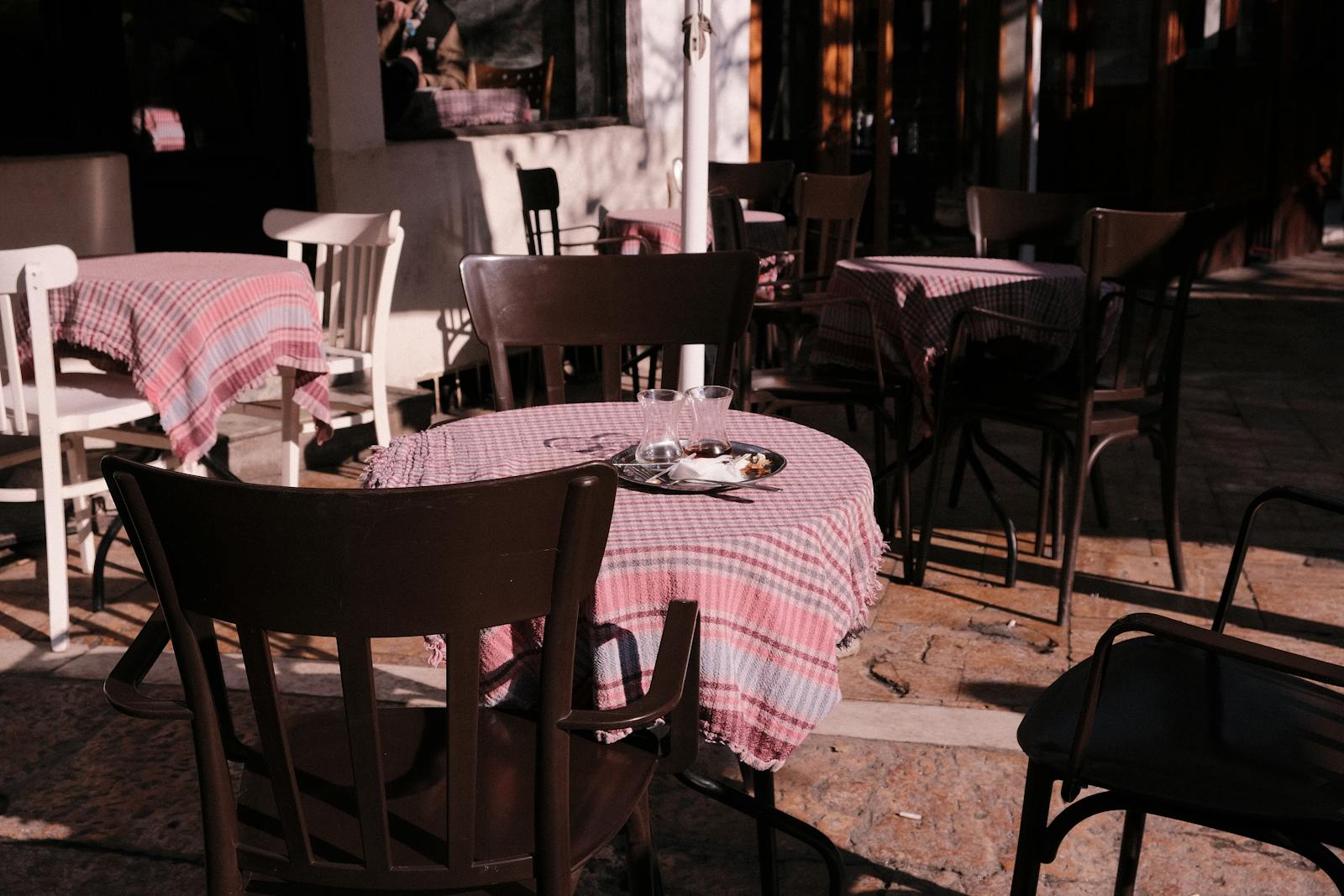
But you can build small pockets of unknownness into a life that's mostly rooted. A neighbourhood you don't usually walk in. A café across town where the staff don't recognise you. A weekend in a nearby city where your phone stays in airplane mode. These aren't escapes. They're maintenance.
The people I know who seem most settled in their own lives are usually the ones who've figured this out. They're not running from their hometowns. They've just stopped pretending that being known all the time is free.
And once you've felt the difference, even for a weekend, it's hard to unfeel it. The clarity that arrives when no one is watching turns out to be the clarity you were always capable of. The unfamiliar city didn't give it to you. It just stopped taking it away.