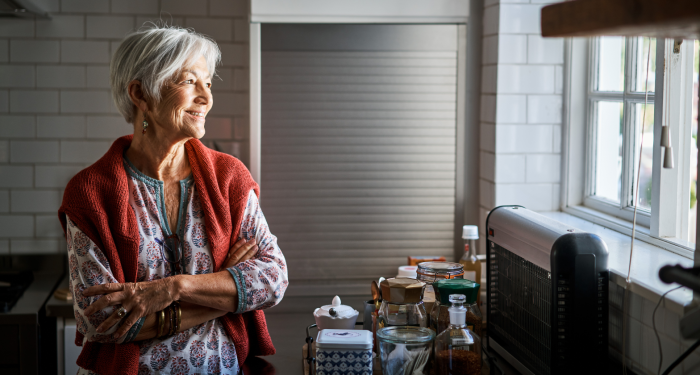
The upper-middle class never announces wealth directly - they let calm language and quiet confidence do the talking.
Language reveals more than people realize.
Upper-middle-class individuals rarely show their wealth in obvious ways.
Instead, they use quiet, confident phrasing that signals security and sophistication.
Their words are measured, their tone calm, and their self-assurance effortless.
They don’t need to talk about money directly because everything they say already hints at comfort.
Here are seven phrases that sound polite on the surface but quietly communicate status and privilege underneath.
1. “We have a place upstate.”
This sounds humble, but it implies ownership, not just access.
People who say this are signaling that they have the means to maintain more than one property.
It is not bragging — it is assumption wrapped in understatement.
The phrase suggests leisure, flexibility, and choice, all subtle markers of class.
It also hints at a lifestyle where weekends are spent in nature, not running errands.
They say it casually, but what they really mean is, “We have options.”
The words are simple, but the privilege behind them is unmistakable.
2. “We’re doing a little renovation.”
This phrase is one of the most polished ways to downplay wealth.
Upper-middle-class people use it to make large home projects sound modest.
It quietly communicates that they own property worth improving.
When they say “a little,” it often means hiring architects, designers, and contractors for months.
It also implies the freedom to make aesthetic choices instead of financial compromises.
They frame it as a small inconvenience rather than a major expense.
It’s a masterclass in understatement, where the calm tone hides the cost behind it.
3. “We’re heading to Europe for a bit.”
This sentence communicates international travel as something routine.
It shows familiarity with distance, planning, and culture — not aspiration but expectation.
People who say this assume that traveling abroad is a normal part of life.
They don’t need to explain why or how, because the assumption of affordability is built in.
The phrase sounds relaxed, as if the trip requires no budgeting or sacrifice.
It suggests confidence in both finances and freedom of time.
It is not meant to impress; it is meant to normalize privilege.
The casual tone is what makes it sound effortless and refined.
4. “We’ve been meaning to try that place.”
This is a subtle way of signaling awareness and taste.
It implies the speaker already knows about what is current and desirable.
Upper-middle-class people use it to reference new restaurants, galleries, or events that align with their social circle.
It shows they are part of a conversation about culture, not chasing after it.
The phrase positions them as selective but open-minded.
It also reflects a life with leisure time, where exploration is a choice, not a luxury.
Saying it conveys familiarity with refinement and curiosity without sounding boastful.
They are not trying to impress — they are maintaining their place in the loop.
5. “We sent the kids to a small school.”
This phrase sounds thoughtful and nurturing, but it carries quiet weight.
“Small school” almost always means private education.
It emphasizes personal attention while avoiding the word “elite.”
Parents use it to present privilege as intention rather than excess.
They talk about values like community and growth instead of mentioning tuition.
It is a way to discuss money without sounding materialistic.
Behind the modest phrasing is access to education that costs more than most mortgages.
It’s the linguistic version of a polite smile hiding a powerful signal of class.
6. “We prefer experiences over things.”
This line sounds simple, but it reveals a lot about financial freedom.
It suggests that material comfort is already secured, so focus can shift to fulfillment.
People who say this are quietly distinguishing themselves from those still chasing possessions.
It makes abundance sound enlightened, not indulgent.
The phrase signals emotional intelligence and an evolved sense of taste.
It implies that they’ve reached a point where the value of life is measured in moments, not money.
There is privilege in being able to prioritize joy over necessity.
It’s not about rejecting wealth — it’s about refining how it’s expressed.
7. “We’re taking some time off to recharge.”
This phrase radiates calm and confidence.
It assumes a financial cushion that allows for rest without consequence.
It reframes luxury as self-care, making privilege sound responsible.
People who say this view downtime as productive rather than indulgent.
It also hints at control over one’s schedule — a luxury many people don’t have.
The phrase is spoken casually, as if time itself bends to their routine.
It’s the verbal equivalent of a deep breath in a world where most people can’t afford to pause.
They are not flaunting wealth, just living comfortably enough to rest on command.
The bigger picture
The upper-middle class doesn’t need to brag.
They’ve mastered the art of sounding grounded while quietly affirming their position.
Their language relies on understatement, confidence, and the assumption of comfort.
Each of these phrases works because it hides what it reveals — privilege dressed as politeness.
It’s never loud, but it’s always clear to those who know how to listen.
True status doesn’t shout.
It smiles, speaks softly, and assumes everyone else already understands.
What’s Your Plant-Powered Archetype?
Ever wonder what your everyday habits say about your deeper purpose—and how they ripple out to impact the planet?
This 90-second quiz reveals the plant-powered role you’re here to play, and the tiny shift that makes it even more powerful.
12 fun questions. Instant results. Surprisingly accurate.