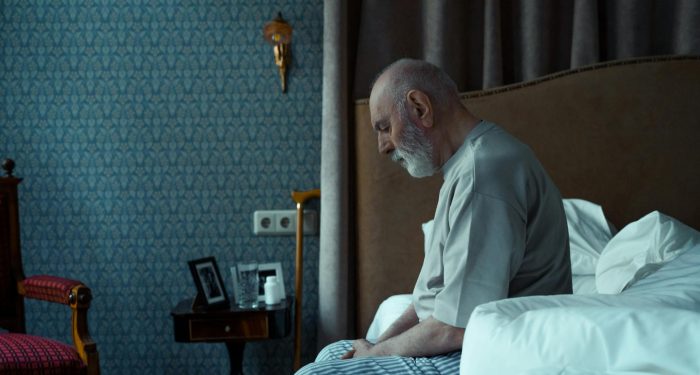


Retirement strips away the role you spent decades perfecting — and underneath it stands someone you barely recognize, waiting for a conversation that's decades overdue.
Retirement research consistently finds that roughly one in three retirees report significant psychological difficulty in the first year, and the difficulty rarely shows up where people expect. It isn't the money. It isn't even the boredom. It's something quieter, and it tends to surface in ordinary moments, in ordinary places, when the adrenaline of the farewell party has long since worn off.
Consider Margaret, who spent thirty-one years as a hospital administrator in Melbourne. She told me she cried in a parking lot three weeks after her retirement party. She wasn't sad about leaving the job. She was sitting in her car outside a Woolworths at 10:07 on a Tuesday morning, engine off, hands still on the wheel, watching people cross the lot with the unmistakable posture of somewhere-to-be. A woman in scrubs jogged toward a hatchback with a coffee in one hand and a lanyard swinging against her chest. A man in hi-vis answered his phone before he'd even closed his truck door. A younger woman walked fast, heels clicking, laptop bag bumping her hip.
Margaret looked down at herself. Tracksuit pants, no makeup, a grocery list on the back of a gas receipt. Something inside her chest folded in on itself. The tears came before she understood them. She gripped the steering wheel and let them fall, watching them land on her bare wrists where a hospital ID badge used to tap against the bone every time she reached for something. What surprised her more than the crying was the question that surfaced underneath it: Who am I when nobody needs me to be anything?
That question is the hinge of the first year of retirement. And almost nobody talks about it honestly.
The conventional wisdom says retirement is one transition. You leave work, you adjust, you find hobbies, you settle in. Financial advisors prepare you for the money. Friends prepare you with jokes about golf. Everyone treats it like a single event with a single adjustment period. But that framing misses what actually happens inside a person during those first twelve months.
Two transitions happen at once. The first, leaving the structure, gets all the attention. The second, encountering the self that existed beneath the structure, gets almost none. And the second one is the one that rearranges everything.
The Structure Was Never Just a Schedule
When people talk about missing the structure of work, they usually mean the routine. The alarm. The commute. The predictable rhythm of meetings, deadlines, and lunch breaks. But structure does something far deeper than organize your hours.
It tells you who you are.
Your role at work isn't just a function. It's an identity scaffold. It answers questions you didn't even know you were asking: Am I competent? Am I valued? Am I needed? Do I matter? Every email responded to, every project completed, every colleague who sought your opinion. All of it was quietly reinforcing a sense of self you'd been building for decades.
Studies of retirement from high-identity professions like firefighting suggest that leaving the role doesn't just create a gap in the calendar. It creates a gap in the psyche. The title, the uniform, the purpose. When those vanish, people don't just feel bored. They feel formless.
I've watched this happen to executives who built entire departments, who led teams of hundreds, who could walk into any boardroom and command it. Three months into retirement, they're standing in their kitchen at 9 a.m. feeling vaguely guilty for not being somewhere. The guilt isn't rational. It's neurological. The brain's habit circuits still firing for a context that no longer exists.
This first transition, the structural loss, is disorienting. But people expect it. They've been warned about it. They have strategies: volunteer work, part-time consulting, morning walks. The first transition has a playbook, however imperfect.
The second transition has no playbook at all.
The Person Underneath the Role
Somewhere around month three or four, once the initial relief or vacation-like novelty fades, something else starts happening. The distractions thin out. The social calendar, once filled with colleagues and work events, starts showing gaps. And in that quiet, a presence begins to emerge. Faint at first, then undeniable.
You meet yourself.
Not the professional self. Not the parent self or the partner self or the community-member self. The base self. The one who existed before any of those roles layered on top. The person with actual preferences, dormant curiosities, unprocessed emotions, and a relationship to solitude that may feel entirely foreign.
This encounter terrifies people more than the financial planning ever did. Because for many retirees, particularly those who spent careers in demanding, high-achievement environments, that base self is a stranger. Research into barriers to authenticity suggests that decades of performing roles can genuinely suppress aspects of personality. The authentic self doesn't disappear under professional identity, but it does go quiet. Very, very quiet.
And quiet things, when they finally speak, tend to say things you weren't ready to hear.
Maybe the person underneath the structure doesn't actually enjoy the social events you filled your weekends with for years. Maybe she's angrier than you expected. Maybe he's lonelier than the busy professional ever had time to notice. Maybe the person you meet when the scaffolding drops is someone who wants a radically different life than the one you planned for.
Why the Brain Resists This Meeting
From a neuroscience perspective, the resistance makes sense. The brain is fundamentally a prediction machine. It builds models of who you are based on decades of reinforcement, and then it protects those models ferociously. When external structures like job titles, daily routines, and professional relationships provided constant identity feedback, the brain didn't need to look inward for a sense of self. The environment handled it.
Remove that environment, and the brain's default mode network, the neural circuitry active when you're not focused on external tasks, suddenly has enormous space to operate. Studies indicate this is the network associated with self-referential thinking, autobiographical memory, and rumination. In a career, you could avoid this network for hours. In retirement, you live in it.
The generation that grew up being told to keep their heads down and work hard, the generation that learned to translate emotional distress into "I'm fine", often finds this internal confrontation deeply uncomfortable. They were trained to produce, not to reflect. Meeting the person underneath the production can feel like a threat to everything they built.
So they resist. They fill the calendar. They take on obligations. They stay busy. And the self underneath waits.
The Loneliness That Isn't About Being Alone
One of the strangest features of this second transition is that it produces a specific kind of loneliness that has nothing to do with social isolation.
You can be surrounded by family, friends, and community, and still feel it. Because what you're lonely for is yourself. You're homesick for a version of you that you never fully inhabited. You spent so many years being needed, being competent, being the person who held it all together, that you never sat with the person who existed when the holding stopped.
Those who study the psychological dimensions of retirement have observed that the hardest part of retirement frequently isn't boredom — it's the strange loss of purpose that arrives when your external contributions no longer define your days. But I think it goes even deeper than purpose. Purpose is something you can rebuild. Identity is something you have to discover, and discovery requires the one thing achievers resist most: not knowing.
Many people find that the loneliness arrives disguised as preference. I like my own company, I don't need anyone, I'm just enjoying the quiet. Those things might be true. They also might be armor against a meeting that feels too vulnerable to attend.

What the Second Transition Actually Looks Like
I created a framework for retirement planning specifically because I kept seeing the same pattern in the high-achievers I worked with: they could handle the structural transition. They could build new routines, manage their finances, stay active. What unraveled them was the identity renegotiation, the slow, often painful process of discovering who they were when performance stopped being the metric.
The second transition tends to unfold in waves, not stages. A wave of grief, for the self that's gone. A wave of curiosity, about the self that's emerging. A wave of anger, at having spent so long performing. A wave of tenderness, toward the parts of yourself that waited patiently for decades.
A woman I coached, I'll call her Ruth, described it as standing in front of a closet full of costumes she'd worn her whole life. Teacher. Mother. Committee chair. Reliable friend. Competent colleague. Behind those costumes, pressed against the back wall, was a person who loved watercolors, who craved solitude more than she'd ever admitted, who wanted to live near water. Ruth had known these things about herself at twenty-two. She'd spent forty years burying them under usefulness.
Research into retirement pathways suggests that up to one-third of retirees describe significant difficulty adjusting. What the research doesn't always capture is that the difficulty often isn't about what was lost. It's about what was found.
Finding yourself at sixty-five or seventy can be just as disorienting as losing yourself. Perhaps more so, because there's a grief folded into the discovery: Where were you all these years? Why didn't I listen sooner?
Habits That Help You Stay in the Room
The temptation during this second transition is to flee. To volunteer for everything. To immediately build a new structure that mimics the old one. To stay so busy that the quiet self never gets a word in.
What helps more is staying in the room with the discomfort. And some practices seem to support that process better than others.
Psychologists studying authenticity have identified that certain habits — like reflective journaling, values clarification, and mindful solitude — strengthen the capacity for self-encounter as people age. The brain retains remarkable plasticity. It can build new self-knowledge at any age. But it needs the raw material of stillness to do it.
Small rituals matter enormously here. A cup of tea in the morning, not rushed, not multitasked, just a fifteen-minute ritual of silence, can become the first honest appointment you keep with yourself. A walk without a podcast. A notebook you write in before you've formed any opinions about the day.
These sound small. They are enormous. They are the architecture of self-meeting.
But what does staying in the room actually look like, in practice, for real people?
I'll tell you about a man I worked with. I'll call him David. Thirty-four years in corporate law. Retired at sixty-seven with every box checked: financial security, good health, a wife he loved, grandchildren nearby. By month five, he was picking fights with his wife over nothing. The dishwasher, the thermostat, whether the garden needed mulching. He knew the fights weren't really about the dishwasher. Staying in the room, for David, looked like this: he started writing a letter to himself every Sunday morning. Not a journal, a letter, addressed to "David at twenty-five." He wrote about what that younger man had wanted from life, what he'd traded away, what he still carried. After three months, he realized he'd always wanted to teach. Not law. History. He enrolled in a volunteer literacy program, and the first time a sixty-year-old man thanked him for helping him read a letter from his daughter, David cried harder than he had at his own retirement dinner. The dishwasher fights stopped. Not because the fights were resolved, but because the emptiness underneath them had been addressed.
I made a video recently about rebuilding your identity after the career ends, and honestly, filming it helped me understand just how invisible this particular grief is. How we're celebrated on the way out but left alone with the stranger in the mirror.
Then there was a woman I'll call Sandra, a former head of nursing at a regional hospital. Sandra's version of staying in the room was more physical. She couldn't sit with a journal. Stillness made her anxious. So she started walking every morning at 5:30 a.m. without her phone. No music, no podcasts, no step-counting. Just the sound of her own footsteps and whatever thoughts arrived. For the first two weeks, she told me, the thoughts were all task-oriented. Grocery lists, appointments, things she should be doing. By week three, other things started surfacing. Memories of her mother. A deep, unexamined anger at having been the "responsible one" in her family since she was twelve. A desire to learn to swim, something she'd been afraid of her entire life. At sixty-three, Sandra signed up for adult swimming lessons at the local pool. She told me she cried during her third lesson, floating on her back with an instructor's hand under her shoulders. "I realized I'd never let anyone hold me up before," she said. "Not once in sixty-three years." That was the self underneath the structure. Sandra didn't find it in a book or a workshop. She found it in the silence of a 5:30 walk and the terrifying vulnerability of asking someone to keep her from sinking.
And there was Frank, a retired engineer who spent his first six months of retirement rebuilding a boat engine he didn't need, renovating a shed that was already functional, and organizing his garage with the precision of someone defusing a bomb. His wife told me she thought he was adjusting beautifully. Frank told me he was terrified. "If I stop moving my hands," he said, "I'll have to figure out what's going on in my chest." Staying in the room, for Frank, started when the boat engine was done and there was nothing left to fix. He sat in the shed, tools put away, and just… sat. He said the first hour was unbearable. By the second hour, he was remembering his father. A man who'd worked himself to death at fifty-nine and never once told Frank he loved him. Frank started going to a men's group at the local community center. Not therapy, not a program. Just a circle of retired men who met on Thursday mornings and talked honestly about what retirement was really doing to them. "I've said more true things in that circle in three months than I said in thirty-eight years of engineering meetings," he told me.
David's letters. Sandra's walks. Frank's shed and his circle. Three different people, three different doorways into the same room. None of them found the answer by staying busy. All of them found it by stopping long enough to hear what the silence was trying to tell them.
The women who built families and careers across the 1970s and '80s, who held entire families together without language for what it cost them, often find this second transition particularly charged. The self they meet has been waiting a very long time. She has things to say. Giving her space to say them requires a courage that has nothing to do with career accomplishments.
The Meeting Nobody Prepares You For
Here's what I wish someone had told Margaret in that parking lot, and what I try to communicate to every person I work with who's entering this phase: the disorientation is the transition working correctly.
You are supposed to feel unmoored. You are supposed to feel unfamiliar to yourself. That sensation, the vertigo of meeting a self you neglected for decades, is evidence that something real is happening. The alternative, which is to immediately rebuild the old scaffolding in a new context, means the person underneath never gets their audience.
The first year of retirement contains two transitions. One is logistical. One is existential. The logistical one, leaving the structure, resolves with time, new routines, and practical adjustments. The existential one, meeting the person who existed underneath the structure, doesn't resolve. It opens. It opens a conversation between the self you performed and the self you are, and that conversation, if you let it happen, becomes the most honest dialogue of your life.
You don't need to have answers during that first year. You need to stay present with the questions. You need to resist the impulse to fill every silence with productivity. You need to let the person underneath speak, even when what they say is inconvenient, or surprising, or contradicts the narrative you spent decades constructing.
Margaret, six months later, told me the parking lot moment was the beginning of something she couldn't name yet. She'd started painting. Badly, she said, with evident joy. She'd stopped attending two committees she'd never actually cared about. She was eating differently, reading differently, sleeping differently.
Many people in retirement find themselves discovering preferences they didn't realize they had during their working years. The constant demands of work can drown out our awareness of our own preferences and desires, which may only become clear in retirement's quieter moments.
That's the second transition. The noise stops. And in the quiet, someone you've been carrying inside you for decades finally clears their throat and speaks.
I built Your Retirement Your Way specifically for that second transition. The one where you're figuring out who you are when the role falls away and you're left with yourself, maybe for the first time in decades.
Margaret is still painting. Sandra is still swimming. Frank still goes to his Thursday circle. None of them would say they have arrived anywhere in particular. What they have, instead, is a standing appointment with someone who waited a very long time to be heard. Whether that person turns out to be a gift or a reckoning, a familiar old friend or a complete stranger, is not something anyone can tell you in advance.
Somewhere, engine off, hands still on the wheel, there is a version of you watching the world go by without you. The question isn't whether they're worth meeting. The question is who opens the car door first, and what they say when the silence finally breaks.