
The world keeps telling quiet people they're broken. After fifty years of paying attention, I've come to believe the opposite is closer to the truth.
For most of my life, I assumed there was something slightly wrong with me, and that if I worked hard enough, I could fix it. I was wrong about both halves of that sentence. There was nothing wrong, and I couldn't have fixed it anyway. What I could do, and eventually did, was stop apologizing.
I taught high school English for thirty-two years, which means I spent three decades watching teenagers perform versions of themselves they thought the room required. The extroverted ones performed enthusiasm. The introverted ones performed engagement. By the end of any given semester, I could usually tell which kids would spend their twenties exhausted by the difference between who they were and who they thought they ought to be. Most of the quiet ones did. So did I.
Most people still believe introversion is a phase, a shyness, a rough draft of a more outgoing self that adulthood will eventually polish into shape. The cultural script says you grow into your social confidence the way you grow into your shoulders. But the research on personality tells a different story, one in which traits like introversion are remarkably stable across the lifespan. You don't outgrow it. You learn to stop fighting it, or you don't.
The decade of trying to become someone else
In my twenties, I treated my own temperament like a personal failing. I went to parties I didn't want to attend and stayed longer than I wanted to stay. I joined clubs. I forced myself to make small talk with people whose names I would forget by morning. I read books with titles like How to Win Friends and Influence People and underlined the parts that sounded most like instructions.
What I was really doing was trying to behave like a person whose nervous system worked differently than mine. I didn't have the vocabulary for that yet. I just knew that other people seemed to gain energy from rooms full of strangers, and I lost it. I assumed the loss was a defect.
Some of this was generational. I came of age in a culture that had not yet decided introverts were allowed to exist as a category. The word itself sounded clinical, like something you'd want to keep off your medical record. Quiet people were either suspect or in need of encouragement. There was no third option.
So I did what a lot of quiet people did. I learned to perform. I learned to ask the second question, then the third, so the conversation would keep moving without me having to say much about myself. I learned to nod at the right moments and to laugh on the inhale, the way the loud people did. By the time I was thirty, I could pass.
Passing is not the same as belonging. I could feel the difference at the end of every social evening, when I'd sit in the car for ten minutes before driving home, just to be in a small enclosed space where no one needed anything from me.
The decade of apologizing
My thirties were worse, in some ways, because by then I had a marriage and a child and a career, and the cost of my temperament had become something other people noticed. I disappointed in-laws by leaving family gatherings early. I disappointed colleagues by skipping after-work drinks. I disappointed my first husband by being, as he eventually put it, hard to reach.
He wasn't wrong. I was hard to reach. I had spent my twenties building such an efficient performance of sociability that by the time I came home each night, there was nothing left for the people I actually loved. The performance ate everything. What looked like aloofness in the marriage was, mostly, a battery that had been drained somewhere else and never got plugged back in.
I apologized constantly. I apologized for needing a Sunday alone. I apologized for not wanting to host the holiday. I apologized for reading at the dinner table when I was overstimulated. The apologies didn't fix anything because the thing they were trying to fix wasn't broken. It was just inconvenient to people who wanted me to be different.
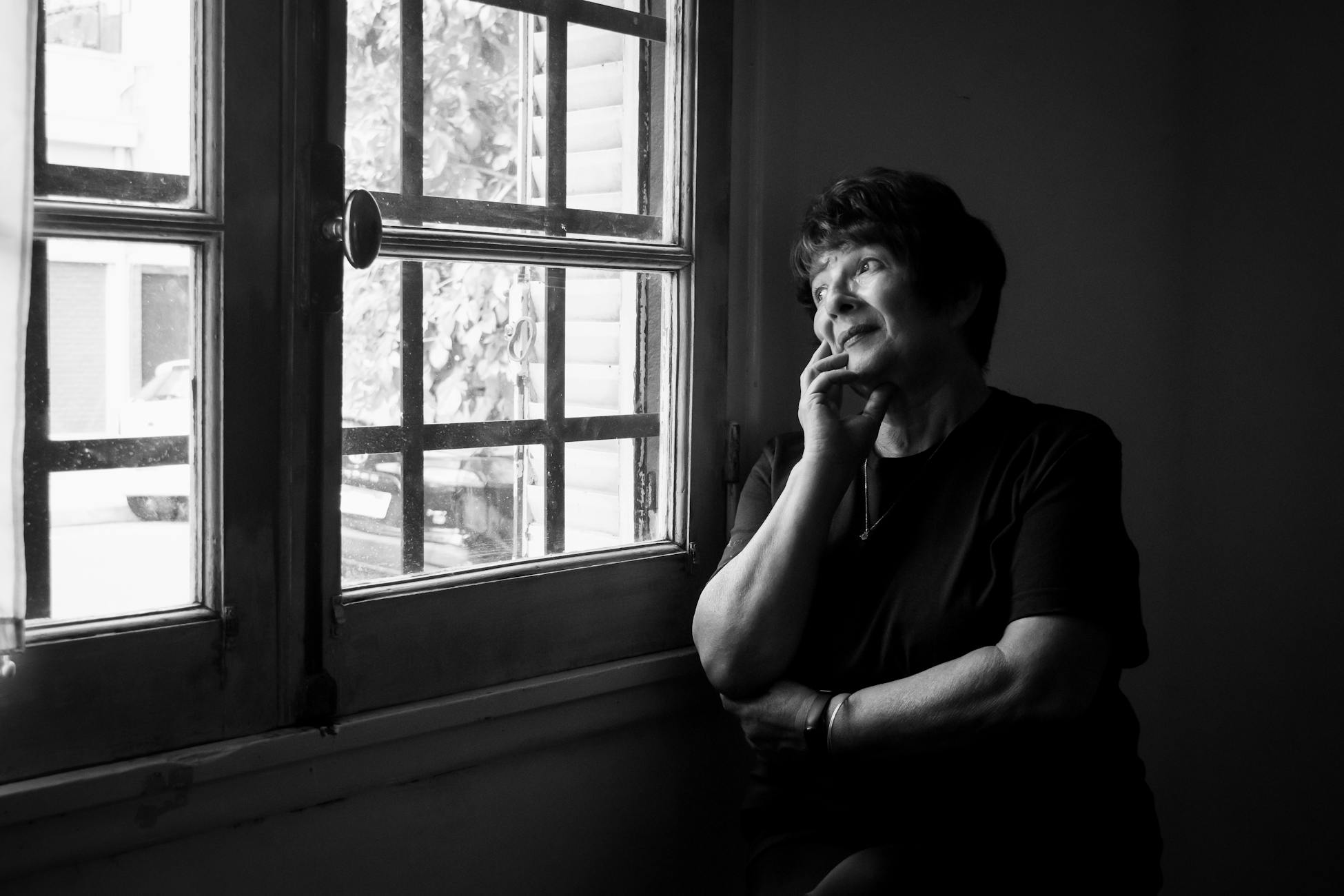
The marriage ended, partly for this reason and partly for many others, and in the wreckage I started reading psychology more seriously. I came across a piece of writing about why introverts exist at all, evolutionarily speaking. The argument was that human groups need both kinds of people: the ones who scan for opportunity and the ones who scan for risk, the ones who go out and the ones who stay back and notice. Neither was a defect. They were two halves of how a species survives.
I read that and cried in a way I had not cried about my marriage, which tells you something about how deep the apology had gone.
What the research actually says
Personality psychologists have been studying introversion for nearly a century, and the consensus has held remarkably steady. Introversion is not shyness. It is not social anxiety. It is not a lack of skills. It is a difference in how the nervous system processes stimulation, and it is one of the more stable traits we have, persisting across decades and circumstances.
What does change with age is the relationship between the trait and the person carrying it. A study from the University at Buffalo on late-midlife self-narratives found that adults in this stage of life tend to revise the way they tell their own story, with more acceptance and less regret. The trait stays. The shame around the trait can leave.
I find this finding moving in a way that has nothing to do with statistics. It matches what I watched happen, slowly, in my own forties. The temperament didn't change. The story I told about it did.
I started to notice, too, that some of the patterns I had treated as flaws were actually the source of whatever I had built that worked. The teaching career was possible because I could sit with one student's bad essay for an hour without losing patience. The writing was possible because I could be alone for entire mornings without feeling abandoned. The long marriage I am in now, the one to Linda, works partly because I no longer apologize for needing the chair in the corner, the door closed, the ninety quiet minutes before anyone else is awake.
The forties, when the apology runs out
Something happens to a lot of quiet people in their forties, and it is not exactly confidence. It is closer to fatigue. You wake up one morning and realize you have spent two decades apologizing for a way of being that several billion humans share, and the math of all that apologizing finally catches up with you. There simply isn't time left to keep doing it.
I remember the exact week I stopped. I had been invited to a colleague's retirement party at a loud restaurant in Manhattan. I went, stayed an hour, and left without explaining myself. On the subway home, I waited to feel guilty. The guilt didn't arrive. What arrived instead was a small, surprised relief, the kind you feel when you find out a debt you'd been carrying was never actually yours to pay.
I want to be careful here, because this is the place where essays like this usually slide into something triumphant, and I don't want to lie. The forties were not a victory lap. There was real grief in them, partly because I'd lost a husband by then, and partly because I had finally understood how much of my earlier life I had spent trying to be legible to people who were not going to read me carefully no matter what I did.
I went deeper on this in a video about life lessons I wish I'd known earlier, and the biggest one? Letting go of the need to be liked by everyone was the most freeing thing I ever did—turns out "becoming yourself" isn't about adding anything, it's about stopping the exhausting performance.

That kind of grief doesn't resolve cleanly. You don't get those years back. What you get instead is the ability to stop adding new years to the pile. You stop accepting invitations you'll resent. You stop performing warmth you don't feel. You start noticing that the people who actually love you have always loved the quiet version, and that the loud version was something you invented for an audience that wasn't paying attention anyway.
What introverts know that the culture is slow to learn
One of the more interesting recent shifts in how we talk about introversion has been the language of the social battery, the idea that interaction draws down a finite reserve that has to be refilled in solitude. It's an imperfect metaphor, but it's done useful work. It has given quiet people a way to describe themselves that doesn't make them sound deficient.
What the metaphor doesn't quite capture is that the battery isn't just for energy. It's also for attention. The reason quiet people often end up doing the careful work, the unglamorous work, the work that requires you to notice things other people miss, is that the same nervous system that makes parties exhausting makes attention possible. You can't have one without the other. The trait isn't a price you pay for nothing. It's a trade.
I have come to think that what looks like introversion in many adults is partly the residue of all that attention. You spend enough years really listening to people and you become reluctant to spend an evening pretending to. You spend enough years paying attention to your own internal weather and you stop being willing to ignore it just because someone's birthday party is on the calendar.
What I'd tell the woman in her twenties
I wouldn't tell her to stop trying. The trying was not wasted. It taught her how to function in rooms she would otherwise have avoided, and some of those rooms turned out to matter. I wouldn't even tell her she was fine the way she was, because that's the kind of platitude that bounces off a person who has been told her whole life that she isn't.
I'd tell her this instead. The thing you're trying to fix isn't broken, and the people telling you it is are mostly people who have never had to think about the shape of their own nervous system, because the world was built to fit it. You are not failing to become them. You are slowly, inconveniently, becoming yourself. The forties will not be a reward for the effort. They will be the decade you finally stop needing one.
And then she'd go back to whatever party she was getting ready to leave early, and I'd go back to my desk, and the morning would still be quiet, the way I have always preferred it.