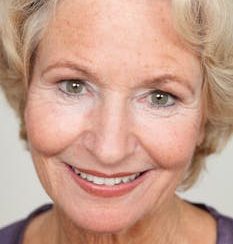
What might our later years look like if we rejected the slowing down narrative? If we understood that experience plus perspective plus the freedom that comes from caring less about others' opinions equals a powerful creative force?
Last year I accomplished more meaningful work than during any decade of my supposed prime, and this fact would have devastated the 40-year-old version of me who was already secretly mourning her fading relevance.
I spent so many years believing that productivity was a young person's game, watching my energy levels shift, feeling my knees protest after long days in the classroom, and assuming this meant my contributions to the world were diminishing.
What a terrible lie I told myself, and what a price I paid for believing it.
The myth that held me captive
Have you ever noticed how we talk about aging? We "slow down," we "decline," we "lose our edge." The language itself programs us for diminishment. When I turned 50, I remember sitting in a faculty meeting, watching a brilliant colleague present her innovative curriculum ideas, and thinking, "She's 35. Of course she has energy for this." I had already begun the insidious process of counting myself out, years before my body actually required any real accommodations.
During my teaching career, I watched this same phenomenon play out with countless students who believed they were "too old" to return to education at 25 or 30. I would encourage them, tell them age was just a number, that learning was lifelong.
Yet I couldn't extend that same grace to myself. When my knees started affecting my ability to stand for full class periods, instead of adapting, I saw it as evidence that my useful years were ending. The retirement party felt more like a funeral for my relevance than a celebration of 32 years shaping young minds.
What strikes me now is how this belief became self-fulfilling. Because I thought my productive years were behind me, I stopped reaching for new challenges. I declined opportunities to speak at conferences. I didn't submit my essays for publication. I put off learning new skills because what was the point? This wasn't wisdom; it was fear dressed up as acceptance.
The unexpected renaissance
Virginia Woolf once wrote that "a woman must have money and a room of her own if she is to write fiction." At 70, I finally had both, though not in the way I'd imagined. The room came through widowhood, a trade I never wanted to make. The money, a modest teacher's pension, freed me from the exhaustion of full-time work.
But most importantly, I had something Woolf didn't mention: the accumulated experiences of seven decades and the hard-won ability to trust my own voice.
Last year's productivity didn't announce itself with fanfare. It began with small acts of creation that I didn't initially recognize as productive. The birthday letters I write for my grandchildren to open at 25. The scholarship fund for first-generation college students that I helped establish with former colleagues. The weekly tutoring sessions with adult learners. Each activity felt natural, almost effortless, because they emerged from genuine care rather than obligation.
The essays came next. A friend suggested I write down the stories I'd been telling. "You have a way of making sense of this chaos," she said. So I started writing, and discovered that 32 years of grading papers had taught me more about structure and clarity than any workshop could. The rejection letters that arrived were almost amusing. After surviving a principal who actively tried to push me out, after weathering budget cuts that eliminated programs I'd built from scratch, a form letter from a magazine editor couldn't wound me.
By year's end, I'd been published. Not because I was racing against time, but because I finally had something to say and the patience to say it well. My morning routine, established not through discipline but through decades of understanding my own rhythms, created space for sustained thought. I wake naturally at 5:30, make tea, and write in my journal. Those 90 minutes yield more meaningful work than the scattered hours I used to steal between obligations in my thirties.
The decade I lost to fear
Sometimes I calculate the cost of believing productivity belonged to youth. Between 55 and 65, when I was "slowing down," I could have been accelerating in new directions. I could have started writing seriously. Could have pursued the doctorate I'd always wanted. Could have traveled to writing conferences, connected with other late-blooming authors.
Instead, I spent those years in a kind of pre-emptive mourning, grieving capacities I hadn't actually lost. I remember telling my daughter I was "too old" to learn Italian at 66. Too old! As if 66 was anything but the perfect age to finally have time for language study. The real tragedy wasn't aging; it was believing the story our culture tells about aging.
What might our later years look like if we rejected this narrative earlier? If we understood that experience plus perspective plus the freedom that comes from caring less about others' opinions equals a powerful creative force? I think about the writers who didn't publish until their 60s, the artists who found their true style in their 70s. They were people who refused to believe their own diminishment.
Final thoughts
Tomorrow morning I'll wake at 5:30, make my tea, and sit down to write. At 70, I have more material than I could use in three lifetimes, the perspective to know which stories matter, and finally, blessed finally, the audacity to believe my voice deserves space in the world.
This isn't productivity despite my age; it's productivity because of it.
If you're reading this and believing your best years are behind you, please know: the clock isn't running out. Perhaps, it's just getting interesting.