When a young grocery clerk burst into tears after snapping at an elderly customer, the 82-year-old woman's response—gently touching her hand and asking "Rough day, sweetheart?"—revealed a truth about aging that contradicts everything we think we know about who becomes kinder with time.
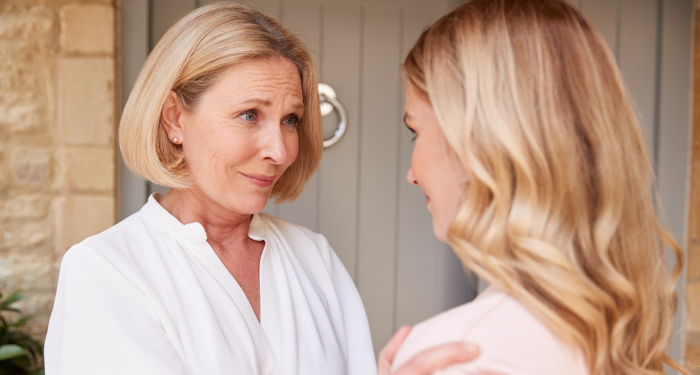
Last week, I watched my neighbor's face crumple when the grocery store clerk snapped at her for counting change too slowly. She's 82, arthritic fingers fumbling with coins, and instead of snapping back, she touched the young woman's hand and said, "Rough day, sweetheart?" The clerk burst into tears. Her mother was dying, she'd been up all night at the hospital, and my neighbor just stood there, holding her hand while the line grew behind them.
That moment captures something I've been thinking about since retiring from teaching. Why do some people grow gentler with age while others grow harder? The answer isn't what you'd expect.
The myth of the unmarked life
We tell ourselves stories about suffering. The biggest one? That people who become kinder must have had it easier. But Lachlan Brown puts it perfectly: "As we age, two people can face identical losses—a spouse, their health, their careers—yet one becomes softer and more giving while the other tightens their grip on everything, and the difference has nothing to do with how much they lost."
I've seen this truth play out countless times. Two colleagues lost their husbands within months of each other. One now volunteers at the hospice center, making sure no one dies alone. The other hasn't left her house in three years except for groceries. Same loss, different choices about what to do with it.
The research backs this up. A study on compassion in older adults found that those who reported higher levels of compassion had actually experienced more significant life events, not fewer. They weren't protected from suffering; they'd walked straight through it and somehow emerged softer.
The daily decision nobody sees
Here's what I learned watching my second husband during his struggle with Parkinson's: the decision to stay open happens in moments so small you don't realize you're making them. When that stranger collapsed next to me, sobbing about her son's overdose, I could have pretended not to notice. Instead, I offered her my last tissue and held her while she cried. That wasn't some grand gesture of evolved wisdom. It was just choosing, in that instant, not to let my own fear make me turn away from someone else's.
"Suffering does not make people bitter. The story they build around their suffering does," writes Justin Brown. After 32 years of teaching, I can tell you he's right. I watched students face identical traumas and emerge with completely different worldviews. The difference wasn't in what happened to them but in the story they told themselves about what it meant.
When suffering becomes wisdom
Do you know what Christine Langley Obaugh means when she says, "We repeat what we do not repair"? I discovered it watching myself snap at my daughter exactly the way my mother snapped at me, using the same tone, even the same words. But here's what matters: catching yourself in that moment and choosing differently next time. Not because you're suddenly enlightened, but because you've decided that particular pain stops with you.
That choice is the hinge everything else swings on.
When my knees gave out and forced early retirement, I spent weeks raging at my body's betrayal. Then I met a woman at physical therapy who'd lost both legs in an accident. She was learning to walk again, cracking jokes with the therapists, bringing homemade cookies for the staff. I asked her once how she stayed so positive. She looked at me like I'd asked why water was wet. "What's the alternative?" she said. "Being miserable changes nothing except how much joy I squeeze from whatever time I have left."
Research shows that engaging in prosocial behaviors like kindness and compassion actually reduces stress reactivity and enhances overall health. But you don't need a study to tell you what you already feel: when you choose gentleness despite having every reason not to, something in your body relaxes. The clenched fist of old hurt starts to open.
The neuroscience of letting go
The difference between processing a loss and accumulating it is neurological. Our brains literally rewire based on how we handle pain. Every time you choose openness over closing off, you're laying down neural pathways that make the next choice easier.
I think about this when I visit my mother, whose Alzheimer's has stolen everything except her sweetness. Even in her confusion, she compliments the nurses, tries to comfort other residents who are crying. It's like kindness became so deeply wired into her that even when everything else fell away, that remained. Studies on self-compassion in older adults suggest it plays a crucial role in psychological adjustment during challenging times. My mother, without knowing any of this science, proves it daily.
The biology of becoming
Dr. Paul J. Zak's research reveals something fascinating: "People who release the most oxytocin in the experiment were not only more generous to charity, but also performed many other helping behaviors." Our bodies are literally designed to reward kindness, creating a biological feedback loop that makes generosity feel good.
But here's what the research doesn't capture: how it feels at 5:30 AM when arthritis makes getting out of bed feel like climbing a mountain, and you do it anyway to make tea for your neighbor who just lost her husband. Or how your heart changes when you tutor someone learning to read at 45, watching them sound out words the way your grandchildren did. These moments don't just release oxytocin; they remake you at a cellular level.
Time changes everything except what matters
Laura L. Carstensen's work on socioemotional selectivity theory explains why we become more selective about relationships as we age. When you realize time is limited, you stop wasting it on people who drain you. This isn't becoming bitter; it's becoming wise.
After my second husband died, I joined a widow's support group thinking I'd find sadness. Instead, I found the most alive women I'd ever met. We laugh until we cry, sometimes cry until we laugh. We've all lost the loves of our lives, yet somehow that shared loss made us more capable of joy, not less. We know what matters because we've lost it. We know time is precious because we've watched it run out.
In one of my previous posts about finding purpose after loss, I wrote about discovering that grief doesn't shrink; you grow larger around it. What I didn't understand then but do now is that growing larger means making room for other people's pain too, not just your own.
Final thoughts
That neighbor at the grocery store? She went back the next day with flowers for the clerk. Not because she's a saint, but because she remembers being young and overwhelmed, remembers her own mother's death, remembers a thousand moments when someone's unexpected kindness saved her.
But here's the part of this story we don't like to sit with: kindness that comes from suffering is not the same as kindness that comes from comfort, and we almost never ask which one we're actually practicing. The comfortable version costs nothing. It asks nothing of you. It's the kind you perform when everything in your life is going fine and generosity feels like a luxury you can afford. The other kind — the kind my neighbor carries, the kind forged in hospital hallways and funeral homes and nights you weren't sure you'd survive — that kind requires you to touch the exact wound you'd rather forget, every single time, and stay there long enough to be useful to someone else. Most people who call themselves kind have never once done that. They've been pleasant, agreeable, well-mannered. But they haven't been kind in the way that costs something.
So the uncomfortable question isn't whether suffering will make you kinder. It's whether you've ever actually been tested — and if you haven't, whether the kindness you're so proud of is kindness at all, or just the absence of any reason to be otherwise.
What’s Your Plant-Powered Archetype?
Ever wonder what your everyday habits say about your deeper purpose—and how they ripple out to impact the planet?
This 90-second quiz reveals the plant-powered role you’re here to play, and the tiny shift that makes it even more powerful.
12 fun questions. Instant results. Surprisingly accurate.