At seventy, I discovered the most liberating truth of aging: the people who matter have already been keeping me alive in their daily rituals and borrowed gestures, while those I've been desperately performing for forgot me years ago.
For decades, I carried the weight of needing to matter to everyone. Every parent-teacher conference, every faculty meeting, every family gathering felt like an audition for remembrance. Would they think well of me? Would they remember this conversation? Would I leave a mark?
The people who will remember you are already remembering you. The people who won't have already stopped. This is the thing I couldn't see for most of my life, the thing that took seventy years and a teaching career and a dead husband and a recipe box full of strangers' names to finally understand. Nothing I do between now and the end is going to change either of those lists very much. And rather than filling me with dread, that realization has made me freer than I have ever been.
I taught high school English for thirty-two years. You'd think that would mean thousands of people carry my name. The truth is simpler. Maybe fifty students genuinely hold something I taught them. Maybe twenty remember my name. Maybe five think of me more than once a year. These numbers used to wound me. Now they feel exactly right.
My daughter calls me every Sunday evening without fail. We started this ritual when she left for college, and twenty-four years later, she still dials my number at 7:30 sharp. She doesn't call because she's trying to be a good daughter or because she's worried about my legacy. She calls because that's what we do. That's who we are to each other. She's already remembering me, has been remembering me all along, in the very act of reaching for the phone.
What I learned from my second husband's death
When my husband died two years ago, after a long battle with Parkinson's, I thought the grief would center on all the future memories we wouldn't make. Instead, I found myself overwhelmed by the realization that I was now the sole keeper of thousands of tiny moments no one else witnessed. The way he hummed while shaving. His elaborate ritual for making morning coffee. The face he made when he was pretending to understand technology but was completely lost.
Who would remember these things when I was gone? The answer came slowly but surely: no one. And that had to be okay.
During those first brutal months of widowhood, I started paying attention to how memory actually works. My mother has been gone for fifteen years, but I still hear her voice when I'm hemming a skirt wrong. My father died eight years ago, but his laugh lives on in my son's identical burst of joy. They're not remembered in some grand, complete way. They exist in fragments, in gestures, in unexpected moments of recognition.
The freedom of letting go
Do you know what happened when I stopped trying to secure my place in everyone's memory? I started living. Really living, not performing life for an audience that wasn't even watching.
I took up watercolor painting. I'm terrible at it. My landscapes look like something a child might produce, and my flowers are barely recognizable. But I'm at the community center, brush in my arthritic hand, making a glorious mess. The woman next to me won't remember me in twenty years. But right now, we laugh about our mutual inability to paint clouds, and that present moment has become more valuable than any future memory.
I volunteer at the women's shelter, teaching resume writing and interview skills. When one of my students finally got that job interview last month, she cried. I cried. Her children, who will benefit from their mother's employment for generations, will never know my name. They don't need to. The ripple doesn't require attribution to be real.
Understanding who already remembers
Here's what became clear to me gradually, like developing a photograph in a darkroom: the people who will remember me are already doing it. My son, who calls me every time he makes a difficult parenting decision, wanting to talk it through. My grandchildren, who know that every other Saturday means the library with Grandma. My neighbor, who has a copy of my house key and checks on me when I don't bring in my mail by noon. These people don't need me to earn their remembrance. I'm already woven into their days, their decisions, their understanding of how the world works. My grandson, just eight, told his teacher that his grandmother says you should read books that make you ask questions, not just ones that give you answers. He's already carrying me forward, already remembering, though he won't understand this for years.
And what about the people who won't remember? My first husband, who left when our children were toddlers, erased me from his story decades ago. The principal who tried to push me out early in my career has probably forgotten my name. The friends who disappeared during my divorce, the relatives who only called when they needed money, the colleagues who competed rather than collaborated.
They've already forgotten, and nothing I do now will resurrect their memory of me.
The surprising comfort of being forgotten
Virginia Woolf wrote, "The beauty of the world has two edges, one of laughter, one of anguish, cutting the heart asunder." At seventy, I understand this differently than I did when I first taught it to sixteen-year-olds. The anguish isn't in being forgotten. The anguish is in fighting against the natural rhythm of memory and forgetting.
Last month, I ran into a former student at the pharmacy. She looked right through me, no recognition in her eyes. Twenty years ago, this would have devastated me. I had spent hours on her college recommendation letters, stayed after school to help her with her essays, celebrated when she got into her dream school. But standing there in the pharmacy, I felt only a gentle acceptance. She took what she needed from our time together and moved on. That's exactly how it should be.
Meanwhile, another former student, Marcus, sends me a Christmas card every year with updates about his children and his writing. He remembers not because I was a better teacher to him, but because something in our connection stuck. You can't force these connections. They either take root or they don't.
Living without a net
When you accept that the lists are already written, that the people who will remember you are already remembering and the ones who won't have already forgotten, something shifts. You stop performing. You stop auditioning for a role in other people's memories. You stop trying to be memorable and start trying to be present.
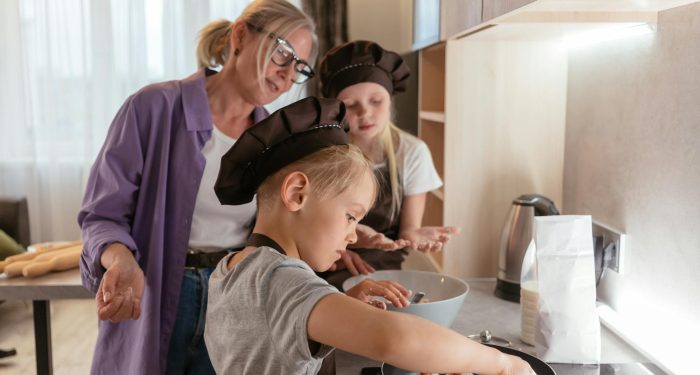
I bake bread on Sundays, not because my grandchildren will remember me as the grandmother who baked bread, but because I love the feel of dough beneath my palms. I keep a garden, though my knees protest every time I kneel to weed, not because it will be my legacy but because growing things connects me to every woman in my family who grew things before me.
When I write, which I've been doing seriously since retirement, I'm not trying to leave something behind. I'm trying to understand something now. The essays I publish in small literary magazines will disappear into the ether. The stories I tell will be forgotten. But the act of writing them changes me, and that's enough.
The mathematics of memory
If you do the math, it's humbling. Let's say you live to be eighty and you meaningfully touch one hundred lives. Within a generation after your death, maybe twenty people actively remember you. Within two generations, maybe five. Within three, you're a name on a genealogy chart, a face in an old photograph that no one can quite place.
This used to feel like failure. Now it feels like freedom.
Because here's what else the math tells you: right now, in this moment, you are actively remembering maybe fifty people who have shaped you. That's all your heart can hold. And you're being actively remembered by maybe the same number. That's not insignificant. That's magnificent.
Those fifty people you remember? You carry them in how you speak to strangers, how you comfort children, how you make coffee, how you cope with disappointment. They don't need monuments. They live in your daily choices.
What my mother's recipe box taught me
After my mother died, I inherited her recipe box. Decades of index cards, stained and bent, covered in her precise handwriting. Most of the recipes came from other women, names I don't recognize, women who are surely gone now. "Mrs. Patterson's Apple Cake." "Dolores's Best Pot Roast." "Anne's Christmas Cookies."
These women are forgotten in the traditional sense. I know nothing about them except that they shared recipes with my mother. But when I make Mrs. Patterson's apple cake, something of her continues. Not her name, not her face, not her story, but this one good thing she knew how to do.
This is how most of us live on. Not in biographies or memorial plaques, but in small competencies passed forward. The way we taught someone to parallel park. The book we recommended that changed someone's perspective. The kindness we showed that became a model for someone else's kindness.
Final thoughts
At seventy, I've stopped being afraid of being forgotten because I finally understand that memory isn't a monument we build but a river that flows. Some drops of water make it all the way to the ocean. Most evaporate along the way. Both are necessary. Both are natural.
The people who will remember me don't need me to do anything more to earn that remembrance. My daughter will call someone she loves on Sunday evenings long after I'm gone. My grandchildren will make messes in their kitchens and remember it's okay.
Last week I pulled a stained index card from my mother's recipe box — Mrs. Patterson's Apple Cake — and noticed, for the first time, a small pencil note in the margin in handwriting that wasn't my mother's. It said, "Better with a little more cinnamon." I don't know who wrote it. I added the cinnamon anyway.
What’s Your Plant-Powered Archetype?
Ever wonder what your everyday habits say about your deeper purpose—and how they ripple out to impact the planet?
This 90-second quiz reveals the plant-powered role you’re here to play, and the tiny shift that makes it even more powerful.
12 fun questions. Instant results. Surprisingly accurate.