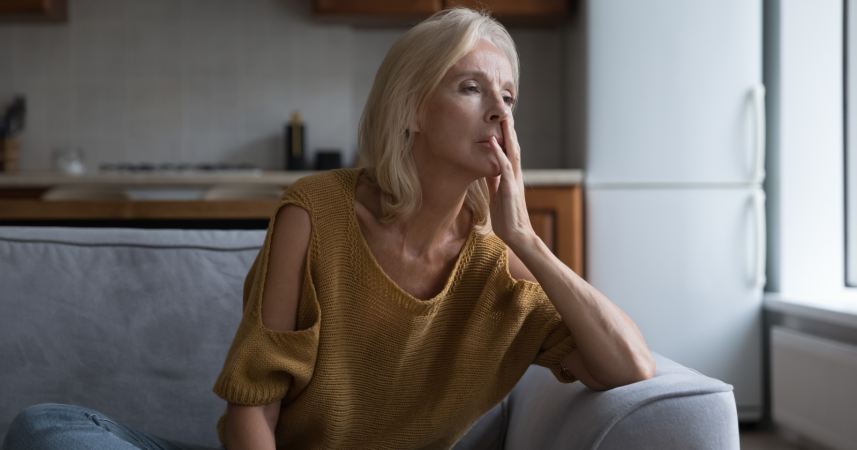
After decades of meeting everyone else's needs, a retired teacher discovers that finding who she was before motherhood, work, and caregiving consumed her life reveals something far more profound than lost dreams—it unveils a truth about identity that only comes from having given everything away.
Last week, I found a journal from 1972, the year I turned twenty-one. The handwriting was mine but the dreams belonged to a stranger. She wanted to backpack through Europe, write poetry, maybe open a bookstore. She signed her entries "Marlene," a name I still use today.
The weight of becoming what's needed
I was fifty-eight, sitting at my kitchen table on a Tuesday evening, when I opened a blank notebook and wrote the words "Things I want" at the top of the page. Then I sat there for eleven minutes — I know because the clock on the stove was directly in my line of sight — and could not produce a single entry. Not one. I could have filled pages with what my students needed, what my grown children needed, what my aging mother needed. But the question of what I wanted had become so foreign it was like being asked to write in a language I'd once spoken fluently and had let go.
That silence at the kitchen table unsettled me more than any crisis I'd weathered. Crises, at least, came with instructions: show up, hold steady, fix what you can. This was different. This was the discovery that somewhere between twenty-one and fifty-eight, I had become so fluent in other people's needs that I'd lost the vocabulary for my own.
Do you remember the first time someone really needed you? Not wanted you or enjoyed your company, but needed you in that bone-deep way that changes the geography of your days? For me, it happened when my husband left me with two toddlers. I was twenty-eight, suddenly alone, and my children needed me in ways that reorganized my entire existence.
As my children grew, that gap became a canyon. There's something about holding your child at 3 AM, knowing you're their entire world, that reorganizes your molecular structure. You don't just care for them; you become the vessel for their needs. My son Daniel needed consistency after his father left, so I became predictable as sunrise. My daughter Grace needed encouragement through her struggles, so I became endlessly patient, even when patience felt like sandpaper on my nerves.
The invisible transformation
Teaching high school for thirty-two years meant being needed by hundreds of teenagers, each carrying their own secret catastrophes. You learn to read the signs: the suddenly sleepy student might be working nights to help pay rent, the class clown might be deflecting pain sharp enough to cut. You become a shapeshifter, morphing into whatever each child needs to survive the day.
But here's what nobody tells you about spending decades meeting others' needs: you get really good at it. So good that people start to see you as inexhaustible. The principal who assigns you the troubled kids because "you have a way with them." The adult children who still call you first with every crisis. The aging parents who assume you'll handle the hard conversations with doctors. You become so reliable that your own needs seem almost embarrassing, like wearing white after Labor Day or crying in public.
I remember standing in my classroom after school one day, maybe fifteen years into teaching, staring at the motivational posters I'd hung with such hope. "Be yourself," one proclaimed in cheerful yellow letters. I actually laughed out loud. When, exactly, was I supposed to do that? Between grading essays and driving my mother to appointments? During parent conferences or while helping my daughter through postpartum depression?
The unraveling that leads to discovery
Virginia Woolf wrote, "It is only by putting it into words that I make it whole." I didn't understand that until my sixties, when the needing began to quiet. My children were grown, my mother gone, retirement approaching. The silence was deafening.
Who are you when nobody needs you to be anything? It's a question that can send you spiraling. I spent months after retirement at sixty-four wandering my house like a ghost, straightening already-straight pictures, reorganizing organized closets. My second husband would find me standing in the garden, staring at nothing, and ask what I was thinking. "I don't know," I'd answer, and it was the truth.
The search for who I'd been before the needing started felt archaeological. I dug through old photos, looking for clues in my younger face. There I was at nineteen, arms thrown wide on a mountain trail. At twenty-five, dancing at a friend's wedding with abandon I'd forgotten I possessed. At thirty, laughing so hard at something my toddler had done that the photo was blurred. When had I stopped moving through the world with such openness?
Learning to need again
The revelation came slowly, the way morning light fills a room. I hadn't just forgotten who I was before others needed me; I'd forgotten that I was allowed to need things too. Not just the obvious things like food and shelter, but the subtle hungers that make us human. The need for beauty that sends us to museums. The need for connection that has us calling old friends. The need for purpose that isn't tied to anyone else's survival.
I started small. Joined a watercolor class where my only job was to create. Nobody's future depended on my success. The imperfect paintings I produced served no one's needs but my own delight in creating something entirely mine.
Have you ever watched a plant that's been in shade suddenly reach toward newfound light? That was me at sixty-six, signing up for things with the recklessness of someone who'd forgotten she was allowed to choose. Yoga in the mornings. A book club that read literary fiction. A writing workshop where I finally put words to years of silent observation.
The integration of selves
Here's what I discovered: looking for who you were before the needing started is like trying to find your childhood home and expecting it to be unchanged. That girl who wanted to backpack through Europe? She's still here, but she's been transformed by every person she's served, every crisis she's weathered, every love she's given and received.
I want to say the integration is seamless — that the woman who spent nights walking a colicky baby and the one who once danced until dawn fit together like puzzle pieces. But I'm not sure that's honest. Some of what I gave away, I gave away permanently. The years I might have spent writing poetry were spent grading essays instead, and no amount of watercolor classes at sixty-six returns those years to me. The teacher who fought for her students' futures carries something of the girl who wanted to change the world, but she also carries the weight of wondering what that girl would have become if she'd been allowed to keep going.
Now, at seventy, when I work with women at the shelter, I see my younger self in their exhausted faces. I want to tell them what I've learned: that being needed is holy work, but so is needing. That you can give yourself away and still remain whole. That the person you're looking for isn't lost; she's just waiting for you to remember that she matters too.
Final thoughts
Last month, my granddaughter asked me who I wanted to be when I grew up. "I'm already grown up," I laughed, but she shook her head with eight-year-old solemnity. "You're still growing, Grandma."
Maybe she's right. But the answer to who I was before the needing started turned out to be less clear than expected, and I'm no longer certain it was the wrong question. I go back to that journal from 1972 sometimes, running my fingers over the handwriting of a girl who signed herself "Marlene" with such confidence. I use that name still. But when I try to trace a clean line between her and the woman holding the journal now — the mother, the teacher, the widow, the grandmother — the line breaks in places I can't mend.
I don't know whether the original Marlene would recognize who I became, or whether she'd grieve for the paths I closed when I chose to be needed. Some mornings I wake up and the question feels settled. Other mornings it doesn't. Perhaps that's the truest thing I can say about looking for yourself after decades of looking after everyone else: you find someone, but you're never entirely sure who's missing.