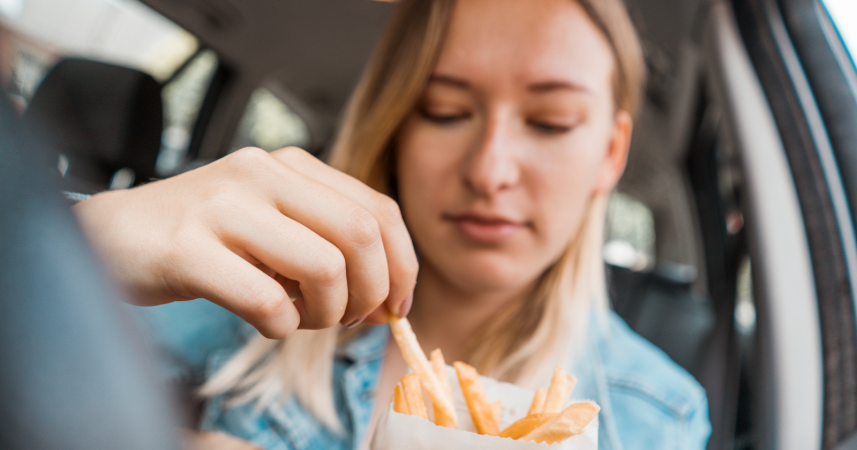
While modern wellness culture demonizes emotional eating as weakness, psychologists are discovering what your grandmother always knew: that midnight bowl of pasta might be the most accessible, immediate, and genuinely effective emotional regulation tool you have — and there's nothing wrong with using it wisely.
We've been told for decades that emotional eating is a weakness. A failure of willpower. Something to overcome with the right diet plan or enough self-control.
But what if we've been looking at this completely backwards?
The truth about food and emotions nobody talks about
Every culture on Earth has comfort foods. Japanese have ochazuke for late-night solace. Italians swear by their nonna's pasta when life gets tough. Indians reach for khichdi when they need grounding. These aren't accidents of culinary history – they're thousands of years of collective wisdom about how humans actually regulate emotions.
Yet somehow, we've convinced ourselves that using food for comfort is inherently broken behavior.
Here's what really happens: You've had a brutal day. It's late. Your partner's asleep. Your friends are busy living their own lives. The gym closed hours ago. Your therapist doesn't answer texts at midnight.
But the kitchen? Always there. Always available. No appointment needed.
Erin Leonard, Ph.D., a psychotherapist, points out something crucial: "Food is often used to cope with emotion. For example, a person who feels shame about who he or she is may restrict food in order to punish himself or herself and alleviate shame."
Notice how she frames it? Food isn't just about adding comfort – it's a complex emotional tool we use in multiple directions. We restrict, we indulge, we share, we withhold. It's a language our bodies understand when words fail us.
Why your brain treats food like medicine
Think about the last time you felt truly overwhelmed. What did your body crave? Probably not a salad.
There's hard science here. When we eat certain foods – especially those high in carbs or fat – our brains release neurotransmitters that genuinely alter our emotional state. This isn't imaginary. It's biochemistry.
The immediate relief food provides isn't a bug in the system. It's a feature that kept our ancestors alive through famines, wars, and winters that seemed endless. Your great-grandmother who made soup for every crisis wasn't being irrational. She was using the most reliable emotional regulation tool available to her.
I learned this the hard way during a Thanksgiving years ago. My grandmother had spent days preparing her famous spread, and when I politely declined most dishes due to my dietary choices, she actually cried. Not because of the food itself, but because in her world, feeding people was how she said "I love you" when words weren't enough.
The modern dilemma we created for ourselves
Here's where things get complicated. Arash Emamzadeh notes that "Eating palatable foods—commonly, foods that are sweet, fatty, or high in carbs—may improve our mood temporarily, but that short-lived comfort comes at the cost of weight gain and other health issues."
But notice the key word there: "temporarily."
Every emotional regulation strategy is temporary. Exercise endorphins fade. Meditation ends. Therapy sessions conclude. Even the best conversation with your closest friend eventually wraps up.
So why do we hold food to a different standard?
The real issue isn't that food provides temporary relief. It's that we've engineered foods specifically designed to hijack our emotional regulation systems while simultaneously telling people they're weak for falling for it. We've created the perfect storm: ultra-processed foods that light up our brains like slot machines, combined with a culture that shames us for seeking comfort where we can find it.
What actually works (hint: it's not what diet culture tells you)
Have you ever noticed how people who have the healthiest relationship with food rarely talk about restriction?
They understand something fundamental: food is information. Sometimes it's nutritional information. Sometimes it's emotional information. Sometimes it's social or cultural information. All of these are valid.
Recent research backs this up. A meta-analysis of 96 studies revealed medium-to-large effect sizes for the associations between both adaptive and maladaptive emotion regulation strategies and eating disorders, indicating that how individuals regulate emotions significantly influences eating behaviors.
The key word there? "Adaptive."
Using food emotionally isn't automatically maladaptive. It becomes problematic when it's your only tool, when it disconnects you from your body's signals, or when the foods you're choosing consistently work against your wellbeing.
But a bowl of soup when you're sad? Your mother's recipe when you're homesick? A piece of chocolate after a hard conversation? These aren't failures. They're human.
Rewriting the story
What would change if we stopped treating emotional eating as the enemy and started seeing it as information?
When you reach for food emotionally, you're telling yourself something important. Maybe you need comfort. Maybe you need a pause. Maybe you need to feel connected to something familiar and safe.
The solution isn't to eliminate this tool entirely. It's to expand your toolkit.
I've noticed in my own life that the times I rely most heavily on food for emotional regulation are when I've let my other tools get rusty. When I haven't been reading the behavioral science research that grounds me. When I skip my morning photography walks. When I stop making time for the music that feeds a different kind of hunger.
The goal isn't to never eat emotionally. It's to eat emotionally with awareness, with choice, and with compassion for the very human need to find comfort in an uncomfortable world.
Wrapping up
Maybe it's time we stopped pathologizing one of humanity's oldest coping mechanisms and started asking better questions.
Not "How do I stop emotional eating?" but "What is my emotional eating trying to tell me?"
Not "What's wrong with me?" but "What do I need right now?"
Food will always be there at 11 PM when nothing else is. That's not a weakness to overcome. It's a reality to work with.
The trick isn't eliminating this tool from your emotional toolkit. It's making sure it's not your only tool. It's choosing foods that actually serve you when you need them. It's recognizing that sometimes, your grandmother's soup really is medicine – just not the kind that comes with a prescription.
Every culture knew this before we forgot. Maybe it's time we remembered.