When the parents who taught you empathy and critical thinking become unrecognizable strangers spouting cable news talking points, you discover a form of grief that has no name, no sympathy cards, and no space to exist—except in the hollow silence of car rides home and the careful choreography of pretending everything is fine.
There's a particular kind of silence that fills the car after visiting my parents these days. It's not peaceful or comfortable. It's the silence of things unsaid, of conversations that can't happen, of a relationship that exists now mostly in memory.
I've been thinking a lot about grief lately. Not the kind that comes with death certificates and funeral arrangements, but the messier kind. The kind that happens when the people you love are still sitting across from you at the dinner table, passing the potatoes, asking about work, but the connection that once held you together has quietly dissolved.
The invisible loss nobody prepares you for
When someone dies, society has protocols. There are sympathy cards, bereavement leave, support groups. People bring casseroles. They understand why you might cry at random moments or need to talk about your memories. The loss is recognized, validated, given space to exist.
But what about when you lose someone who's still alive?
I've watched my parents transform over the past several years into people I struggle to recognize. The shift wasn't sudden. It crept in through forwarded emails I'd delete without reading, through casual comments at dinner that made me wince, through a constant background of news commentary that seemed designed to keep them angry. Then came the certainty about things they had once been curious about, the hardening of opinions that had once been open, the increasingly heated social media posts about a version of the world that didn't match the one I was living in.
The parents who raised me to be curious, to question authority, to treat everyone with respect, now speak in talking points I've heard verbatim on cable news. The mother who taught me to think critically accepts conspiracy theories without question. The father who emphasized the importance of character supports politicians who embody everything he taught me to reject.
The weight of pretending everything is fine
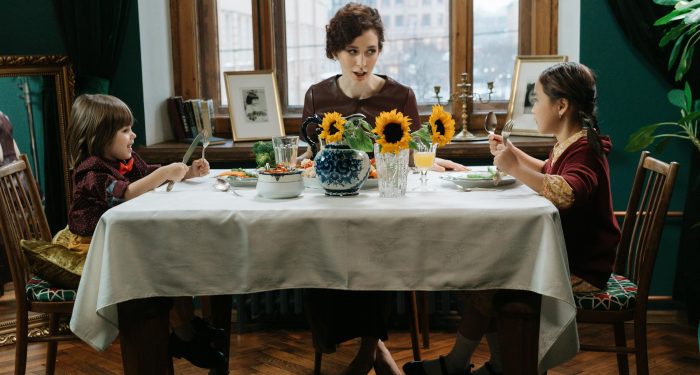
Every family gathering has become a carefully choreographed dance of avoidance. We talk about the weather, the garden, anything but the elephant that's not just in the room but has basically moved in and redecorated. I've become an expert at redirecting conversations, at keeping things surface-level, at smiling and nodding while my chest feels tight.
Last Thanksgiving, sitting at the same table where I learned to say please and thank you, where we used to have spirited but respectful debates about everything from music to philosophy, I realized I was grieving. Not for parents who had passed away, but for parents who were right there, asking if I wanted more stuffing, completely unaware that their child was mourning them.
The psychological term for this is "ambiguous loss." It's what happens when someone is physically present but psychologically absent, or vice versa. It's what families of people with dementia experience. It's what happens when someone you love fundamentally changes but their body remains the same.
Why we can't just "agree to disagree"
People who haven't experienced this often say things like "just don't talk about politics" or "family is more important than politics." They don't understand that this isn't about different views on tax policy or foreign affairs. This is about fundamental values, about the core of who we are as people.
When my grandmother, who volunteers at the food bank every Saturday, starts repeating talking points about "welfare queens" and "illegals," it's not just politics. It's a betrayal of everything I thought she stood for. When she drove six hours to bring me soup when I had the flu in college, that was the grandmother I knew. The person who now shares articles about how my generation is destroying America feels like a stranger wearing her face.
The disconnect is jarring. These are the people who taught me empathy, who told me to stand up for the underdog, who modeled kindness and generosity. Watching them champion cruelty and division feels like watching someone speak fluently in a language they never learned. It doesn't compute.
I've read enough psychology to understand some of what's happening. The amygdala, our brain's fear center, can actually override the prefrontal cortex when we feel threatened. Continuous exposure to fear-based media literally changes how our brains process information. Add in confirmation bias, tribal psychology, and the dopamine hits from social media outrage, and you have a perfect recipe for transformation.
Understanding the mechanics doesn't make it hurt less.
The loneliness of unshared grief
Perhaps the hardest part is carrying this grief alone. When a parent dies, people understand why you might need to talk about them, to process your loss, to share memories. But how do you explain that you're mourning parents who are still posting on Facebook, still calling on Sundays, still expecting you for Christmas?
There's no socially acceptable way to say "I miss my parents" when they're still alive. Friends who haven't experienced this kind of loss don't understand. They see it as dramatic, as choosing politics over family. Those who have been through it understand too well, but our shared understanding often feels more like a support group for a condition nobody wants to acknowledge exists.
I find myself grieving in private moments. Scrolling through old photos from family vacations when discussions were about where to eat dinner, not whether democracy is dying. Reading birthday cards from years ago, written in the same handwriting but by someone who feels gone now. Remembering conversations with the parents who raised me, who I could talk to about anything, who felt like home.
The grief comes in waves. Sometimes it's triggered by seemingly small things. A forwarded conspiracy theory. A comment about "those people." A Fox News alert on their phone. Each one a small reminder of the distance between who they were and who they are now.
Learning to live with the contradiction
I've had to accept that two things can be true simultaneously: I can love my parents deeply while also grieving the loss of who they used to be. I can show up for family dinners while maintaining boundaries around what I'm willing to discuss. I can honor the people who raised me while acknowledging they've become people I wouldn't choose to spend time with if they weren't family.
This kind of ambiguous grief doesn't resolve neatly. There's no funeral after which you begin to heal. No moment of closure. Instead, it's an ongoing process of adjustment, of finding ways to love people across a chasm that feels impossible to bridge.
I've started treating visits home like visiting a foreign country where I once lived. I know the language, the customs, the layout of the streets, but the culture has shifted in ways that make me feel like an outsider. I can navigate it, even find moments of connection and warmth, but I no longer feel at home there.
Some days I wonder if they grieve for me too, in their own way. If they miss the child who used to agree with them, who shared their worldview, who they could talk to without walking on eggshells. Maybe we're all grieving each other, sitting at the same table, pretending nothing has changed.
Wrapping up
If you're reading this and recognizing your own experience, know that your grief is real and valid, even if there's no Hallmark card for it. You're allowed to mourn the loss of relationships that still technically exist. You're allowed to feel heartbroken about people who would be hurt to know you're heartbroken about them.
This unnamed grief deserves recognition. It deserves space. It deserves the same compassion we extend to any other form of loss.
The parents I knew might be gone, but I carry the lessons they taught me, the values they instilled before fear and anger took hold. In a strange way, honoring who they were means standing against who they've become. The empathy they taught me extends even to them, even as I mourn the space between us.
There's no neat ending to this story because it's still being written. Every holiday, every phone call, every family gathering is another chapter in learning to love people across a divide that feels unbridgeable. It's exhausting and heartbreaking and sometimes I wonder if it's worth it.
But then I remember that grief is love with nowhere to go. The fact that this hurts so much means that what we had mattered. The relationship might be irreparably changed, but the love, complicated as it now is, remains.
Even if there's no card for that in the sympathy aisle.