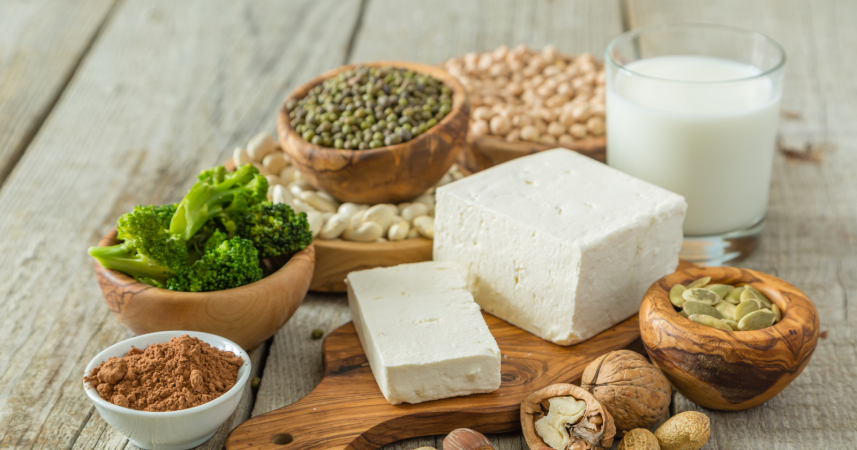
After years of popping expensive calcium pills, I discovered that whole food sources were not only cheaper but far more effective for my body.
For three years after going vegan, I dutifully swallowed calcium supplements every morning.
My medicine cabinet looked like a small pharmacy, and my monthly supplement bill rivaled what I used to spend on fancy coffee. I told myself it was the responsible thing to do, the price of ethical eating.
Then my doctor ran some bloodwork and gently pointed out that my calcium levels were barely adequate despite all those pills. She asked about my diet, and when I rattled off my daily meals, she smiled.
"You're probably absorbing more calcium from that morning smoothie than from those expensive tablets," she said. That conversation sent me down a research rabbit hole that completely changed how I think about nutrition.
Here are the five calcium sources that now anchor my diet, and why they work better than anything I ever bought in a bottle.
1) Fortified plant milks: the everyday workhorse
I used to think fortified foods were somehow "cheating" or inferior to whole foods. That changed when I learned that fortified plant milks often contain as much calcium as dairy milk, around 300mg per cup.
The calcium added to these products is typically calcium carbonate or tricalcium phosphate, both highly bioavailable forms that your body can actually use.
Now I go through about a quart of oat milk weekly. It goes in my morning coffee, my post-run smoothies, and the occasional bowl of cereal when I'm feeling nostalgic. The key is shaking the carton well before pouring, since the calcium can settle at the bottom.
Have you checked the nutrition label on your plant milk lately? Not all brands fortify equally, so it's worth a quick comparison.
2) Tofu made with calcium sulfate: the protein-calcium combo
Here's something I wish I'd known earlier: not all tofu is created equal when it comes to calcium. Tofu made with calcium sulfate as a coagulant can deliver a remarkable 250-400mg of calcium per half-cup serving. That's a significant chunk of the 1,000mg daily recommendation for most adults.
I started paying attention to ingredient labels at the grocery store, and now I specifically seek out brands that use calcium sulfate.
The texture is identical, the taste is the same, but the nutritional profile is dramatically better. I cube it into stir-fries, crumble it into scrambles, and blend silken versions into creamy pasta sauces.
It's become my nutritional multitasker, delivering protein and calcium in one affordable package.
3) Dark leafy greens: nature's original calcium source
When I first went vegan, everyone told me to eat my greens.
What they didn't explain was the nuance. Spinach contains calcium, yes, but it's also high in oxalates that bind to calcium and reduce absorption. Kale, bok choy, and collard greens, on the other hand, have low oxalate levels and excellent calcium bioavailability.
I've made bok choy a weekly staple, usually sautéed with garlic and a splash of tamari. Collard greens show up in my Sunday meal prep, braised low and slow until tender.
One cup of cooked collards delivers about 270mg of calcium. What greens are you reaching for? If spinach has been your default, consider rotating in some of these lower-oxalate options.
4) Tahini and sesame seeds: the Mediterranean secret
My partner Marcus introduced me to tahini years ago, but I only recently discovered its calcium credentials. Two tablespoons of tahini contain roughly 130mg of calcium, plus healthy fats that may actually help with calcium absorption. Whole sesame seeds are even more concentrated, though they're harder to digest unless ground or chewed thoroughly.
I drizzle tahini on roasted vegetables, whisk it into salad dressings, and blend it into hummus. It's become my secret ingredient for adding richness and nutrition to simple meals. There's something deeply satisfying about a food that tastes indulgent while quietly doing good work for your bones.
5) White beans and almonds: the snack and staple duo
White beans might be the most underrated calcium source in the plant kingdom. One cup of cooked white beans provides about 160mg of calcium, along with fiber, protein, and iron. I keep canned cannellini beans in my pantry at all times for quick additions to soups, salads, and grain bowls.
Almonds round out my calcium strategy as my go-to snack. A quarter cup delivers around 95mg of calcium. I keep a jar of raw almonds on my desk for afternoon hunger, and I've started making my own almond butter to spread on toast.
These aren't dramatic numbers individually, but they add up throughout the day, creating a foundation of calcium intake that supplements never quite achieved for me.
Final thoughts
Looking back at my supplement-popping years, I realize I was approaching nutrition like I approached everything in my finance career: find a quick fix, optimize for efficiency, move on to the next problem. But bodies don't work like spreadsheets. They respond to whole foods, to nutrients in context, to the slow accumulation of good choices over time.
I still keep a calcium supplement in my cabinet for days when my eating is off, but it's no longer the foundation of my strategy. That role belongs to the tahini in my fridge, the fortified oat milk on my counter, and the bag of almonds in my desk drawer. Sometimes the most effective solutions aren't the ones we buy in bottles. Sometimes they're already waiting for us in the produce aisle.
If You Were a Healing Herb, Which Would You Be?
Each herb holds a unique kind of magic — soothing, awakening, grounding, or clarifying.
This 9-question quiz reveals the healing plant that mirrors your energy right now and what it says about your natural rhythm.
✨ Instant results. Deeply insightful.

Avery White
Avery White is a writer and researcher who came to food and sustainability journalism through an unusual path. She spent a decade working as a financial analyst on Wall Street, where she learned to read systems, spot patterns, and think in terms of incentives and consequences. When she left finance, it was to apply those same analytical skills to something that mattered to her more deeply: the food system and its environmental impact.
At VegOut, Avery writes about the economics and politics of food, plant-based industry trends, and the intersection of personal health and systemic change. She brings a data-informed perspective to topics that are often discussed in purely emotional terms, while remaining deeply committed to the idea that how we eat is one of the most powerful levers individuals have for environmental impact.
Avery is based in Brooklyn, New York. Outside of writing, she reads voraciously across economics, environmental science, and behavioral psychology. She runs most mornings and considers a well-organized spreadsheet a thing of genuine beauty.
More Articles by Avery