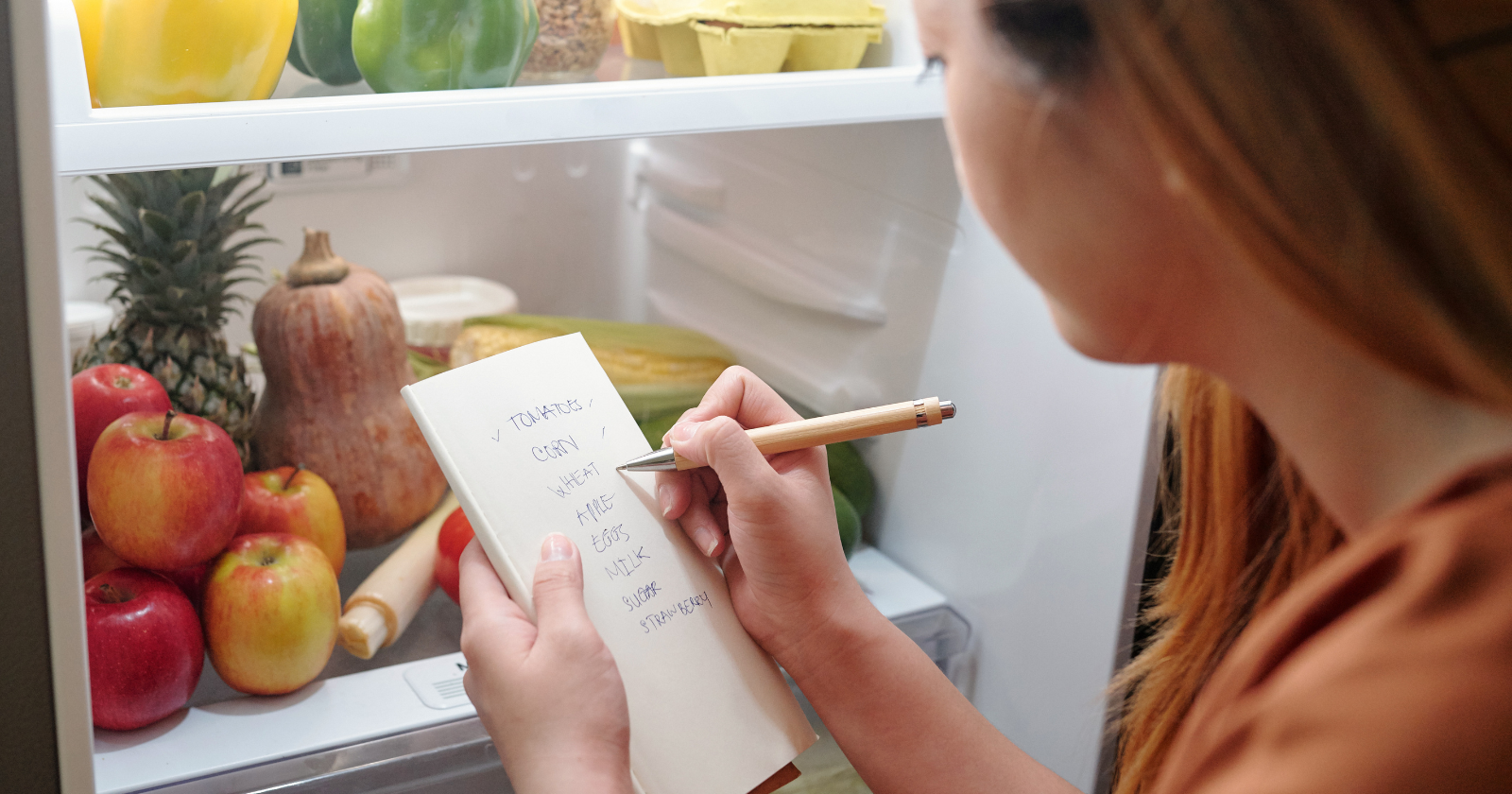
You've probably seen them at the supermarket. The folded scrap of paper. The little notebook. The back of a receipt with eight items scrawled down the side. Meanwhile, half the aisle is staring into glowing rectangles, scrolling through Notes apps and Reminders lists.
It's tempting to file the paper-list people under "stuck in their ways." But the psychology and neuroscience on handwriting suggest something different is going on. The act of putting pen to paper isn't just stylistic. It's a specific kind of cognitive work that the phone version of the same task quietly skips.
The encoding hypothesis
The most cited study on this is Pam Mueller and Daniel Oppenheimer's 2014 paper, "The Pen Is Mightier Than the Keyboard." Their experiments looked at university students taking lecture notes either by hand or on a laptop. The students typing on laptops took more notes, sometimes much more. But on conceptual test questions, the handwriters consistently outperformed them.
The reason wasn't volume. It was depth. Typing is fast enough that you can transcribe almost verbatim. Handwriting is slow enough that you have to summarise, reframe, and choose what matters. That choosing is the encoding. It's what stamps the information into memory.
The same principle applies to a shopping list. When you scribble "eggs, milk, oats" on paper, you're not just recording the items. You're briefly holding each one in your head, deciding it's worth the space on the page, and routing it through the part of your brain that handles deliberate attention. When you tap them into a notes app, you can do the whole thing on autopilot.
What the brain actually does when you write by hand
There's a more physical reason for the difference. Researchers Audrey van der Meer and Ruud van der Weel at the Norwegian University of Science and Technology have spent years using EEG to compare what the brain does during handwriting versus typing. Their 2024 paper, "Handwriting but not typewriting leads to widespread brain connectivity," recorded activity across 256 electrodes while participants wrote or typed the same words.
The result was striking. Handwriting produced far more elaborate connectivity patterns, particularly in the theta and alpha frequencies that the existing literature has linked to memory formation and the encoding of new information. Typing didn't.
The likely explanation comes back to the hands. Forming a letter on paper requires a unique sequence of fine motor movements that the brain has to coordinate, track, and adjust in real time. Pressing a key, by contrast, is the same simple finger movement no matter which letter you're producing. The richer the physical action, the richer the neural conversation that goes with it.
Why this matters for a list
None of this means digital lists are useless. Phones are excellent for shared lists, recurring lists, and the kind of grocery run where you genuinely don't want to think. But there are three things a paper list does for the person making it that a phone list mostly doesn't.
The first is memory. Even if you leave the paper list at home, paper-list users often find they can still reconstruct most of what was on it from memory, because the writing process itself encoded the items. People who tap items into an app and then forget their phone usually can't.
The second is intention. Writing "buy oats" is a small physical commitment. It takes a few seconds, it produces a visible mark, and it gets briefly held in the working memory while the pen forms the letters. The list becomes a record of decisions, not just a database.
The third is focus. Phones are environments. Open the Notes app and your brain knows it's three taps away from email, three more from social media, and a notification can interrupt you at any moment. Paper is just paper. There's nowhere else for your attention to go.
The wider pattern
Paper-list users tend to share a few quiet characteristics. They're often the same people who still keep a physical calendar somewhere, write birthday cards by hand, or take meeting notes in a notebook. They're not anti-technology. They've usually just noticed something about how their own mind works.
They tend to feel more in control of their day when they've planned it on paper. They remember more of what they intended to do. They feel less of the fragmented attention that comes from running everything through the same device that pings them all day.
None of this is mystical. It's the predictable result of slowing a process down, embodying it, and giving the brain something to grip onto.
The deeper layer
There's a smaller, quieter point hiding underneath all this research. We tend to assume that faster and more efficient is always better. The handwriting studies suggest the opposite. The slowness is the feature. The friction is the part that does the work.
Buddhist psychology has been making a related point for centuries. The contemplative traditions noticed early on that the mind that does everything quickly is rarely the mind that remembers, savours, or feels present. Slow, deliberate, physical actions, done one at a time, are how attention gets trained. A handwritten shopping list is, in a strange way, a very small piece of that same practice.
So the next time you see someone reach into their pocket for a folded piece of paper at the supermarket, don't assume they haven't caught up with the modern world.
It's more likely that they have, and they've decided that not every part of life needs to be optimised, digitised, and routed through the same glowing screen.
Sometimes the older tool was already doing something the new one can't.