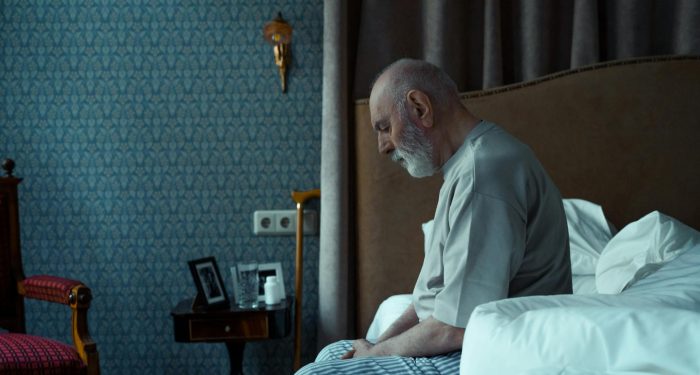

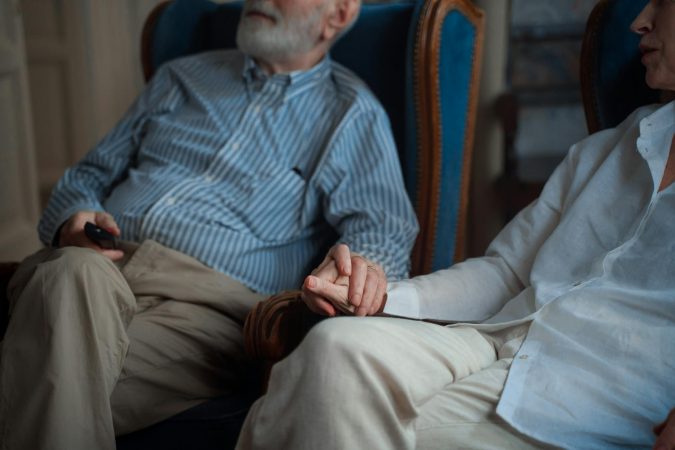
The quietest marriages in the room aren't always the happiest ones — sometimes they're the ones where someone stopped trying to be known years ago.
Relationship researchers keep running into a finding that complicates the standard story about long marriages. Couples in their late sixties and seventies often report higher marital satisfaction and fight less than they did in earlier decades. The conventional read is that they've softened, figured it out, arrived at something like harmony. But when you look closer at what's actually happening inside those quieter households, a different possibility keeps surfacing. Some of those couples aren't more peaceful. They've just stopped trying to be understood by the person sitting across the table, and from the outside that looks exactly like contentment.
I've been thinking about this a lot lately — about what silence actually signals in a relationship. If you've ever watched a great play or film, you know that when a character stops speaking to another character, it isn't because they've run out of things to say. They've made a decision. The audience is supposed to notice. Somewhere between art and real life, we agreed to forget this, especially when it comes to the long marriages we watch from across a restaurant or a church pew, where two people sit without speaking and we tell ourselves they've simply run out of things to say because they know each other so well.
Most of us were taught that the arc of a good marriage bends toward peace. You fight hard in your thirties, negotiate through your forties, soften in your fifties, and by the time you hit your late sixties you're supposed to have arrived at harmony. What the research keeps quietly suggesting is something else. Many of those couples haven't figured anything out. They've just stopped trying.
What the outside can't see
There's a concept in couples research called the demand-withdraw pattern, where one partner pushes for connection or resolution and the other pulls away. For years, psychologists treated it as a problem stage, something couples pass through on their way to either repair or rupture. What research on conflict in long-term relationships has shown is that the pattern doesn't always resolve. Sometimes it calcifies. The demanding partner stops demanding. The withdrawing partner stops needing to withdraw because there's nothing left to withdraw from. The house goes quiet.
From the outside, this looks exactly like contentment. Two people moving around a kitchen without friction. One pouring coffee, the other reading the paper. No raised voices, no slammed doors. A neighbor might look in the window and think, that's what I want when I'm their age.
What the neighbor can't see is that one of them decided, somewhere around sixty-four, that explaining herself wasn't worth it anymore. Not because she'd been defeated, exactly. Because she'd run the math. How many years left. How many times she'd already said the same thing. How little had changed. At some point the cost of being misunderstood became lower than the cost of trying to be understood again.
The difference between peace and surrender
Some researchers who study well-being in older adults draw a sharp line between active contentment and passive acceptance. Genuine contentment has a texture to it. Engagement, curiosity, a continued interest in the other person as a moving target rather than a settled fact. Passive acceptance has a different texture. It looks the same from across the room, but inside the person living it, something has gone still.
I think many of us have watched older couples in our own families do this. One partner tells the same handful of stories, and the other nods at the parts where nodding is required. We tell ourselves it's sweet — the long-married shorthand, the comfort of the familiar. But if you sit with that scene long enough, you start to notice something. The nodding partner isn't really listening. They're not upset. They're not bored exactly. They've simply withdrawn their attention so gradually over so many years that by the time anyone catches it, they've been somewhere else entirely for a long time, and neither person really knows it happened. That's the part nobody prepares you for.
There's a phrase going around now, quiet divorcing, that describes couples who stop showing up for each other in small everyday ways without ever formally separating. The language is new. The phenomenon isn't. Previous generations had a different word for it: marriage. They assumed this was what the later decades were supposed to feel like and didn't bother naming it.
Why late sixties is the turning point
Around retirement age, the structures that used to absorb a mismatched marriage — work, raising children, running a household, showing up for extended family obligations — start disappearing one by one. Suddenly there are hours of unstructured time together, and the couple has to generate its own reason to be in the room.
This is where the disengagement gets either addressed or locked in. Psychologists who study emotional disconnection in long-term partnerships have identified distinct forms it takes: emotional, physical, and what they call cognitive disconnection, where partners stop being curious about each other's inner lives. The cognitive form is the one that disappears into the background of a long marriage most easily, because it doesn't make noise. It just quietly erases the person across the table.
By late sixties, both partners have usually noticed the erasure. What varies is what they do about it. Some couples fight through it. Badly, painfully, but actively. They keep trying. The fights look ugly from the outside but they're a sign that both people still believe the other is worth the exhaustion of being known by. Other couples skip the fight. They arrive at a silent agreement: we will no longer be translators for each other. And once that agreement is in place, the arguments stop, because arguing requires an assumption that your position matters to the other person.
This is what makes the data so confusing when researchers try to measure marital satisfaction in older couples. Studies suggest that reported satisfaction often goes up in the late sixties and seventies. But satisfaction measured by conflict frequency is a terrible proxy for satisfaction measured by actual connection. Less fighting can mean more peace. It can also mean the comfortable absence of intimacy, which is not the same thing and has a very different effect on the people inside it.
The quiet mathematics of giving up
What I've come to believe — from reading the research, from observing the people around me, from thinking hard about what connection actually requires — is that the decision to stop trying to be understood doesn't arrive as a decision. It arrives as a series of micro-withdrawals so small that no single one feels like a turning point. You explain something important about yourself. It gets received wrong. You try again. Same result. After enough repetitions, something in you shifts. Not dramatically. Just a degree or two. You stop expecting the conversation to land. And once you stop expecting, you stop initiating. And once you stop initiating, the silence begins. And from the outside, that silence looks like the peace everyone told you a long marriage was supposed to become.
The researchers who look closely at this pattern will tell you it's remarkably common. And they'll also tell you it's remarkably hard to reverse, not because the love is gone, necessarily, but because the habit of not-trying has its own gravitational pull. It's comfortable in the way that anything you've done for years becomes comfortable. Breaking out of it requires both people to tolerate the awkwardness of being beginners again — of fumbling toward understanding the way they did in their twenties, when neither of them knew enough to protect themselves from the embarrassment of caring too much.
The couples who manage this — who fight their way back to curiosity — almost always describe the same thing. It wasn't one big conversation. It was a series of small decisions to stay in the room when leaving was easier. To ask a question they didn't already know the answer to. To tolerate the discomfort of being seen again by someone who had stopped looking.
What the outside world sees when it looks at a long, quiet marriage is a finished story. What's usually there is an unfinished one — one that both people stopped writing, not out of cruelty, but out of a very human exhaustion with the effort of being known. And the most honest thing any of us can do is notice the difference. Not from across the restaurant. From inside it.