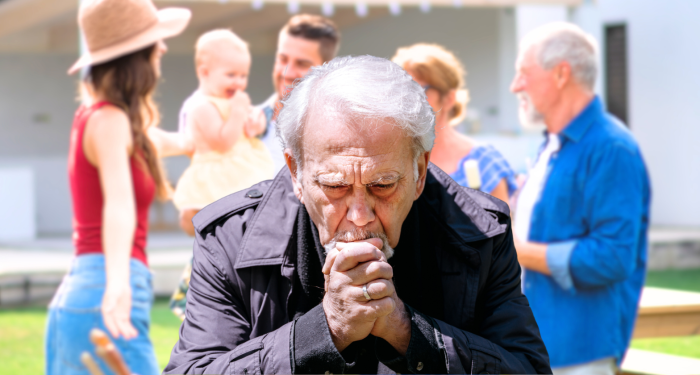


The happiest people in their late sixties have learned to find satisfaction in ordinary days rather than memorable events, measuring a good day by what they savored rather than what they accomplished.
Contentment in late adulthood is mostly built out of unremarkable Tuesdays. Not the cruises, not the grandchildren's graduations, not the dinner parties — the unremarkable Tuesdays. The people in their late sixties who report the steadiest sense of well-being tend to be the ones who stopped grading their days on whether anything dramatic happened, and started measuring them by whether anything was truly savored.
This runs against the usual script for aging well: stay busy, stay social, keep the calendar full, surround yourself with family, take the trips while you still can. None of that is wrong. But it isn't the whole picture, and for many people it isn't even the main picture.
Strong family relationships and active social lives do predict better well-being in older adults — that's a consistent finding. What the usual framing sometimes misses is the texture underneath. Two people can have similar calendars and very different daily experiences. The difference often lies less in the events themselves and more in how those days are received.
What theories of aging suggest
Stanford psychologist Laura Carstensen's Socioemotional Selectivity Theory shows that as people sense their remaining time is shorter, priorities often shift away from novelty and status toward emotionally meaningful present-moment experiences. Older adults aren't withdrawing from life. They're filtering for what matters now.
A packed schedule of obligations and acquaintances may have been useful at 35 for building networks and identity. By the late sixties, the same pace can sometimes feel like noise rather than nourishment.
Erik Erikson described the key task of late adulthood as ego integrity versus despair — the process of looking back and finding one's life coherent and acceptable. That sense of integrity comes not from stacking more memorable moments but from no longer needing them to feel whole.

The hedonic treadmill problem
A life aimed only at "memorable" peaks runs into a well-known issue. Psychologists Philip Brickman and Donald Campbell described the hedonic treadmill: people adapt quickly to positive changes. The new car, renovated kitchen, or long-awaited trip soon stops feeling exceptional.
A Psychology Today piece explains the mechanics: we overestimate how lasting future pleasures will feel, and we remember experiences as highlight reels rather than moment-by-moment reality. The vacation that lives in memory as glorious was mostly ordinary in real time.
Applied across a whole life, this means chasing peaks becomes exhausting. At 68, with finite energy, it can feel unsustainable. Many of the steadiest people have quietly stepped off that treadmill.
Savoring ordinary moments
What often replaces the chase is savoring — deliberately noticing positive everyday experiences while they happen. Research on savoring points to it as a counter to the forward-leaning attention many adults carry from working years.
Savoring isn't formal meditation or a timed practice. It's noticing the coffee tastes good right now. It's feeling the dog warm against your leg. It's letting late-afternoon light fall across the kitchen floor without reaching for a photo.
This attention appears in writing on everyday mindfulness — brief, repeated moments of presence that build something more stable than isolated peaks. It mostly requires not rushing.
People in their late sixties often have a built-in advantage: on average, they are less hurried.
Where family and connection fit
Family clearly matters. Studies consistently link strong family ties to better well-being, especially when managing health issues. Intimacy and connection remain important too. Research in the Journal of Sex Research shows many adults 60–80 still value romantic and physical intimacy as part of a meaningful relationship.
The nuance is that family closeness often serves as a foundation, not the entire structure. Two people with devoted children calling every Sunday can still experience very different weeks. One moves through ordinary days content; the other waits for the next Sunday. The difference is often what fills the rest of the time.
The shift from doing to noticing
What separates the most content older adults from the restless ones isn't always temperament, income, or perfect health. It's often the relationship to the day itself. They have stopped expecting the day to perform or prove anything.
A good day needs enough small moments that register — a conversation without rush, a meal that tastes like itself, a walk where the body cooperates. Lowering the bar paradoxically raises the average quality, because nothing is measured against an absent peak.
This isn't a shortcut available at every life stage in the same way. Earlier decades have real demands — careers, raising families, building foundations. The late-sixties pattern reflects a developmental shift more than a simple hack. Still, elements like savoring ordinary moments can be practiced earlier, even if they feel more natural later.
What it actually looks like
The genuinely content people in their late sixties tend to share a quality. They aren't loudly grateful or performative. They make their coffee. They read or don't. They take the same walk as yesterday. They have a long phone call because no one is rushing. They make dinner and go to bed at roughly the usual time.
Nothing about the day would make a compelling story. That's the point. The day didn't need to be a story. It only needed to be lived.
The quiet thesis here is that the fullest calendar isn't the prize. Close family is a real gift but not the complete answer. For many who have found contentment, the real relief is no longer needing each day to prove anything. A good day is simply one that felt good enough. For a lot of people, it took until their late sixties to fully believe that.