
Refusing to remove your shoes indoors often signals deep-seated anxiety about vulnerability, rooted in trauma responses that persist long after the original threat has passed.
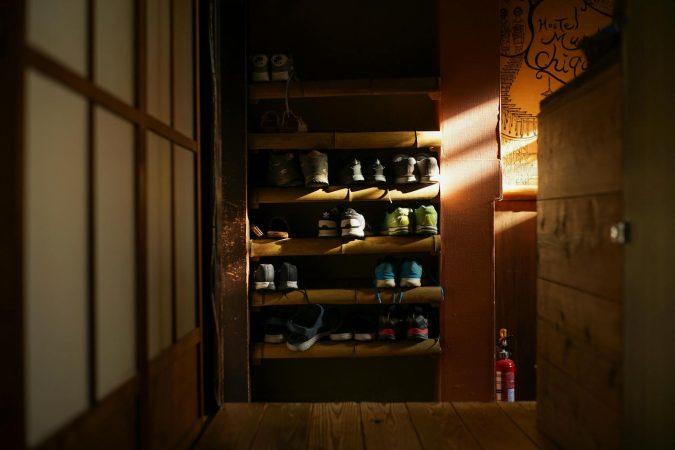
Most arguments about shoes in the house are really arguments about respect. One person sees the doorway as a boundary. Another sees the request to remove shoes as oddly intimate, inconvenient, or unnecessary. A host notices the carpet. A guest notices the exit.
That small mismatch can make a whole evening feel slightly off.
It is easy to read the person who keeps their shoes on as careless. Sometimes that reading is fair. Some guests are simply ignoring a house rule. But the behavior can also come from a quieter place: a lifelong habit of staying ready, staying self-contained, and not getting too comfortable in someone else's space.
People who grew up around unpredictability often describe ordinary habits that seem unrelated from the outside. Sitting where they can see the door. Keeping their phone charged. Carrying extra keys. Sleeping lightly. Keeping their shoes on, even at home. The details differ, but the emotional logic is similar. The person wants to feel prepared.
That does not mean every shoes-on guest is carrying some hidden wound. It means the most obvious interpretation is not always the whole story.
Some habits are about readiness, not manners
For some people, shoes are not just shoes. They are the last thing you take off before you admit you are staying.
That may sound dramatic to someone who feels relaxed in other people's homes. But comfort is not distributed evenly. Some people learned early that being settled could become a liability. They learned to keep their belongings close, their plans flexible, and their body just a little bit ready to move.
By adulthood, that readiness can stop feeling like a strategy and start feeling like personality. The person does not think, "I need to keep an escape route." They think, "I just don't like taking my shoes off in other people's houses."
That distinction matters. The behavior may look like defiance from the outside, while feeling like composure from the inside.
The body often gives away what people cannot explain
People do not only communicate through words. Research covered by Greater Good Magazine has noted that emotional states can be expressed through full-body positioning, not just through facial expressions. A person can look at ease, guarded, dominant, hopeful, or uncertain before they say anything at all.
The same is true in a doorway. One guest steps inside, slips off their shoes, and sinks into the room. Another remains partly outside the moment, even after they have entered. Coat still on. Bag still in hand. Shoes still laced.
That does not automatically mean something is wrong. It simply shows that people arrive with different relationships to ease.
Some people relax by removing layers. Others relax by keeping options open.
There are many ordinary reasons someone may keep their shoes on
The compassionate reading should not become the only reading.
Some people wear orthotics. Some have foot pain. Some are embarrassed about their socks, their feet, or a medical issue they do not want to explain in a hallway. Some come from households or cultures where shoes indoors were normal. Some worry the floor is cold or dirty. Some are dressed in a way that makes taking shoes off feel awkward.
And yes, some people are just being inconsiderate.
The point is not to turn a minor etiquette choice into a grand emotional diagnosis. The point is to leave room for the possibility that what looks like rudeness may actually be discomfort, self-protection, habit, or simple unfamiliarity.
Old patterns often survive long after they make sense
There is a broader human pattern here. People often keep using strategies that once helped them, even when their current life no longer demands those strategies in the same way.
A person who learned to avoid conflict may keep the peace long after honesty would serve them better. A person who learned not to need much may keep minimizing their preferences even around people who would gladly meet them. A person who learned to stay ready may keep one foot emotionally near the door.
Research on coping during the COVID-19 pandemic, published in PLOS ONE, found that avoidant coping was negatively correlated with quality of life, while problem-focused and emotion-focused coping were associated with higher quality of life. That finding is not about shoes. But it does point to a familiar trade-off: avoiding discomfort can feel useful in the short term while becoming costly over time.
Keeping shoes on can work the same way for some people. It creates a small feeling of control. It also keeps them from fully entering the room.
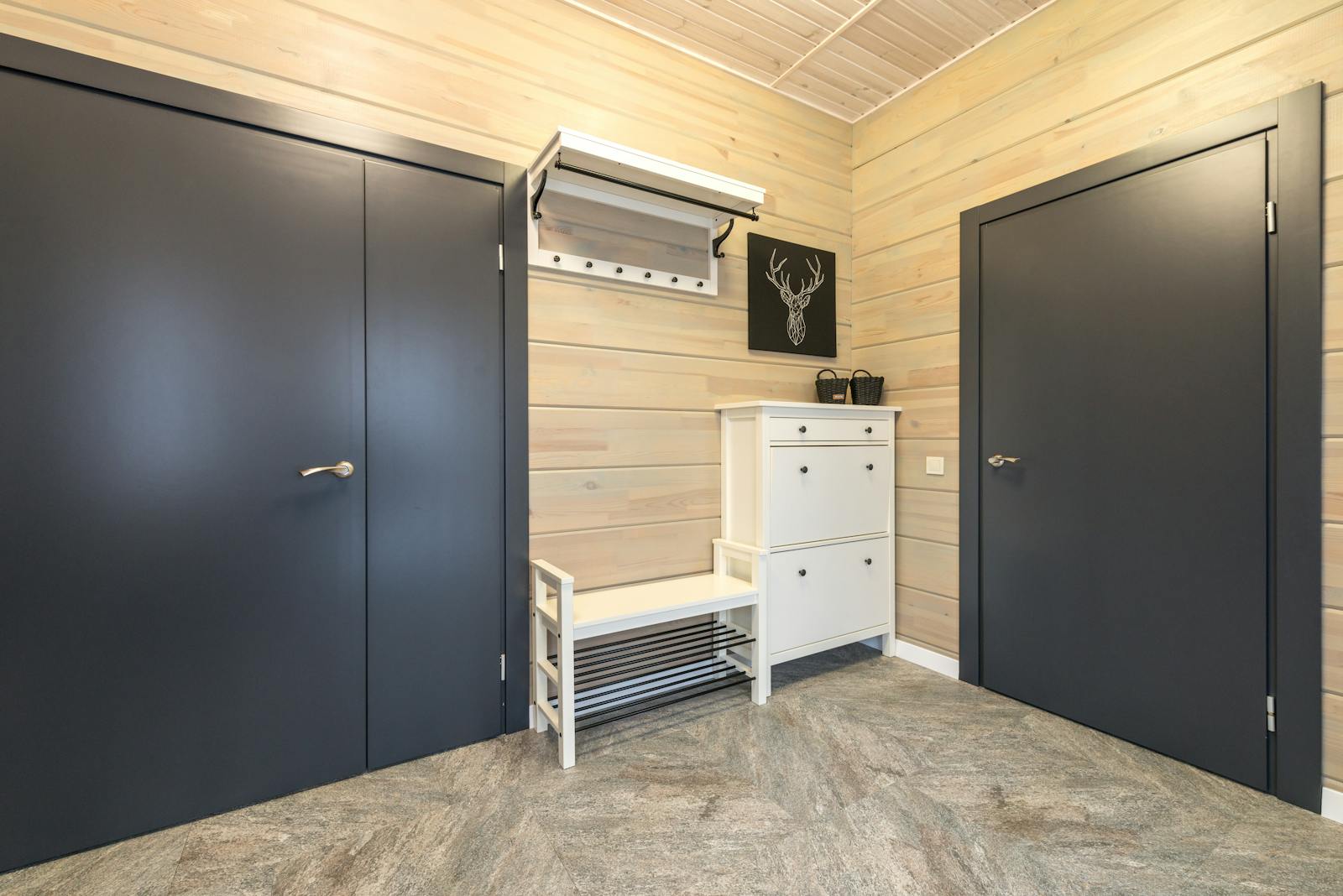
Being asked to take shoes off can feel more intimate than hosts realize
For a host, the request may be practical. The floors are clean. The carpet is light. Everyone else has done it. Why should this person be different?
For a guest, the request may land differently. Taking off shoes can mean giving up a layer of presentation. It can mean exposing socks, feet, height, posture, or vulnerability. It can make someone feel less dressed, less ready, and more physically committed to the space.
Most people will never say that out loud. They may not even understand it that clearly themselves. They just pause at the door and feel resistance.
That pause is worth noticing without immediately moralizing.
The host still gets to have house rules
Compassion does not mean abandoning boundaries. If shoes matter in a home, they matter. Clean floors, cultural norms, allergies, crawling babies, and simple personal preference are all legitimate reasons to ask guests to remove them.
But the delivery matters.
A small sign by the door is often kinder than a public correction. A basket of clean socks or guest slippers can make the request feel less exposing. A casual "We usually take shoes off here, but no pressure if there's a reason you need to keep them on" gives the guest a way to comply without feeling cornered.
The goal is not to psychoanalyze someone at the threshold. It is to make the rule clear without turning the moment into a test of character.
And if you are the person who keeps your shoes on
The habit does not make you rude by default. But it is still worth getting curious about.
Do you keep your shoes on because of comfort, pain, culture, or practicality? Or because taking them off makes you feel oddly trapped? Do you feel better when you know you can leave quickly? Do you stay physically ready in rooms where everyone else has already settled?
Those questions do not require a dramatic answer. They are just a way of noticing the small ways a person protects themselves.
Sometimes the protection is still useful. Plenty of social situations call for alertness. Plenty do not.
The small etiquette fight is rarely only about etiquette
The shoes-at-the-door question seems tiny because the object is tiny. A pair of sneakers. A pair of boots. A host's carpet. A guest's hesitation.
But small rituals often hold larger meanings. They reveal where people feel safe, where they feel watched, where they feel free to settle, and where they still need to keep a little distance.
That does not excuse every breach of etiquette. It simply softens the certainty that etiquette is all that is happening.
The shoes stay on for many reasons. Sometimes it is laziness. Sometimes it is culture. Sometimes it is a foot problem, an awkward outfit, or a guest who missed the cue. And sometimes, more often than a dinner-party host might suspect, it is a person who learned somewhere along the way that being ready to leave felt safer than fully arriving.