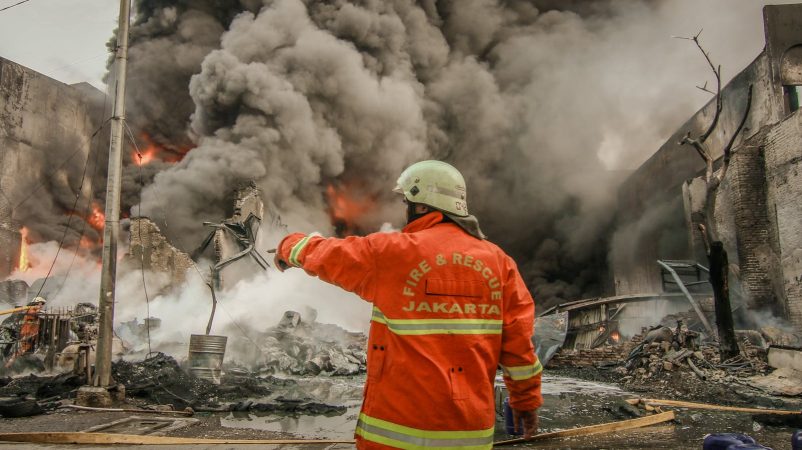
People who stay calm under pressure aren't relying on breathing techniques—they're using a thinking skill most of us never learn. What they do with their attention and assumptions works in ways no morning routine can match.
Two hundred covers on the books, half the line down mid-service, and the head chef didn't move. I was watching him from across the pass, waiting for the explosion I'd seen a hundred times from lesser kitchens. It didn't come. He looked at the broken equipment, looked at what was still working, and asked one question out loud: "What can we still send?" That was it. No deep breath, no pep talk. A question.
I've thought about that moment a lot in the fifteen years since. Because when I started paying closer attention to the people around me who held steady under genuine pressure — in crises, in emergencies, in the kind of situations that flatten most of us — none of them were doing box breathing. They were doing something with their attention and their assumptions that no morning routine app will teach you. The wellness industry treats calm as a physiological state you can hack with the right technique. But the evidence, and the people I've watched closely, suggest something different: calm is a cognitive skill, built through specific mental habits, and it beats physiological tools almost every time.
It's not that physiological tools don't matter. Slow breathing genuinely influences the autonomic nervous system. But breathing is a downstream fix. It manages the symptom after the cascade has already started. The people who stay calm are doing upstream work, on what they believe, what they notice, and what they've practiced responding to. They've trained their thinking, and the calm follows.
Here are seven cognitive habits I've observed in people who don't fall apart when things get hard. None involve an app. None require you to wake up at 5am. All of them are learnable.
1. They interrogate the thought before they manage the feeling
Under pressure, most people try to fight the feeling. The calm ones question the thought underneath it.
This is the basic mechanic of cognitive restructuring, which, according to Medical News Today's explainer on the technique, involves identifying unhelpful beliefs and challenging them with evidence. One common approach involves asking yourself what you're actually worried about, whether there's evidence for it, and what would happen if the worst-case scenario occurred.
Think back to that chef. His question did more than any deep breath could have. It redirected his attention from catastrophe to capability. He reframed the situation before his nervous system had a chance to escalate it.
This is the core of why cognitive habits beat physiological ones. Most panic isn't about the situation. It's about the story we're telling ourselves about the situation. Change the story, the panic loses its fuel. Breathing calms the body after you've already panicked. Interrogating the thought can prevent the panic from igniting in the first place.
2. They've separated "I feel this" from "this is true"
The Medical News Today piece describes something called emotional reasoning, the habit of concluding that because you feel something, it must be factually true. If you feel a break-in is likely, the feeling itself becomes evidence. This reinforces fear and pulls you further from reality.
People who stay calm have internalized a small but radical idea: feelings are data, not verdicts. They recognize the difference between experiencing an emotion and accepting it as reality. Feeling like you're about to get fired is not the same as being about to get fired. Feeling like the presentation is a disaster is not the same as it actually being one.
This is a cognitive distinction, not an emotional one, and that's exactly the point. No amount of controlled breathing teaches you to separate feeling from fact. That separation is a mental habit, built through repetition. You practice noticing the thought "this is a catastrophe," and then you practice asking, "Is it? Based on what?" Over time, the gap between feeling and conclusion widens, and that gap is where calm lives.
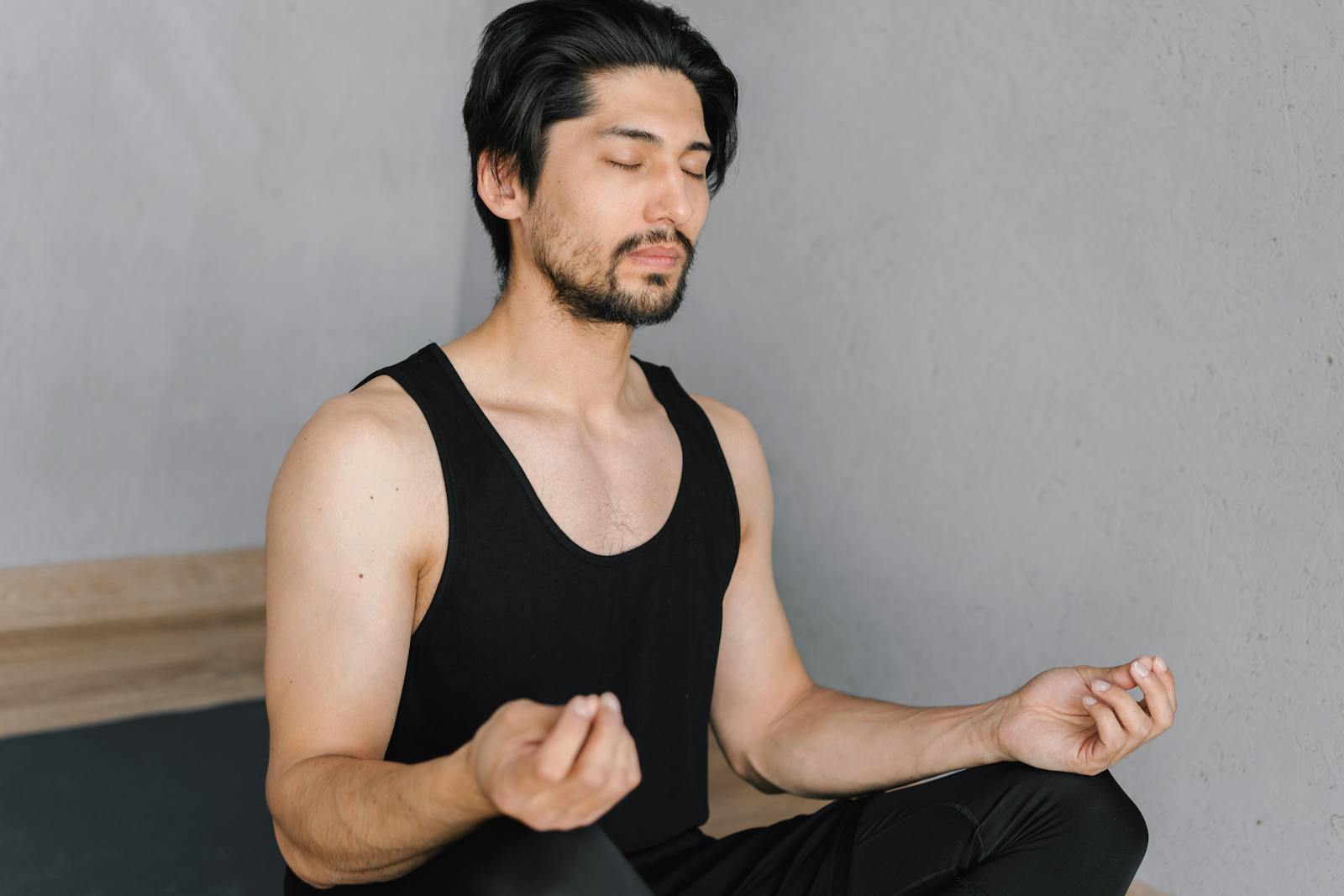
3. They don't mistake their wiring for their ceiling
There's a popular idea that some people are just naturally calm. Type B, chill by birth, lucky. The research complicates this.
As Healthline's overview of personality research points out, most healthy personalities don't fit neatly into types at all. Research suggests personality traits are influenced by both genetic and environmental factors, which means a substantial portion is shaped by environment and practice. And the popular categorization of Type A personalities as heart-attack-prone has not held up; research has found stronger cardiovascular correlation with personality profiles characterized by negative affect, not with classic Type A ambition.
This matters for the central argument. If calm were purely temperamental, the cognitive habits on this list would be irrelevant. You'd either have it or you wouldn't. But the research says otherwise: calmness is partly temperament, but it's substantially a skill. The people who have it have usually been practicing longer than they realize, often without calling it practice. Their advantage isn't genetic serenity. It's thousands of small reps of choosing a different thought under pressure.
4. They protect sleep like it's part of the job, because it is
This is the one nobody wants to hear, especially people who treat productivity as identity.
Research has examined how personality traits influence the development of insomnia, and found bidirectional relationships between temperament and sleep quality. High neuroticism and low emotional stability correlate with worse sleep, and worse sleep in turn amplifies emotional reactivity.
The pattern is self-reinforcing. Poor sleep makes everything feel more urgent. Everything feeling urgent makes sleep harder. You can't out-breathe a sleep deficit. And here's where this connects directly to thinking habits: sleep deprivation doesn't just make you tired, it degrades your ability to do the upstream cognitive work that keeps calm people calm. When you're running on three hours, you lose the capacity to interrogate thoughts, separate feelings from facts, and tolerate ambiguity. Your brain defaults to threat mode, and no breathing technique can override exhausted cognition.
People who stay calm under pressure usually aren't pulling three hours and a Red Bull. They've quietly made sleep non-negotiable, not as a luxury, but as a prerequisite for the mental habits that produce genuine calm.
5. They know their stress is usually someone else's, absorbed
Calm people tend to be very good at noticing whose anxiety they're carrying.
A Psychology Today piece on children and stress makes a point that applies just as much to adults: kids pick up on the mood of the adults around them, absorb stress indirectly, and often act it out without the words to explain what happened. The piece talks about the way one calm nervous system can steady another.
Adults do this too. We just pretend we don't. The Slack message from your boss that sent you into a spin, the partner who came home tense and infected the room, the coworker whose chaos became your emergency. Calm people notice the transfer. They ask: is this mine? They don't always opt out, but they've stopped reflexively taking delivery of everyone else's panic.
This is another cognitive habit disguised as emotional intelligence. The question "is this mine?" is a thinking move, not a feeling move. It requires stepping back from the emotional flood long enough to trace its source. Breathing might slow your heart rate in that moment, but it won't tell you the anxiety you're feeling belongs to your manager, not to your actual circumstances.
This is related to something I explored in a piece on quiet behaviors that signal real therapeutic work. One of the clearest markers is this ability to feel someone else's emotion without automatically making it your own.
6. They've built tolerance for unresolved situations
Most stress isn't about problems. It's about unfinished problems. The meeting you haven't had yet. The diagnosis you're waiting on. The email you sent that hasn't been answered.
Calm people have, through deliberate practice, developed a higher tolerance for the pause between things. They can sit with a situation that hasn't resolved yet without forcing premature closure. This is a trainable cognitive capacity, not a personality trait. It's the ability to notice the urge to resolve something immediately and choose not to act on it.
I think this is part of why people who eat slowly tend to be calmer in general, something I got into in a piece on slow eating and decision-making. The skill isn't about food. It's about practicing being okay in the gap, training your brain to tolerate the discomfort of "not yet" without interpreting it as "never."
7. They don't use escape as regulation
This is the one that gets uncomfortable.
Research on stress and coping mechanisms has found that high pressure and limited control can push people toward reliance on gaming and other escape behaviors as a coping mechanism. The mechanism is predictable: high pressure, limited control, escape through a substitute world that offers fast feedback and low stakes.
Gaming isn't the villain. The pattern is. Substitute gaming with scrolling, shopping, drinking, working more, or reorganizing your apartment for the third time this month. When escape becomes the primary regulator, stress doesn't get processed, it gets postponed. And postponed stress compounds like credit card interest.
People who are genuinely calm under pressure usually don't have cleaner coping strategies. They have fewer escape hatches. They've learned, often through losing something, that the cost of dodging the feeling is higher than the cost of feeling it. This is the final cognitive habit: the willingness to stay in contact with discomfort instead of routing around it. It's not stoicism. It's the recognition that every escape teaches your brain the feeling was too dangerous to face, which makes the next one louder.
What to actually do with this
None of these habits fit on an infographic. They're cognitive and relational, built over years, often invisible from the outside. But they are learnable, and that's the point the wellness industry misses when it sells calm as a product.
Breathing apps, cold plunges, branded journals. I'm not against any of it. But if you've tried the tools and still feel like you're barely holding on, it's probably not because you haven't found the right app. It's because the real work, the upstream work, involves changing how you think, not just how you breathe.
So the next time the pressure hits, try something small. Before you reach for a tool, ask yourself three questions: What am I actually afraid will happen? Is that based on evidence or on a feeling I'm treating as evidence? And whose stress am I carrying right now, mine or someone else's?
You may not get clean answers. That's part of it. The emergency might be smaller than it feels, or it might not be yours, or it might be an unresolved situation you're trying to force closed. Or you might sit with the questions and notice nothing shifts at all, and that's worth sitting with too.
I still don't know exactly what that chef was doing in his head the night the line went down. I've asked versions of that question to a dozen people over the years who held steady when I couldn't, and the answers never quite line up. Maybe that's the honest ending here. The habit isn't a formula. It's a long, quiet argument with yourself, most of which nobody else ever sees.
What’s Your Plant-Powered Archetype?
Ever wonder what your everyday habits say about your deeper purpose—and how they ripple out to impact the planet?
This 90-second quiz reveals the plant-powered role you’re here to play, and the tiny shift that makes it even more powerful.
12 fun questions. Instant results. Surprisingly accurate.