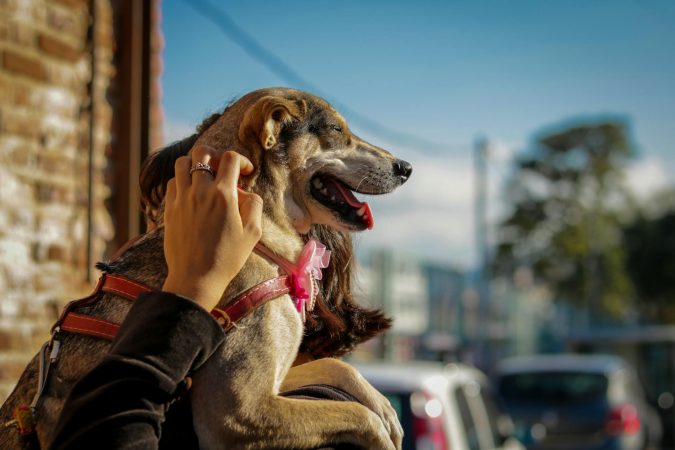
The hierarchy of grief we inherit has almost nothing to do with how much we actually loved someone, and everything to do with what kind of love we were allowed to have with them.
The hierarchy of grief is a lie, and the sooner you accept that, the sooner you can stop performing sorrow you don't feel and start honoring the sorrow you do. My father died in a hospital in Sacramento on a morning I was supposed to already be driving there. I cried at the funeral the appropriate amount. Two years later, my dog Wesley stopped eating, and when the vet put her hand on his side and told me what I already knew, I made a sound in that examination room I have never made before or since. I drove home without him and sat on the kitchen floor for four hours. I could not get up. I did not want to get up.
Most people will tell you grief is proportional to love, and love is proportional to importance, and importance is determined by blood and biology and the official forms you fill out when someone dies. The conventional wisdom insists a father outranks a dog by several orders of magnitude, and anyone whose grief rebels against that ranking has either failed at being a son or failed at being a rational adult. What I've come to understand, slowly and with a lot of help, is that the math doesn't work that way. Grief isn't measuring love in the abstract. Grief is measuring what you actually had.
My father and I had a relationship composed almost entirely of potential. The version of him I loved was the version I kept hoping would show up. Wesley, on the other hand, was just there. Every morning for eleven years. No potential. No waiting. Just a small warm body that had chosen me and never unchose me.
What the research actually says about this
For about eighteen months after Wesley died, I thought I was broken. I'd read the occasional article about pet grief and dismiss it as sentimental. Then I stumbled into an actual body of research that reframed everything. Research on pet loss and attachment has found that many pet owners experience grief after losing an animal that meets or exceeds the distress of losing a human loved one. The researchers weren't surprised. The thing that predicts grief intensity, it turns out, isn't the species of the one you lost. It's the nature of the bond.
That distinction broke something open for me. The bond with my father was conditional in ways I'd spent a lifetime negotiating. He loved me when I was performing the version of myself he understood. He was proud of me in finance. He was confused by me in writing. He never read a single thing I published. Wesley, meanwhile, didn't care what I did for work. He didn't care if I was having a bad month or a productive one. He climbed into my lap with the same devotion either way.
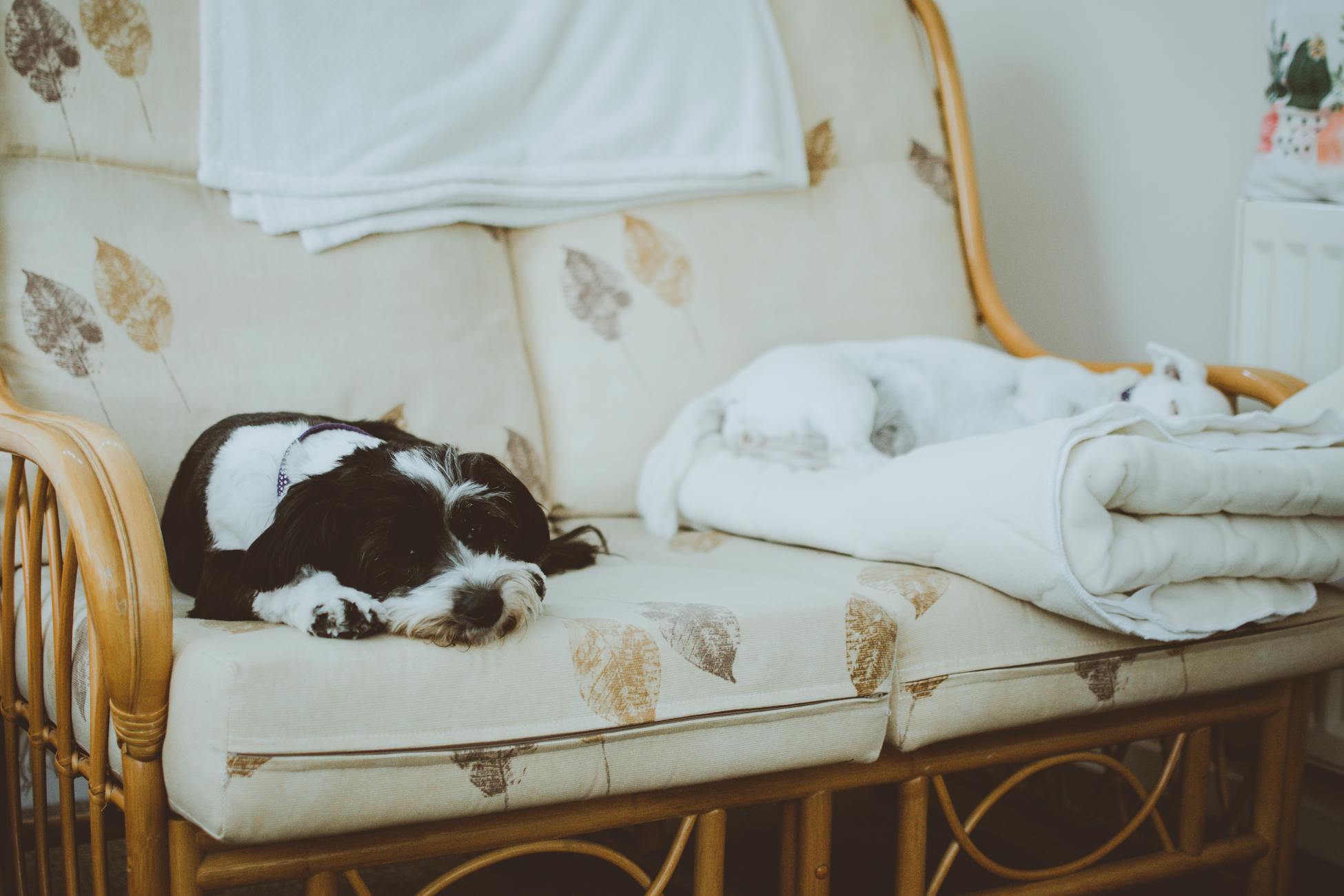
What I later learned psychologists call this is secure attachment, and the reason so many adults find it in pets rather than parents is that pets are incapable of the kind of withdrawal that shapes most human relationships. A dog cannot punish you with silence. A dog cannot remember the thing you said in 1997. A dog cannot decide you've disappointed them in a way that requires years of repair work. The unconditional part is real, not projected.
The two years of shame
I didn't tell anyone how hard I was taking Wesley's death. I told people I was sad. I didn't tell them I'd sat on the kitchen floor. I didn't tell them I was still, eight months later, flinching every time I turned the key in my front door because the absence of his footsteps was louder than his footsteps had ever been.
I especially didn't tell anyone that I was grieving him harder than I'd grieved my own father. Because I knew what that sounded like. It sounded like the kind of thing that makes people reassess whether you're a decent human. It sounded like a confession.
Part of what kept me quiet was the well-documented phenomenon of disenfranchised grief. Grief that society doesn't recognize as legitimate, and therefore grief you're expected to process quietly and briefly. Pet grief is disenfranchised in a particular way. You get maybe a week of sympathy. After that, people start asking if you're going to get another one. Nobody asks a widow that.
The shame I felt wasn't really about loving Wesley too much. It was about having loved my father too little, or the wrong way, or not enough, or in a way that never quite landed. And every tear I shed over the dog was evidence, I thought, of that failure. The grief wasn't just grief. It was an accusation against myself.
What I finally understood
Here's what two years of sitting with it taught me. The size of grief is the size of the hole. The hole is the shape of what you had, not what you were supposed to have had.
With my father, I had already grieved most of what there was to grieve, in installments, over decades. Every missed birthday. Every phone call that ended in an argument. Every visit where I drove home feeling smaller than when I'd arrived. By the time he actually died, the grief was not new. It was just the final page of a book I'd been reading my whole life. There was sadness, real sadness, but there was also a strange relief that the door had finally closed on the version of reconciliation I'd been trying to force for forty years.
With Wesley, there was no installment plan. Nothing had been pre-grieved. There was only eleven years of accumulated ordinary love, and then one afternoon there was none of it. Every routine was shaped around him. The grief wasn't for one relationship. It was for a thousand small rituals, all ending at once.
Psychologists who study bereavement have written extensively about how grief recovery timelines depend less on the relationship's social status than its integration into daily life. A father you saw twice a year produces a different grief than a dog you saw twice a day. Neither is larger than the other in some cosmic sense. They're just different shapes. I kept trying to pour my dog-shaped grief into a father-shaped cup, and I kept feeling like a monster when it overflowed.
The part nobody says out loud
There's a generational layer to this too. My father was raised by men who treated emotional availability like a flaw to be corrected. He did his best with what he was given. But what he was given was not enough for the job of being close to a son. Emotional suppression ran in his family the way some families pass down silverware. He inherited it. He handed it to me. I spent my twenties and thirties trying to refuse the inheritance, and he spent those decades not quite understanding why I kept trying to talk about feelings that, to him, were supposed to stay where feelings belonged, which was nowhere.
A dog doesn't have that problem. A dog doesn't have a lineage of suppressed affection to work around. When Wesley wanted to be close to me, he just got close to me. When he was happy to see me, his entire body said so. The purity of it was what I'd been starving for, though I couldn't have named the hunger until he was gone.
I understand now that what I was grieving when Wesley died wasn't only Wesley. I was also grieving, in some delayed and displaced way, the father I never quite had. The dog's death gave me permission to cry about something that felt socially legible, and all the undigested sadness from my actual family piggybacked onto it. That's not a dishonor to Wesley. He would have been fine carrying it. That was kind of his whole thing.
What changed
Eventually I told a friend the truth, about a year and a half in. I said the sentence out loud. I cried harder when my dog died than when my father did. I waited for her face to change. It didn't. She just nodded. She said that made sense. She said she'd felt something similar when her grandmother's cat died, six months after her grandmother.
The shame unhooked a little after that. Not all at once, but enough. I started to see that the hierarchy I'd been measuring myself against was a cultural invention, not a moral truth. Biology doesn't confer intimacy. Proximity does. Showing up does. Choosing someone, every day, without a contract or an obligation, does.
My father never quite chose me. He loved me, I think, in the way he knew how. But the daily choosing, the thing Wesley did without thinking, was something he couldn't give. And the grief I felt for the dog was, in part, grief for finally understanding that about my father. Grief for the chooser I had and lost, and grief for the one I never had in the first place.
I have another dog now. His name is Arlo. He's not Wesley and he was never meant to be. And here is the part I suspect most people won't want to hear: I am not sorry my father got less of me at the end than my dog did. I am not going to retroactively inflate a grief I didn't feel to make the ledger balance. Some of the people who are supposed to matter most to us will matter less than a small animal who slept at our feet, and pretending otherwise is the real dishonor. The hierarchy of grief isn't just a lie we tell at funerals. It's the lie that lets us keep mistaking obligation for love, and blood for belonging, long after the evidence has come in. I loved my dog more. I am done apologizing for what that says, about him, about my father, or about me.