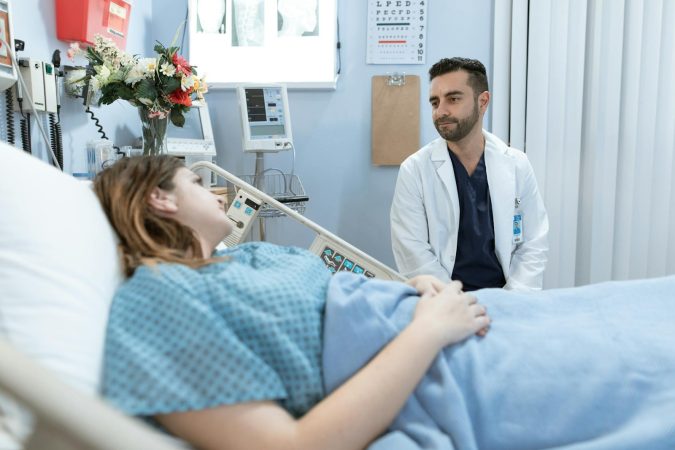
A parent's illness forces conversations siblings avoid until crisis makes them unavoidable—but waiting until then creates unnecessary conflict when families can least afford it.
There's a version of this that will feel familiar to most people: you're standing in a hospital corridor at 11 p.m., your sister is on speakerphone from another time zone, your brother is pacing by the vending machines, and someone has just asked whether your mother would want to be intubated. Nobody knows the answer. Or rather, everyone knows a different answer, each one shaped by a different conversation none of you compared notes on. According to AARP, more than 53 million Americans provide unpaid care to a family member, and for the vast majority, the hardest part isn't the caregiving itself. It's the conversations with siblings that should have happened years earlier and didn't.
Those conversations don't disappear. They just wait.
The conventional wisdom goes like this: families talk when they need to, and crisis is just the natural pressure point where the important stuff surfaces. There is a gentler version of this belief that says waiting is a form of respect. Don't borrow trouble, don't rehearse grief, let people live without the weight of logistics hanging over every holiday dinner.
That framing is wrong, or at least incomplete. What actually happens in most families is avoidance dressed up as politeness.
The difficult conversations don't arrive on their own timeline. They arrive when a diagnosis forces them, and by then, the siblings talking to each other are already operating at a deficit: sleep-deprived, emotionally compromised, and trying to make decades' worth of decisions in a hospital corridor. What families lose by waiting isn't just time. It's the quality of the decisions themselves, the relationships that get damaged by things said under duress, and the peace of mind that comes from knowing you chose something together rather than scrambled through it apart. The families who have these conversations early don't avoid the pain of a parent's illness. But they face it with a foundation instead of a fault line.
Psychologists distinguish avoidance from procrastination in a useful way. Procrastination is putting off the dishes. Avoidance, as Psychology Today frames it, is pushing away people, situations, or thoughts to avert perceived threat or discomfort. It feels like relief in the short term and compounds into something harder over time.
Siblings are uniquely good at this particular form of compounding. They share half a lifetime of unspoken rules about what the family does and doesn't discuss. Then a parent gets sick, and suddenly five conversations happen in five weeks that could have happened across five years.
1. Who is actually going to do this
The first conversation is almost always logistical, and it's almost always uncomfortable, because it reveals an assumption nobody voiced: that someone else was going to handle it.
Usually one sibling has been doing more for years. The drop-ins, the pharmacy runs, the Sunday calls that last ninety minutes. The others have been grateful in a vague, distant way, without ever formalizing what that gratitude costs. Research on family dynamics suggests that perceptions of parental favoritism in childhood shape how siblings divide caregiving decades later. The kid who felt less-favored often shows up more, trying to earn something retroactively. The one who felt favored sometimes coasts on the assumption that the arrangement is natural.
When illness arrives, that invisible distribution becomes visible, and resentments that spent twenty years pretending to be something else finally get named.
2. What our parents actually want at the end
Most families have never had a direct conversation about end-of-life preferences. Not with the parent, and not between siblings about what each of them believes the parent would want.
This is the conversation that benefits most from being pre-loaded, and the one most families delay longest. My brother is a doctor, and the thing he mentions most often about families in crisis is that nobody agrees on what Mom said at Thanksgiving three years ago, because everyone heard a different version of it, filtered through their own hope or dread.
Advance directives exist partly because this conversation is so reliably avoided. But the legal document isn't the conversation. The conversation is the one where siblings sit in a room and align on what their parent has actually said, separate from what each of them wishes had been said.
When this happens after a crisis, it happens in fragments, often between procedures, often with one sibling advocating for what they can emotionally handle rather than what the parent explicitly requested. Families that have this conversation early don't have to perform that triage.
3. Money, and what it means that we've never talked about it
Inheritance is the conversation siblings avoid most aggressively because it feels crass to raise and catastrophic to mishandle. It also tends to carry every unresolved dynamic from childhood, compressed into a spreadsheet.
A piece in YourTango on high-functioning families makes a point worth sitting with: the families that stay connected aren't the ones that avoid confrontation. They're the ones that have learned to tolerate the awkwardness of unresolved discussions long enough to resolve them.
Money is where this tolerance gets tested hardest. Who's been loaned what. Who paid for what. Whether the sibling who took care of the parent deserves to be compensated for time, or whether that compensation insults the love that motivated it. These are not questions with clean answers. They are questions that benefit from being asked when nobody is grieving, because grief is the worst possible context for nuance.
4. What we actually remember, and whether we remember it the same way
This is the conversation nobody plans for. It usually happens by accident, often at two in the morning in a hospital waiting room, when one sibling says something offhand about childhood and another sibling realizes they have been carrying an entirely different version of the same event for thirty years.
When a parent gets sick, childhood patterns activate. The sibling who always played peacemaker starts peacemaking. The one who withdrew starts withdrawing. And sometimes, in a moment of unexpected honesty, one of them says: that's not what I remember. This conversation is often where adult siblings stop relating to each other as versions of who they were at twelve and start relating as two adults with separate memories of the same house. It is also, frequently, where grief for a parent intersects with grief for the version of a sibling you thought you had. The grief of recognizing a parent late has a sibling corollary. You can grieve the brother or sister you thought you were growing up alongside, once you realize their version of the house was different from yours. What looked like a shared childhood turns out to have been two parallel ones, running under the same roof. And the recognition often arrives too late to do anything with it except acknowledge it out loud.
5. What we want from each other going forward
The fifth conversation is the one that almost never happens, even in the crisis. It's the one where siblings look at each other and explicitly ask: when the parent who held us together is gone, are we still going to be a family?
Sibling relationships are strange in that they require almost nothing to continue and almost everything to deepen. They persist by inertia. Closeness often means shared history rather than active investment.

Parents are often the structural reason siblings see each other. Holidays happen at their house. Phone chains route through them. When they're gone, the architecture goes with them, and siblings who assumed they'd always be in each other's lives discover they have to choose it now, deliberately, or drift.
The families I've watched handle this best are the ones who said the quiet thing out loud before they had to. Some version of: I want us to keep being close when Mom isn't here to make us close. Some version of: here's what I'd want from you, and here's what I'm willing to give.
Why the waiting is on purpose
Avoidance is structural in most families, not accidental. Psychologists have written about how avoidance disguises itself as safety. Staying silent to keep the peace, telling yourself you'll deal with it tomorrow, numbing the low-grade dread with scrolling or another glass of wine. Research suggests that planning, seeking support, and reframing challenges can strengthen the self-efficacy needed to manage stress.
Families use the same strategies at scale. The group text that never quite asks the hard question. The holiday that everyone survives by agreeing, implicitly, not to bring up the thing. The sibling who keeps saying they should really talk about this sometime for nine years.
What looks like respect for a parent's autonomy is often two or three siblings each hoping another one will go first. And the longer that standoff continues, the more loaded the eventual conversation becomes, because now it's carrying not just the topic but the years of not-talking-about-it.
There's a Psychology Today piece on adult sibling strain that identifies recurring pressure points: unresolved childhood roles, uneven caregiving, competing loyalties between original families and spouses. None of these pressure points are resolved by crisis. They're exposed by it.
What earlier looks like
Having these conversations on purpose doesn't mean scheduling a family summit or treating every dinner like a deposition. It means lowering the threshold for what counts as a real conversation with your siblings.
A single question at a reasonable hour, without an agenda. What do you think Dad actually wants if he gets sick? Do you feel like we divide things fairly? What do you remember about that year?
The psychological work underneath all five conversations is the same one. It's the ability to stay in the room while someone you love says something uncomfortable, and to resist the urge to fix it, minimize it, or redirect the conversation toward something easier.
Most families can do this. Most families just don't, until the hospital does it for them.
The conversations will happen. That part isn't optional. The only variable is whether they happen with time to absorb them, or in a hallway at three in the morning while someone hands you a clipboard.