
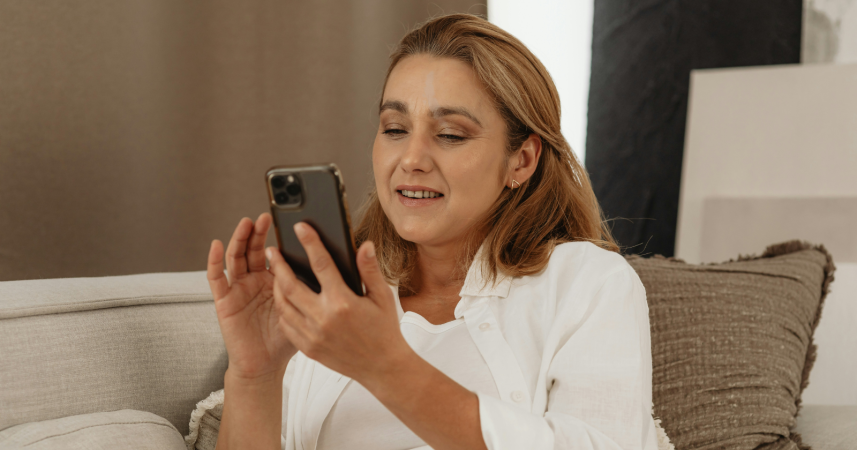
While everyone else exhausts themselves curating their digital personas and chasing engagement metrics, the silent observers among us are developing something far more valuable: an undistorted understanding of human behavior that only comes from watching the show instead of performing in it.
You probably know one. They have been on the platform for years. Their account is technically active. They watch the photographs of weddings and new houses and morning runs and family holidays scroll past. They notice when a friend is struggling, when a colleague has gotten engaged, when an old classmate has had another child. They read what is being said, and they often have a clear opinion about it.
What they do not do is participate. They do not comment. They do not post. They do not put their birthday on display. They do not announce milestones. They do not curate their meals, their workouts, their wins, or their grief. From the outside, they look like ghosts. From the inside, they are paying attention.
The cultural reading of this kind of person tends to land in the same place. They are shy. They are antisocial. They are out of touch. They have failed to engage with modern life. The reading misses something. The person is not declining connection. They are declining a particular form of it. The form that requires them to be on stage.
What social media actually is, structurally
To understand what these adults are opting out of, it helps to take seriously what social media is, beneath the surface descriptions. The Canadian-American sociologist Erving Goffman, working in the 1950s, proposed that ordinary social life functions like theater. Human beings have a front stage, where they manage how they are seen by other people, and a back stage, where they are simply themselves. Goffman called this dramaturgical theory, and his book on it, The Presentation of Self in Everyday Life, is one of the most cited works in twentieth-century sociology.
The dynamic Goffman described in face-to-face interaction has not disappeared. It has migrated, and intensified. The sociologist Bernie Hogan, in a 2010 paper in the Bulletin of Science, Technology & Society, extended Goffman's framework to the digital era and made an important distinction. Some online activity is a performance, a synchronous interaction with a present audience. Most of it, Hogan argued, is something different. It is an exhibition, an asynchronous display of artifacts (status updates, photographs, posts) curated for an unknown future audience that may visit the exhibition at any point.
This is the structural feature of social media that the typical "shy person on Facebook" framing misses. To post is not, fundamentally, to communicate with a friend. It is to add an item to a permanent gallery whose viewers are partially imagined and partially real, and whose visits will continue indefinitely into the future. Every post is a small contribution to a curated self that will keep being looked at.
Why opting out is a coherent choice
Once the architecture is visible, the people who do not post stop looking strange. Many of them have simply concluded, often without putting it in these words, that the exhibition is not how they want to spend their attention. They are willing to be seen. They are not willing to be permanently displayed. The distinction is not pedantic. It is the difference between meeting a friend for coffee and putting a portrait of yourself on a museum wall.
This becomes especially clear when you observe how these adults stay connected through other channels. They text. They call. They send long, thoughtful emails. They meet up. They show up at the funerals and the weddings. They remember, often with unusual specificity, the things their friends have told them. The connection is intact. What has been declined is the performance.
What the research actually says about passive use
The popular framing of social media use has, for years, leaned on a tidy distinction. Active use is good. Passive use is bad. People who post and engage are connecting. People who scroll silently are eroding their wellbeing. The science has turned out to be considerably messier.
A 2024 meta-analysis of 141 studies on active and passive social media use, published in the Journal of Computer-Mediated Communication, found that the picture does not support the simple narrative. People who used social media more actively did report greater wellbeing and more positive emotions, but they also reported greater symptoms of anxiety. The active versus passive dichotomy, the authors concluded, is too crude to describe what is actually happening, and the field's confident claims about the harms of passive use have outrun the evidence.
This matters for the adult who never posts. The cultural assumption that they are damaging themselves by "lurking" turns out to be poorly supported. The same review notes that context, age, and what the user is actually doing during their time on the platform matter far more than whether or not they are visibly producing content.
What the non-poster is often actually doing
The adult who never posts is, in many cases, using the platform for its actual utility while declining its incentive structure. They are seeing what their distant friends are up to without feeling obliged to broadcast their own day. They are tracking the cultural conversation without contributing to it. They are gathering information without staking a public position on every piece of it. They are, by any reasonable definition, still connected. They are just not paying for the connection in the currency the platform is built to extract, which is performance.
This is not a withdrawal. It is, on closer inspection, an unusually clear-eyed bargain. The person has noticed that posting has costs (the curation, the exposure, the small permanent shame of an old post resurfacing, the cognitive load of being mildly on stage at all times) and has decided that the costs outweigh the benefits for them personally. They have not opted out of friendship. They have opted out of a specific performance economy.
The reframe
The next time you notice a friend or colleague who has been on a platform for years and has never posted anything, the most useful thing you can do is stop reading the silence as withdrawal. They are usually still there. They are usually still paying attention. They are usually, in the channels that matter to them, deeply engaged with the people they care about.
What they have done, often without making a public decision out of it, is decline the offer to put themselves on permanent display. This is, by any reasonable measure, a sane response to the medium. The strangeness is not in their silence. The strangeness is in the assumption that anyone who is not performing must not be there. They are there. They are just not performing. The two are not the same thing, and many of the most thoughtful people you know have quietly figured this out.