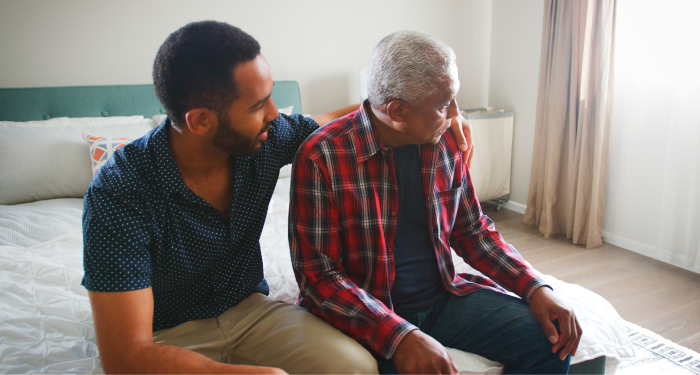
The leaps were tiny: walking home alone, settling a playground dispute, spending an afternoon with no plan. The cumulative effect, repeated a thousand times across a decade, was an entire generation that learned to be its own safety net.
Ask anyone born between 1960 and 1980 about their childhood and a particular set of stories tends to surface. The bike that took them several miles from home before lunch. The neighborhood game that involved no adult, no rules anyone had written down, and a slightly questionable hill. The walk to school they made alone from age six. The afternoon they came home to an empty house and made themselves a peanut butter sandwich and watched whatever was on, because nothing else was. The summer that started in June and ended in August and contained, in between, almost no scheduled activities at all.
The stories are usually told with a particular tone, half nostalgia, half disbelief. The disbelief is mostly directed at the contemporary world. They cannot quite imagine letting their own grandchildren do what they did at eight. And yet, when psychologists look at the kinds of childhood experiences many people from that era had, something quiet and durable becomes easier to understand. Repeated independence can build self-reliance. They tend not to panic when things go wrong. They tend to treat problems as things to be handled, not things that require an immediate phone call to someone else.
The psychology behind that pattern is, on the available research, not mysterious.
What the era actually looked like
People born in the 1960s and 1970s came of age at a particular cultural intersection. Mothers were entering the workforce in large numbers. Childcare options outside the home were thin. Divorce rates were climbing. The result, for an entire generation, was an unusual amount of unsupervised time. Children walked to school. They walked home. They let themselves in. They navigated playgrounds where the adults were not within shouting distance. They negotiated their own conflicts because there was no nearby grown-up to outsource the negotiation to.
This was not consistently good. Some children were genuinely neglected. Some were lonely. Some were managing situations they were too young to manage, and the consequences of that show up in clinical literature on emotional parentification and latchkey trauma. The picture is honestly mixed.
What is also true, however, is that the same conditions inadvertently produced a generation with an unusual amount of practice in two specific skills: solving problems without adult help, and tolerating the discomfort of figuring things out as you go. Those two skills, accumulated over a thousand small unsupervised situations, build something the psychological literature has spent decades studying.
The skill that gets built
The skill is sometimes called internal locus of control, sometimes self-efficacy, sometimes simply resilience. The names overlap. The underlying capacity is the same. It is the felt sense, in the body and in the mind, that when something goes wrong, the person facing it has the resources to handle it.
This sense does not develop from being told. Children who are told they are capable, and then have all genuinely difficult tasks done for them by anxious adults, do not develop it. The capacity grows from repeated experience of facing something hard, fumbling through it, and discovering that the world did not end. The child who solves a small problem alone today is more likely to attempt a larger one tomorrow. By the end of childhood, if the experiences accumulate steadily enough, the person has built an internal foundation that no number of motivational speeches can substitute for.
The Boston College psychologist Peter Gray, in his widely cited 2011 paper in the American Journal of Play, documented this dynamic at scale. Gray traced the decline of children's unstructured free play in the United States and argued that this decline closely paralleled rising anxiety, depression, helplessness, and narcissism among young people. The data on locus of control, in particular, showed a steady shift toward external locus, the belief that outcomes are controlled by forces outside oneself. That shift correlated tightly with the loss of the kind of childhood experience that 60s and 70s kids had by default.
The leap without a safety net
What this generation got, almost as an accident of cultural conditions, was repeated practice at the experience of leaping without a safety net. Not in any dramatic sense. In the smallest, most ordinary sense. Walking somewhere unfamiliar without a phone. Settling a dispute on a playground without an adult. Riding home in the dark. Spending an afternoon with no plan, no direction, and no adult to consult. The leaps were tiny. The cumulative effect was significant.
The journalist Lenore Skenazy, who founded the Free-Range Kids movement after writing a column about letting her nine-year-old ride the New York subway alone, has spent the last fifteen years arguing that the modern decline of this kind of independence is doing measurable harm to children. In an interview with EdSource, Skenazy summarized the argument as cleanly as it can be put: independence, on the available research, is a key ingredient in producing happy and well-adjusted children. The research she points to consistently links lower childhood independence to higher childhood anxiety. The kids who are never allowed to do anything difficult on their own do not, as the popular intuition suggests, become safer adults. They become more anxious adults.
What the resilience actually looks like
The adult version of this is recognizable. The 60s and 70s kid, now in their fifties or sixties, tends to be the one in any group who absorbs the unexpected without much visible reaction. The flight gets cancelled. The plan falls apart. The colleague drops out. They notice what has changed, recalculate, and move on. Their nervous system is not asking, in the background, for someone else to come and rescue the situation. It is asking what the next step is.
This is not stoicism. It is not toughness for its own sake. It is the residue of a childhood that delivered, often without intending to, a thousand small experiences of being alone with a problem and figuring it out. The world rewarded the figuring. By adulthood, the figuring had become automatic.
The reframe
Recent commentary on the era has tended to swing between two extremes. One framing romanticizes 60s and 70s childhood as a lost golden age. The other pathologizes it as a generation of neglected children. The truth, on the evidence, sits in between. As researchers writing in the Encyclopedia on Early Childhood Development have argued, the kind of risky, independent play that earlier generations took for granted appears to be one promising mechanism for building coping skills and potentially reducing anxiety risk.
The honest summary is this. Many adults of this generation were handed, through cultural circumstance rather than parenting genius, an extraordinary number of opportunities to learn that they could survive their own lives. They paid for those opportunities, in some cases, with loneliness and unmet emotional needs. They also walked away with something that subsequent generations have found harder to come by, which is the felt confidence that when the safety net is not there, they themselves can be the safety net. That is not a small thing to carry into adulthood. It may, on the longest view, be one of the more durable gifts a childhood can give.