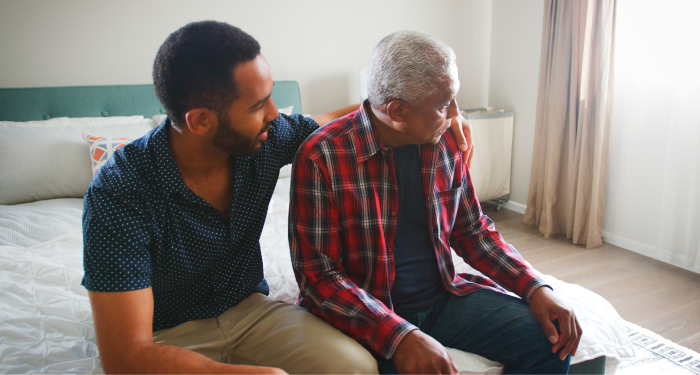
The most depleted people are often the ones who keep showing up, checking boxes, and convincing everyone they are okay.
Do you know that specific kind of tired that doesn't show up on your face?
You're dressed, you're on time, you're answering emails and making dinner and asking how everyone's day was. From the outside, nothing looks wrong. You're functioning. You might even be functioning well. But underneath the routine, something has gone quiet in a way that's hard to name.
Emotional exhaustion doesn't always look like falling apart. In fact, some of the most emotionally depleted people are the ones who appear to have it together. They've learned to keep moving. They've built their life around structure and output, and for a while, that structure holds them up even when they have nothing left inside.
I've been close enough to this feeling to recognize it, and I've watched it in people around me too. It rarely announces itself. Instead, it shows up in subtle, more specific ways.
They stop looking forward to things
One of the earliest signs is a flattening of anticipation. Things that used to feel exciting, a trip, a dinner out, a weekend with nothing planned, start to feel like logistics. You do them, and they're fine, but the sense of looking forward to them has faded.
This isn't depression necessarily, though they can overlap. It's more like the emotional bandwidth required to feel genuine excitement isn't available right now. All of it is going elsewhere. What's left is a kind of neutral competence: you show up, you participate, you come home.
They become very efficient but less present
Emotionally exhausted people often get very good at getting things done. The to-do list becomes a coping mechanism. Checking things off creates a sense of movement when everything inside feels still.
But efficiency and presence aren't the same thing. You can be highly productive while being almost completely absent from your own life. You do the task but you're not really in it. Conversations happen and you track them but you're not fully there. The body is doing the thing, and the mind is somewhere far away, or nowhere at all.
I think about this when I'm running on full productivity mode and I look up and realize I can't remember the last time I felt genuinely relaxed during a normal moment, not on a trip, not after something special, just in an ordinary Tuesday afternoon. That gap is worth paying attention to.
They find small decisions surprisingly difficult
When emotional resources are running low, decision fatigue hits fast. Big decisions are manageable because they feel important enough to summon focus for. But small ones, what to eat, which errand to do first, what to watch, become oddly draining.
This is partly because emotional regulation and decision-making draw from the same cognitive reserves. Research from the American Psychological Association has linked chronic stress to reduced executive function, including the ability to weigh options and make choices with confidence. When someone is emotionally depleted, even minor choices can feel like one more demand on a system that's already at capacity.
The person who says "I don't care, you decide" about everything, the one who seems oddly paralyzed by a restaurant menu, might not be indifferent. They might just be running on empty.
They get irritable about things that never used to bother them
Emotional exhaustion narrows the window of tolerance. Things that would have rolled off before, a small inconvenience, a slightly thoughtless comment, a change in plans, land differently when your reserves are low.
The reaction often surprises the person themselves. They snap, or they feel disproportionately frustrated, and then they feel bad about it, which adds another layer of quiet depletion. It becomes a cycle: low resources, overreaction, guilt, lower resources.
From the outside, this person might just seem a bit prickly lately. Inside, they're often very aware that they're not handling things the way they'd like to, and that awareness is its own kind of weight.
They withdraw from the people they're closest to
Not dramatically. There's no big announcement, no obvious pulling away. They still show up. But somewhere along the way, they've started conserving emotional energy for the interactions they can't avoid, and quietly letting the optional ones go.
They stop initiating. They keep conversations at the surface. They're responsive but not really open. The people closest to them might notice a kind of glass wall, the person is there, but something isn't quite reaching.
This withdrawal is protective. When you don't have much to give, you stop spending it. But it also has a cost, because the relationships that could offer genuine restoration are the ones getting cut off first.
They feel guilty for not feeling more grateful
This one is subtle and worth naming. Emotionally exhausted people often have objectively good lives. They know it. And so the exhaustion comes wrapped in guilt, because how can I be this tired when things are fine?
But emotional exhaustion isn't about your circumstances being bad. It's about cumulative depletion, from caregiving, from performing wellness, from managing everyone else's feelings while pushing your own to the side. Research has explored how consistently attending to others' emotional needs, without adequate recovery, leads to compassion fatigue regardless of how much someone loves the people they're caring for.
Loving your life and being exhausted by it are not opposites. They coexist more than people want to admit.
Their sleep changes, but they don't always sleep less
Sometimes emotionally exhausted people sleep more and still wake up tired. Other times they can't sleep at all, mind running through nothing in particular, just humming with a background noise that won't quiet down.
The quality of rest changes. You stop waking up with the feeling of having actually recovered. Sleep becomes another thing you do, like the rest of the routine, without the restoration it used to bring.
They keep going anyway
This is perhaps the most defining thing. Emotionally exhausted people who are still functioning don't stop. They have commitments, people who depend on them, work that needs doing, routines that hold the household together. So they keep going.
And from the outside, this looks like strength. Sometimes it is. But sometimes it's something closer to autopilot, a life being managed rather than lived. Burnout is a state of chronic stress that leads to physical and emotional exhaustion, and one of its hallmarks is that high-functioning people can sustain it for a long time before anything breaks, precisely because they're so practiced at pushing through.
Final thoughts
The reason this matters is that functioning well and being well are not the same thing. A person can be perfectly capable and deeply depleted at the same time, and if no one around them recognizes that, including themselves, the depletion tends to deepen quietly over time.
If you recognize yourself in any of this, the most useful thing isn't to add a self-care routine to the list of things you're already managing. It's to start being honest about the fact that you're running low, and to let that honesty mean something. Not as a reason to collapse, but as a reason to take the exhaustion seriously rather than just continuing to prove you can function through it.
Sometimes the most important thing isn't doing more. It's finally letting yourself rest.