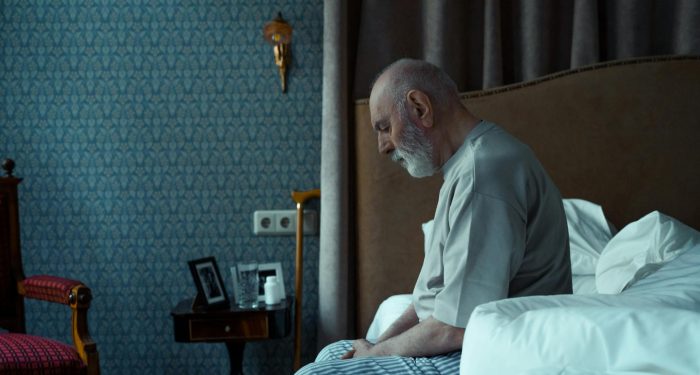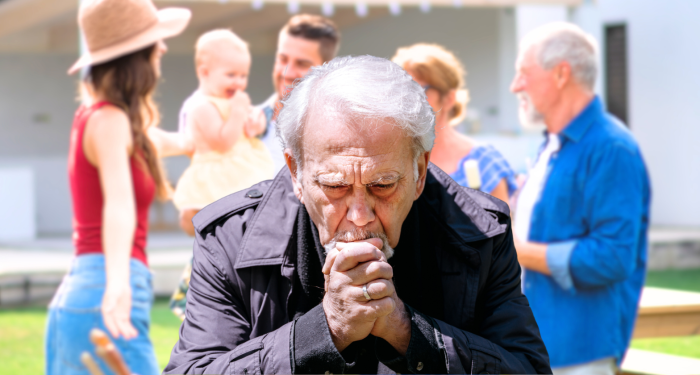


The solution may not be more company. It might be letting the people you already have actually meet you.
We tend to think of loneliness as something that happens when nobody's around. The empty house. The missed call. The quiet weekend with no plans.
But some of the research seems to suggest we've been picturing it too narrowly.
You may be in a room full of people, laughing, chatting, even close to people you've known for years, and still feel a kind of loneliness that can seem heavier than anything you'd feel sitting at home alone.
And the reason might have less to do with the people around you, and more to do with which version of yourself walked into the room.
A quick note before we go any further. I'm not a doctor, psychologist, or therapist. I'm just a writer who reads a lot of this research and finds it interesting. Loneliness has many causes, and most of them are not personal failings. If anything in this post resonates in a way that feels heavy or persistent, please speak to a qualified professional. They're far better placed to help than any blog post.
Let me explain.
What the research seems to suggest
In 2023, researchers Dongning Ren and Olga Stavrova published a study in the Journal of Happiness Studies called "Alone in a Crowd: Is Social Contact Associated with Less Psychological Pain of Loneliness in Everyday Life?" It drew on three separate datasets and over 3,000 participants who reported how they were feeling in real time throughout their day.
What they found may surprise you.
In the abstract, the researchers wrote that "findings suggest that simply spending time with others (vs. alone) is not associated with a reduced burden of loneliness and may even backfire."
It's worth being careful about what this study actually measured. The participants were reporting on brief, in-the-moment social contact during their everyday lives, not on deliberate connection-building, close relationships, or professional support. So the finding isn't that seeing people is unhelpful in general. It's that the casual, everyday version of "being around others" doesn't always do the heavy lifting we expect it to.
What this suggests to me is that the old advice to just go out and see people when you feel disconnected might not always do what we think it does in those small everyday moments. The company itself may not be the active ingredient. Something else might be doing the work.
Why being alone may hurt less than feeling unseen
Solitude tends to have a clean edge to it. You're alone, you know it, and you can sit with it. There's no performance required and nobody to disappoint.
Loneliness in a crowd can feel murkier. You're physically with people, technically connecting, technically participating, and yet something can still feel off.
A 2019 study by researcher Dominik Borawski ("Authenticity and rumination mediate the relationship between loneliness and well-being") explored a possible reason for this. A piece on PsyPost summarized the finding directly in its headline: "Loneliness makes it difficult to perceive life as meaningful by inhibiting authenticity."
Because the study was cross-sectional, it can't show causality. So this is a suggestive correlation, not a settled mechanism.
What this suggests to me is that loneliness and authenticity may be linked in ways many of us don't notice. The lonelier we feel, the more we might shrink behind a curated version of ourselves. And the more we do that, the harder it might become to feel our lives carry meaning.
The possible cost of the version we bring into the room
This is where research on what experts call "expressive suppression" might be relevant. As put by researchers, it "involves the attempt to hide, inhibit or reduce emotion-expressive behaviour".
This could mean not laughing at jokes, avoiding smiling or avoiding showing dislike for something.
In a 2025 review of work in this area, the authors noted that "people who frequently used suppression were more likely to experience negative emotions."
Is the very thing many of us do to make social situations easier, smoothing over how we actually feel, quietly costing us?
How we may end up performing without ever choosing to
I don't think anyone wakes up one day and decides to start showing up as a curated version of themselves. It seems to happen slowly, through small accommodations that don't feel like accommodations at the time.
You stay quiet about a frustration that's been building all week. You brush off a question about how you're really doing because the honest answer feels like too much. You go along with a plan that drains you because saying no felt rude.
Researchers have a name for this kind of pattern. They call it self-concealment, defined as "active concealment from others of personal information that one perceives as negative or distressing."
More recent research has started to connect this pattern to loneliness specifically. In a 2021 study published in Frontiers in Psychology, Kealy and colleagues found that for younger and middle-aged men attending mental health services, "the pathway to loneliness from reduced emotional awareness through distress concealment" was a significant one. It's a narrow population, so the finding may not generalize neatly to everyone, but it points toward something the broader research seems to keep circling: that hiding parts of ourselves is not good for us.
What this suggests to me is that the tiny edits we make to who we are may not be as harmless as they feel in the moment. They could be quietly accumulating into something heavier, and possibly into a kind of loneliness we don't immediately recognize as loneliness.
Over enough time, the people around us might stop knowing us and start knowing the edited version of us. Once that version becomes the one being invited to dinners and introduced to other people, it can become the one we feel we have to keep showing up as.
My takeaway
The research seems to suggest that loneliness may not really be about how many people are in the room. It might be more about whether the person you're being in that room actually resembles the person you are when nobody's watching.
None of this is a tidy explanation for why anyone feels lonely. Loneliness can come from grief, from circumstance, from health, from a hundred other things that have nothing to do with how authentic you're being. But this particular flavor of it, the kind that shows up in a room full of people, might be worth sitting with a little differently.
The most painful kind of loneliness might not be the absence of people. It could sometimes be the absence of yourself in the rooms you keep showing up in.
If loneliness has been weighing on you for a while, you don't have to figure it out from a blog post. A GP, therapist, or a service like Samaritans (UK), 988 Lifeline (US), or your local equivalent are good places to start.