The airport isn't an escape from your life. It's the only place your nervous system is allowed to stop performing it.
The man at gate B14 had his eyes closed and he was smiling. Not at anything. Just smiling. He was maybe fifty, rumpled suit, tie loosened, the kind of face that usually arranges itself into competence. When he laid his ticket on his knee I saw it said Cleveland. He wasn't going on vacation. He was going to Cleveland, and for the next ninety minutes nobody on earth could reach him, and his whole body had registered this as good news.
I've been watching people like him for years now, ever since my husband died and I started flying alone to see my daughter. They're easy to spot once you know what to look for. They arrive at the airport hours before they need to. They move through security with the calm of someone who has already factored in every possible delay. Then, once they reach the gate, they do something that looks almost religious. They sit down. They exhale. Their shoulders, which have been hovering somewhere near their earlobes for the better part of a decade, descend.
Most people assume this is anxiety. Type-A overpreparation, the chronic worrier building a buffer against disaster. I thought the same thing for years. But watching these people, and eventually recognizing myself among them, I've come to believe something different. The three-hour-early airport arrival isn't anxiety in action. It's the opposite. It's the only sanctioned permission slip a certain kind of adult ever gives themselves to stop. A 2026 piece in Forbes reported that chronic job stress causes measurable changes in the brain, thinning the regions associated with emotional regulation and thickening the ones that keep us scanning for threat. I read that on a plane, ironically, somewhere over Nebraska. What struck me wasn't the science. It was the timing. I had spent the previous three hours at the gate doing absolutely nothing, and for the first time in weeks, my jaw wasn't clenched.
The only room where no one needs anything from you
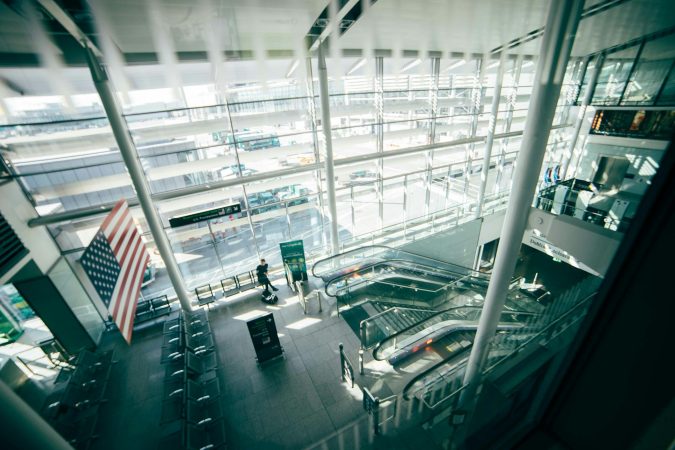
Think about what a gate area actually is. A row of vinyl seats, bad coffee, people you'll never see again, and a single instruction broadcast over speakers: wait. That's it. That's the whole job. You cannot answer the email that just came in because you're about to lose signal. You cannot start the laundry. You cannot attend the meeting, pick up the prescription, reply to your sister's text about Thanksgiving, or worry productively about the leak under the kitchen sink. All of it has been suspended, legally and logistically, by the fact that you are now contained inside a building designed to release you only when it decides to.
For the chronically responsible, this is closer to a spiritual experience than they'll admit. The man at LaGuardia looked like someone who had finally, after months of holding his breath, been told he could put down the thing he'd been carrying.
This is what people miss when they call this behavior anxious. Anxiety is future-oriented dread. What's happening at the gate is the release of dread. It's what your nervous system does when it finally believes, maybe for the first time all week, that the to-do list has been physically removed from its reach.
What the body was doing all along
Research on anticipatory anxiety suggests that the body often experiences the anticipation of a demand as more taxing than the demand itself. The meeting isn't what exhausts you. It's the seventeen hours before the meeting, during which some part of your brain is already in the room, already performing, already tracking every possible way it might go wrong.
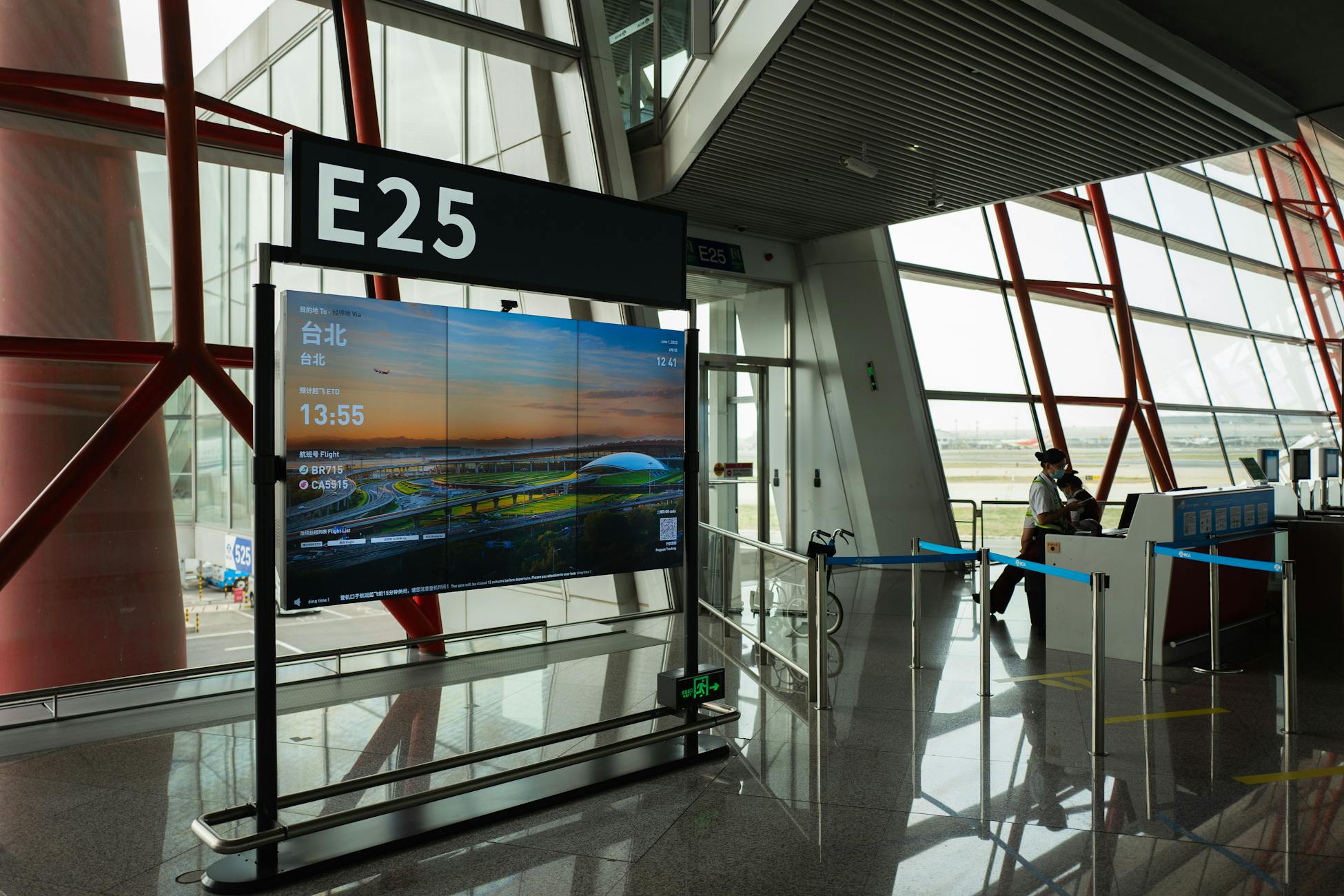
Now consider what the gate does. It erases anticipation. The plane will come when it comes. You cannot make it come faster by worrying. You cannot prepare any better than you already have. There is no version of you that could be more productive right now, because productivity has been structurally forbidden. For the person whose default setting is hypervigilance, the one who learned long ago that swallowing frustration was cheaper than expressing it, this is not boredom. It's the first real rest they've had since Sunday.
I think about a woman in my widow's group who told me she started booking flights she didn't strictly need. A half-hour hop to see a cousin. A weekend in Phoenix. She said her daughter thought she was running away from grief. What she was actually doing, she told me, was buying herself three hours in a terminal where no one expected anything of her. Her house, even empty, was full of expectations: bills, laundry, the roof, the recycling, the slow ongoing paperwork of a life winding down. The airport had none of that. The airport didn't know her.
The gap between burnout and the person you've become
There's a good piece in Forbes on why certain predictable stretches of the calendar trigger anxiety. It describes how the nervous system learns that certain environments mean sustained threat, and braces for them accordingly. January, for many people, is one of those stretches. But so is Monday. So is the commute. So is the house, if the house has become a place where you are constantly needed.
The three-hour-early traveler has usually figured out, without being able to articulate it, that the only way to turn off the bracing is to physically insert themselves into an environment that doesn't require it. The office requires it. The house requires it. The car, on the way to either, requires it. The gate, somehow, doesn't. It's one of the last neutral spaces left in adult life. Hospitals used to be neutral, until your phone started working in them. Libraries used to be. Churches, for some people. But gates are still protected, by altitude and atmospheric pressure, from the reach of your obligations.
And here's what I notice about the people who seek this out: they're rarely the ones you'd call anxious in their daily lives. They're the competent ones. The reliable ones. The ones who get called first when something goes wrong. A piece in Standard-Examiner recently drew a careful distinction between burnout and depression, and what stayed with me was the observation that burned-out people still have the capacity to feel relief. They just can't generate relief on their own. They need the environment to grant it. A gate grants it. A weekend at home, full of unfinished projects, doesn't.
Why the mid-career ones are the worst offenders
If you want to know who's flying three hours early next Tuesday, look at the mid-career manager. The Conversation published research finding that mid-career is one of the most dangerous periods for burnout, precisely because that's when responsibility stacks up in every direction at once. Aging parents on one side. Kids or partners on the other. A job that has finally given you enough authority to be blamed for everything. These are the people you see at gates, staring at nothing, looking like they've been pardoned. My son, who is forty-three, does this. He flies out of Newark for work roughly twice a month and he always, always arrives before he needs to. He told me once that the gate is where he eats his only uninterrupted meal of the week. A bagel. A paper cup of coffee. Nobody asking him anything. He said it with the shy half-laugh of someone confessing to a small indulgence, and I thought: that's not an indulgence. That's a man who has structured his entire professional life around not having his shoulders drop, and has found the one loophole the culture still permits.
I sat with this question for a while before eventually filming something about the actual psychological cost of relentless achievement—specifically looking at why some high-performers I know moved to Singapore, not for opportunity, but because it was the only place where their nervous system got permission to stop grinding (https://www.youtube.com/watch?v=zh0XgYwQalI). Turns out the airport gate feeling isn't an anomaly; it's a symptom of building a life where rest requires an institutional excuse.
The quiet thing nobody talks about is that we have made it almost impossible for competent adults to rest inside their own lives. High-achievers dread weekends for this reason. The weekend is not protected. The weekend still has a dishwasher in it. The gate is protected. The gate has been designated, by forces larger than you, as a place where nothing can be expected of you for a specific and finite window of time.
What we're actually grieving at the gate
I'll say something I've only recently let myself think. The relief these travelers feel at the gate is partly grief. It's the grief of recognizing, in the absence of demand, how relentless the demand usually is. You cannot feel how heavy something is while you're holding it. You can only feel it when you set it down. The gate is where a certain kind of person sets it down, and the weight that floods in during that first exhale, the weight of understanding what you've been carrying, is not anxiety either. It's information.
What I see in those slumped shoulders, in the man at LaGuardia smiling at nothing, in my son with his bagel, is not people running from their lives. It's people briefly allowed to meet their lives at a distance long enough to see them clearly. And what most of them see, I suspect, is the same thing: I have built something that does not let me rest. I have said yes to too many people. I have become a person I didn't quite mean to become, and the only time I notice is when a stranger in a uniform tells me I have to wait.
You can learn a lot from watching who shows up early. The ones doing it for the Cleveland flight, for the conference they don't want to attend, for the visit to a parent in decline. Those are the ones to pay attention to. They've found the loophole. They've figured out that the airport isn't a punishment. It's the last waiting room in America that doesn't ask you to fill out a form.
I arrived four hours early for my flight last month. I sat by the window at gate C7 and watched the planes push back from their jet bridges in the gray morning light. I had a book I didn't open. I had emails I didn't answer. A woman across from me was knitting something blue. We didn't speak. Neither of us needed to. We had both, for ninety uninterrupted minutes, been given permission to be nobody in particular, and we were using every second of it.
What’s Your Plant-Powered Archetype?
Ever wonder what your everyday habits say about your deeper purpose—and how they ripple out to impact the planet?
This 90-second quiz reveals the plant-powered role you’re here to play, and the tiny shift that makes it even more powerful.
12 fun questions. Instant results. Surprisingly accurate.