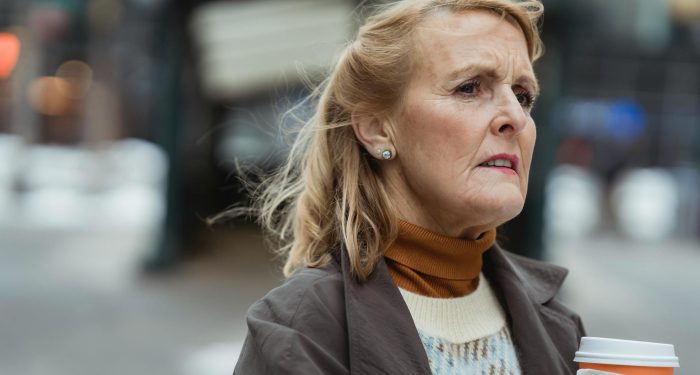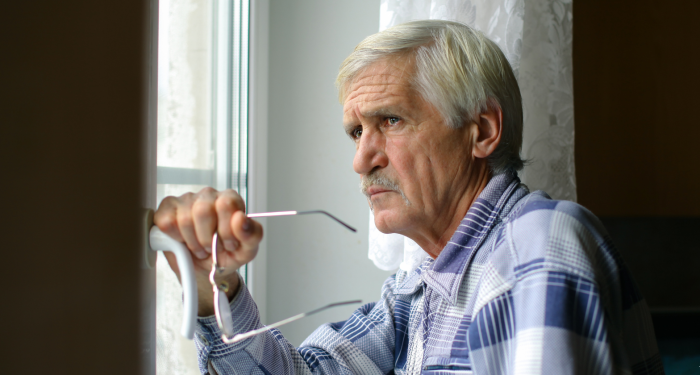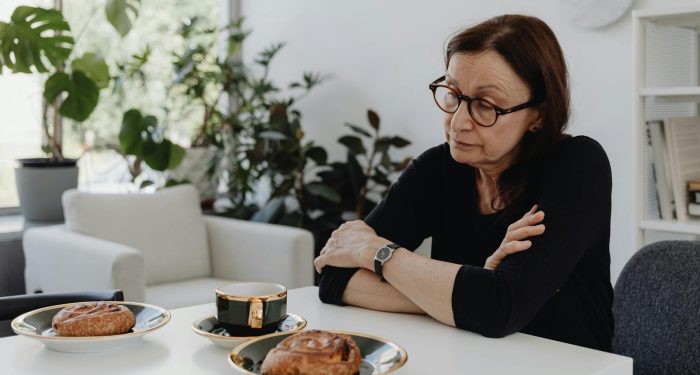
A retired teacher watches her daughter handle her grandson's Christmas morning meltdown with patience instead of punishment, and realizes that three decades of "tough love" parenting might have taught her children to survive, but not necessarily to thrive.
Last Christmas morning, I stood in my daughter's kitchen holding a cup of coffee that had gone cold, watching a scene unfold that would have played out so differently in my house thirty years ago. My eight-year-old grandson was melting down over something about the way presents were being distributed, his face red and tears streaming. My hand tightened on the mug. Every fiber of my being wanted to march over there and tell him that crying on Christmas morning was unacceptable, that he should be grateful, that this behavior would not be tolerated.
Instead, I watched my daughter set down the gift she was holding, walk over to him, and lower herself to the floor. She sat cross-legged in her pajamas, right there on the hardwood, and waited until his eyes met hers. "You're having some big feelings," she said, her voice steady and calm. "Can you help me understand what's happening for you right now?"
The child, still sobbing, started explaining something convoluted about fairness and promises and his sister getting to open something first when he thought it was his turn. My daughter nodded, really listening, asking clarifying questions. She didn't rush him or dismiss his concerns as silly. She didn't threaten to take presents away or send him to his room. Five minutes later, he was helping distribute gifts to everyone else, the crisis completely resolved.
I've been thinking about that moment ever since.
When everything you knew feels suddenly outdated
There's a particular kind of vertigo that comes with realizing that maybe, just maybe, everything you thought you knew about something fundamental might be wrong. Or if not wrong, then at least incomplete. After 32 years of teaching high school English, after raising two children largely on my own, after surviving and thriving and making it through, I thought I understood young people. I thought I knew how to guide them through difficulties.
But watching my daughter parent her children has been like discovering there was a whole other language I never learned to speak. The first time she told me she let her teenager take a "mental health day" from school, my teacher brain nearly imploded. When she instituted something called "big feelings time" where the younger kids could stomp and yell in their rooms without consequences, I had to physically leave the house for a walk to avoid saying something I'd regret.
She talks about "gentle parenting", and while I can see some of the benefits, there's undoubtedly limitations that my generation can spot in an instant. I actually came across a video about this, "4 Things Your Child Will Never Get From Gentle Parenting", which highlights some of the points I feel when watching my daughter raise her kids (and it does a much better job of explaining the psychology behind it than I can).
Click here to watch the video.
The thing is, I raised my children in survival mode. Their father left when Daniel was three and Grace was barely one, and suddenly I was drowning, trying to finish my teaching degree while substitute teaching and keeping two tiny humans alive. There was no time for validation circles or emotional processing. There was barely time to make sure everyone had clean underwear for the next day. Love looked like teaching them to be independent, to solve their own problems, to never let anyone see them sweat.
I remember one night when Daniel was maybe nine, crying because some kids at school were teasing him. "Sticks and stones," I told him, barely looking up from the stack of papers I was grading. "Don't let them see it bothers you and they'll stop." It worked, I suppose. He stopped coming to me with those problems. I thought that meant he'd learned to handle them himself. Now I wonder what it really meant.
The luxury of doing better
My daughter has things I didn't have. A partner who stayed. Financial stability. Time to read parenting books and attend workshops. Energy that isn't depleted by working two jobs and wondering how to make twenty dollars stretch until payday. She can afford to get down on the floor and explore feelings because she's not worried about keeping the roof over their heads.
But acknowledging her privileges doesn't diminish what she's accomplishing. She's intentional about parenting in a way I never could be. She thinks about the long-term impact of her words, considers the latest child development research, talks to other parents about strategies and approaches. She treats raising children like the complex, important work it is, not just something you stumble through hoping everyone survives.
During one of our weekly phone calls, I finally asked her directly: "How did you learn to do this so differently?"
She laughed, but not unkindly. "Therapy, Mom. Years of it. And reading everything I could get my hands on. And honestly? Making different mistakes than the ones that were made with us."
That stung. But she was right.
Learning to bite my tongue (and when to open my mouth)
Have you ever had to physically stop yourself from offering advice so many times that your jaw actually starts to ache? That was me for the first several years of watching my daughter parent. Every instinct screamed at me to intervene, to share my wisdom, to prevent what I saw as mistakes.
When she negotiated with a tantruming toddler instead of simply laying down the law, I bit my tongue. When she apologized to her children for losing her temper, something that would have been seen as weakness in my generation, I bit my tongue. When she let them express anger at her without immediate consequences, I bit my tongue so hard I'm surprised I didn't draw blood.
But slowly, something shifted. I started noticing the results. Her children came to her with problems instead of hiding them. They expressed their emotions without fear of punishment. The teenagers actually seemed to enjoy family time instead of counting the minutes until they could escape. There was a ease in their household that I don't remember in mine, a sense that everyone's feelings mattered, that mistakes were learning opportunities rather than moral failures.
I started asking questions instead of offering solutions. "What made you try that approach?" "How do you stay so calm when they're melting down?" "What do you do when that doesn't work?"
The humility of hindsight
There's grief in watching your child parent better than you did. Grief for the parent you might have been with more resources, more knowledge, less trauma of your own to work through. Grief for the moments you shut down instead of opening up, for the connections missed in the name of control.
I think about my mother, who raised four daughters in small-town Pennsylvania with even less room for error than I had. Problems were solved with silence and perseverance. Emotions were luxuries we couldn't afford. She loved us in the only way she knew how, with food on the table and clothes on our backs and the fierce determination that we would have better than she did. She did her best with what she had. We all do.
But there's also something liberating about admitting you didn't have all the answers. In my widow's support group, when the other grandmothers complain about permissive parenting and kids these days, I find myself gently pushing back. "Maybe they're onto something we didn't know to try," I suggest. Sometimes this earns me looks of betrayal, as if I've broken some sacred grandmotherly code of judgment.
Becoming a student again
At 70, I'm learning to be a different kind of grandmother than I was a mother. I've instituted "adventure days" with each grandchild, one-on-one time where I practice the techniques I've learned from watching my daughter. When my teenage granddaughter complains about her parents' rules, instead of immediately defending them, I say, "That sounds frustrating. Tell me more." When the youngest has a meltdown at the museum, I resist every urge to bribe or threaten. I get down on those creaky, replaced knees and try to understand.
It doesn't come naturally. My instincts still run toward quick fixes and "because I said so." But I'm learning that connection takes time, that feelings need space, that children are whole people deserving of respect even when they're being completely irrational about who gets the last piece of pizza.
My daughter sends me articles about emotional regulation and gentle parenting. She explains terms like "natural consequences" and "repair after rupture" without condescension. She's teaching the teacher, and somehow that feels like coming full circle in the most unexpected way.
Final thoughts
That Christmas morning scene plays in my mind often now. Not with regret for all the times I handled things differently, but with wonder at how each generation gets to choose what to carry forward and what to leave behind. I gave my children resilience and independence. My daughter is giving hers emotional intelligence and secure attachment. Both are forms of love.
I've come to realize, that although there are limitations to this style of parenting (as the video I mentioned earlier covers), there are numerous benefits too. It all comes down to parenting with intention and love.
Next Christmas, when the inevitable emotional explosion occurs, I won't just bite my tongue and watch. I'll see it as my daughter does: a child who trusts their adults enough to fall apart in front of them, knowing they'll be helped to put the pieces back together. And maybe, if these old knees cooperate, I'll get down on the floor too.
What’s Your Plant-Powered Archetype?
Ever wonder what your everyday habits say about your deeper purpose—and how they ripple out to impact the planet?
This 90-second quiz reveals the plant-powered role you’re here to play, and the tiny shift that makes it even more powerful.
12 fun questions. Instant results. Surprisingly accurate.