
The child who learned to disappear at the dinner table grows into an adult who disappears at the family reunion — and everyone considers it proof of how easy they've always been to love.
Researchers who study attention distribution in large families have noticed something that doesn't fit the tidy narratives. It isn't the oldest who carries the heaviest emotional load, and it isn't the youngest. It's usually a middle child — often a daughter, often the third or fourth — who learns earliest that the household's attention is a finite resource and quietly opts out of competing for it. The opting out looks, from the outside, like maturity. From the inside, decades later, it looks like something else.
Marguerite is the fourth of six. She is sixty-one now, a retired paralegal in Ohio, and she tells a story about her parents' fiftieth anniversary party that she has never told anyone outside of therapy. The hall was rented, the photographer booked, the slideshow assembled. Three of her siblings gave speeches. Her mother cried during the one from the youngest, who used to wet the bed until he was nine and whose name everyone still says with a softness they don't extend to anyone else. Marguerite had prepared something too. She had it folded in her purse. Nobody asked her to speak. On the drive home she realized, with the kind of clarity that arrives only when it's far too late to be useful, that nobody had asked her to speak at any family event, ever, and that the absence of the request had been so consistent for so long that she had stopped registering it as an absence at all.
Most writing about large families lands on one of two narratives. Either the siblings are a built-in tribe, a lifelong support system that smaller families envy, or the household was chaotic and under-resourced and everyone came out wounded in roughly the same way. Both miss what actually happens to the child who read the room early and decided, without ever framing it as a decision, that the way to stay safe in a crowded house was to need less than everyone else. That child is not traumatized in any headline-grabbing sense. That child is, by every external measure, the easy one. The one the parents brag about. The one teachers describe as mature. The one who never made a scene at Christmas because they understood on some wordless level that scenes were a resource in short supply and other people had already claimed them.
The strategy works. That is the cruel part. It works so well that it becomes invisible, and invisibility becomes the identity.
The adaptation that succeeds too completely
Psychologists who study childhood emotional neglect describe a specific pattern in which a child's unexpressed needs gradually stop being experienced as needs at all. The feelings don't disappear. The signal that converts feeling into request is what atrophies. You can want something badly and also, simultaneously, have no mechanism left for asking for it. The two coexist in the body the way a lit room and a locked door coexist in a house.
In a large family, this adaptation is rewarded faster than almost anywhere else. When there are two parents and six children and one bathroom and a finite dinner, the child who volunteers to wait, who says they're fine with the heel of the bread, who takes the middle seat in the car, who shares a room without complaint — that child is not just tolerated. That child is celebrated. Their self-effacement gets named as character. And character, once named, becomes something you have to keep performing to remain recognizable to the people who named it.
By the time Marguerite was ten, her role was set. She was the one who didn't need anything. Her younger brother had asthma. Her older sister was the pretty one, which in a family economy like theirs counted as a medical condition in its own right. Her two middle brothers were loud and the oldest was brilliant and the baby was the baby. She was the one who was fine. And she was. She was fine. That was the achievement.
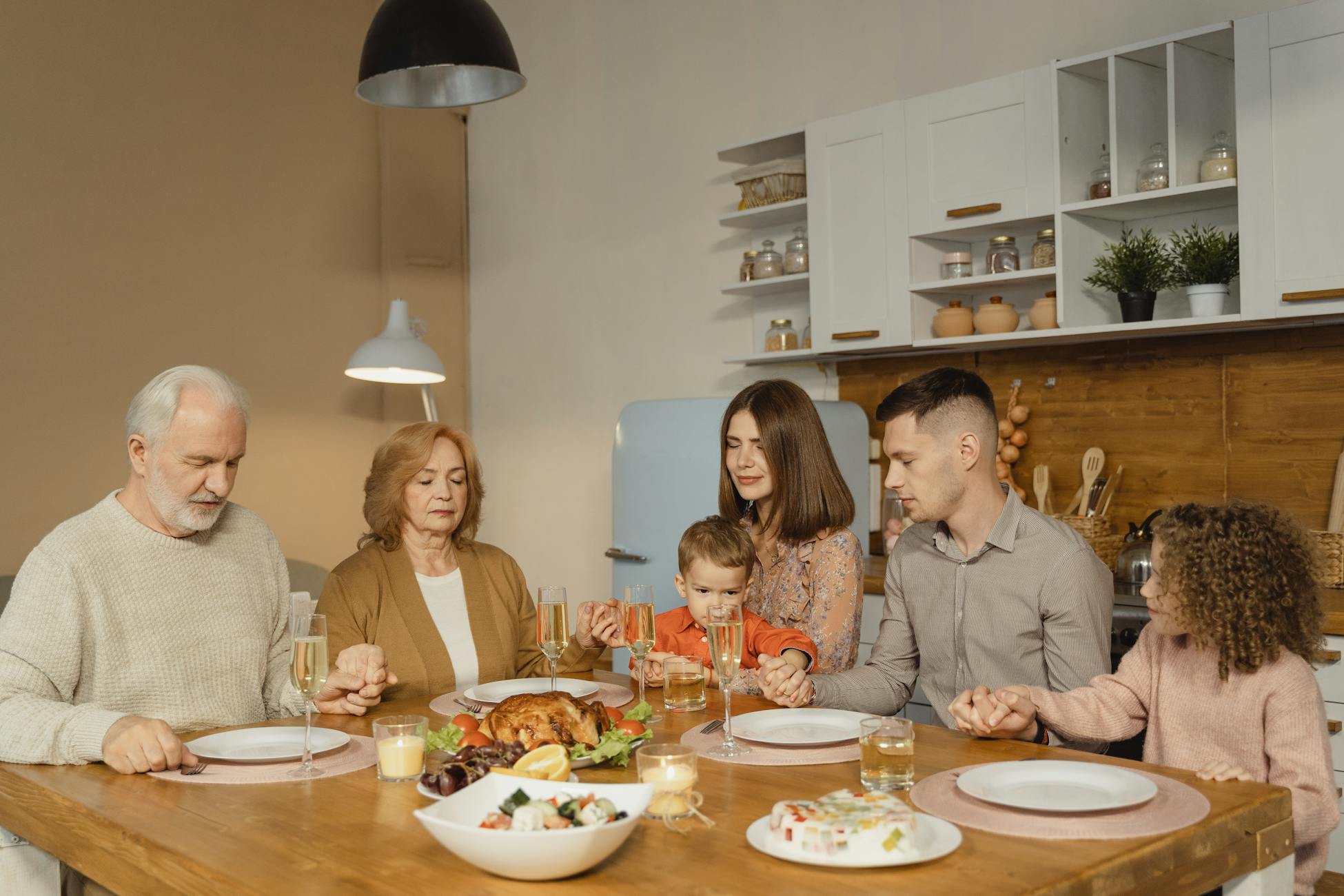
Why the reunion is the scene of the crime
Family reunions are the one context in adulthood where the original distribution of attention becomes legible again. At work, Marguerite is known. At book club, people save her a seat. In her marriage, her husband asks her what she thinks and waits for the answer. But at the reunion, the old map reasserts itself. The seating, the conversational gravity, the way the group photo organizes itself — all of it defaults to the configuration that was set when she was nine.
And the person who learned to need less as a child cannot simply announce, at sixty, that she would like more now. The announcement itself would violate the identity that bought her belonging in the first place. She cannot say I wish you had asked about my divorce without becoming, in the family's eyes, a different person than the one they've always loved. The love was conditional on a specific performance, and the performance required the absence of the request.
So she watches. She watches her siblings be asked about their children, their health, their opinions on the new house. She answers when addressed. She clears the table. She drives home. And somewhere on the highway, the grief arrives, and she doesn't have a name for it because the name would indict everyone she loves.
The name, if she wanted one, is this: the strategy worked. Nobody ever came looking for what she stopped asking for. Every reunion is a fresh data point confirming that her disappearance was not a temporary strategic retreat but the permanent shape of her position in the family. She was valued for requiring nothing, and she is still valued for it, and the value is exactly what hurts.
The trait that survives becomes the trait that isolates
Researchers who track the long tail of childhood coping strategies have begun pointing out that the very traits that once helped a child survive often become the source of relational pain in adulthood. Self-sufficiency, low-maintenance affect, preemptive helpfulness — these get reclassified in the adult world as maturity or generosity, which makes them even harder to put down. You can't easily stop doing the thing everyone praises you for.
This is why children who were praised for being no trouble at all often become adults who cannot locate their own hunger. They don't know what they want for dinner. They don't know which movie they'd pick. They defer, and the deferral is so automatic it doesn't register as a choice. The inner compass was never installed because the compass would have been insubordinate.
The same pattern shows up in how these adults grieve. They grieve privately. They grieve late. They grieve on the drive home, in the shower, in the car in the grocery store parking lot while the engine ticks. Research on adults raised with emotional neglect suggests that many of them confuse self-reliance with strength, and the confusion lasts decades because the culture rewards it the whole time.

What the grief is actually about
It is tempting to frame this as a story about bad parents or bad siblings. It usually isn't. The parents in a family like Marguerite's often loved all their children genuinely and were simply running a household at the edge of their bandwidth, triaging toward the loudest need. The siblings weren't cruel. They were children. They accepted the distribution of attention the same way children accept the weather.
The grief is not about villains. It is about the cost of an adaptation that worked.
What Marguerite is mourning, when she drives home from the reunion, is a version of herself that never got to exist. The Marguerite who interrupted. The Marguerite who said she wanted the window seat. The Marguerite who, at twelve, told her mother that she was having a hard time at school and needed her to notice. That child was negotiated away in exchange for peace in the household, and the negotiation was successful, and the success is what she is crying about.
There is a difference between missing someone and missing a version of yourself, and this grief is almost entirely the second kind. The people at the reunion are still there. They love her in the way they have always loved her. They would be hurt and confused to learn she was in pain, because from their vantage point she has always seemed fine, and their vantage point is the only one the family has ever credited.
Why the kind ones carry it longest
The child who learned to need less usually grew up to be kind. Not performatively kind — structurally kind. They became the friend who remembers the anniversary of your mother's death. The colleague who notices you're quiet. The partner who can sit with you in a bad mood without taking it personally. The skill of reading other people's unexpressed needs was their first literacy, and they never stopped practicing. And the fluency runs in only one direction. They speak a language of quiet attention that nobody, as far as they can tell, has ever spoken back to them.
Which is why the reunion stings in a way that a normal week doesn't. A normal week, Marguerite is surrounded by people she has trained to expect nothing from her, and her loneliness is diffuse, survivable, almost cozy. At the reunion, the loneliness becomes specific. It has names. It has faces. It has a seating chart. It has a photographer telling everyone to squeeze in.
What begins to change it
The first step, for anyone who recognizes themselves here, is the smallest and the hardest: letting yourself call it grief. Not disappointment. Not moodiness on the drive home. Grief. The word is accurate, and the accuracy matters, because grief is the only category of feeling that doesn't require a resolution in order to be legitimate. You don't have to fix the family. You don't have to confront anyone. You don't have to reinvent yourself at sixty-one. You are allowed to mourn something that is still happening.
The second step is slower, and it doesn't begin with the family at all. It begins with the small, private reinstallation of the request. Asking the waiter for a different table. Telling your husband which movie you'd actually prefer. Saying out loud, to one trusted person, I would have liked to give a speech at that party. None of this reaches back through time. None of it corrects the original distribution. But it begins to prove to the nervous system that the request is survivable, which is the thing the nine-year-old never got to learn.
And even that, Marguerite would tell you, is easier to write than to do. The paper in her purse is still folded. The speech is still unread. Next year there will be another gathering, and her brother will probably organize it, and someone will give a speech, and she will bring a dish and help with the dishes and drive home on the same highway she always drives home on.
The strategy worked. That is the sentence she keeps arriving at, and the sentence she cannot quite finish. It worked, and it is still working, and the people she loves are exactly as they have always been, and she is exactly as she has always been to them. The headlights pick out the lane markers. The engine does its quiet work. Somewhere near the exit she always takes, the grief comes up again the way it always does, and she lets it, and then she goes inside, and nobody at the reunion will ever know she was, for a little while on the drive, not fine.
What’s Your Plant-Powered Archetype?
Ever wonder what your everyday habits say about your deeper purpose—and how they ripple out to impact the planet?
This 90-second quiz reveals the plant-powered role you’re here to play, and the tiny shift that makes it even more powerful.
12 fun questions. Instant results. Surprisingly accurate.