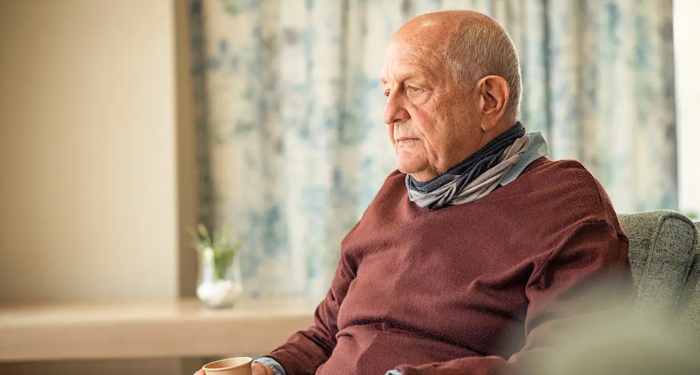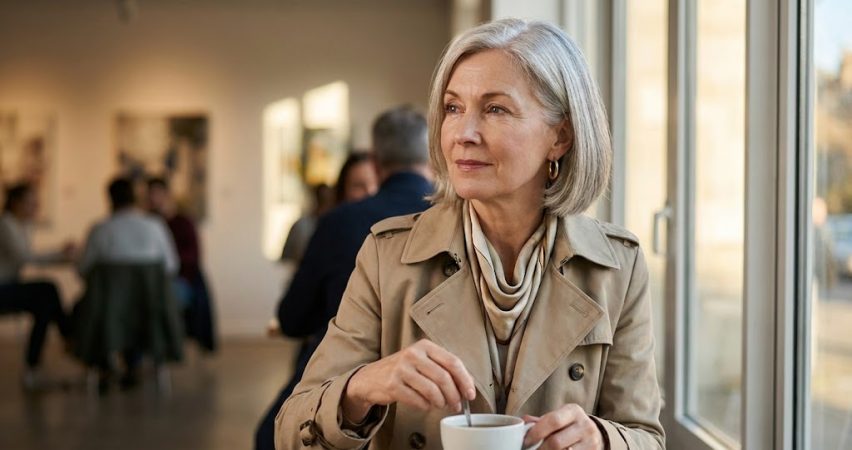
They've discovered that the most elegant women at seventy aren't the ones with perfect pearls and manicures, but those who kneel on creaky knees to comfort a stranger's crying child, who spend Saturday mornings teaching immigrants to read, and who treat the invisible people of the world as if they matter — because they do.
True class in your sixties and seventies has almost nothing to do with style, wealth, or beauty. It has everything to do with how you treat people who can do nothing for you. After three decades in the classroom and six years of retirement, I've come to believe this is the single trait that separates women who are merely well-dressed from women who are unforgettable.
The pattern shows up in small, unscripted moments. Last week at the grocery store, I watched a woman in her seventies help a young mother whose toddler was having a spectacular meltdown in the cereal aisle. While others averted their eyes or hurried past, this woman knelt down, despite what must have been protesting knees, and simply said, "You're doing fine, dear. We've all been there." The mother's eyes filled with tears of relief.
That brief exchange stayed with me because it captured what I've noticed after decades of observing genuinely classy older women: they possess an instinct for kindness that has nothing to do with their handbag or their manicure, and everything to do with how they move through the world when no one important is watching.
The invisible currency of genuine class
Have you ever noticed how the most memorable women in their sixties and seventies aren't necessarily the ones with the most polished appearance? After 32 years in the classroom and six years of retirement, I've come to understand that genuine class operates on an entirely different currency than what we're taught to value in our youth.
I think about a bridge club I knew that met every Thursday for forty years. The wealthiest member, draped in pearls and perfectly coiffed, is barely remembered now, five years after the group dissolved. But Agnes, who drove a fifteen-year-old Honda and wore the same cardigan to every meeting, is still spoken of with reverence. Why? Because she remembered every grandchild's name, every husband's surgery date, every small triumph and quiet sorrow of each woman at that table.
A 2021 study published in Nature Aging found that prosocial behavior tends to increase with age across cultures, with older adults showing higher rates of generosity and cooperation than younger cohorts. The data tracks with what I've watched up close for years: the women who age with genuine grace seem to operate on the assumption that their legacy won't be measured in possessions but in the lives they've quietly touched.
The radical act of treating everyone as worthy
During my teaching years, I watched countless parent-teacher conferences reveal character within minutes. The parents who treated the janitor with the same respect as the principal invariably raised the kindest children. Now, volunteering at the local women's shelter, I see the same pattern magnified in older women. The truly classy ones don't calibrate their warmth based on someone's perceived status.
Last month, a woman in her seventies spent twenty minutes at the library helping a homeless man navigate the computer system to apply for jobs. She sat beside him as naturally as if he were her own son, never flinching at his appearance or smell, focused entirely on his humanity. Later, I learned she'd been doing this weekly for three years, and had never mentioned it to anyone.
This behavior tends to intensify with age. Whether that's accumulated experience, reduced ego involvement, or something else entirely, the result is consistent: these women operate on the working assumption that everyone they meet is dealing with something they don't know about, and that fact alone deserves a baseline of respect.
The wisdom of the unwitnessed moment
What interests me most about genuinely classy older women is how they behave when they think no one is watching. My neighbor at seventy-three still writes thank-you notes to the mail carrier at Christmas, tips generously even when service is mediocre, and picks up litter on her morning walks without fanfare. She told me once, "Character is what you do in the dark," quoting Dwight Moody, though she lives it more than quotes it.
In my previous post about finding purpose after retirement, I mentioned the invisible work that defines us. The behaviors stack up in predictable ways: bigger tips at diners they'll never return to, letting harried drivers merge in traffic, smiling at crying babies on airplanes instead of rolling their eyes. None of it is performed for an audience because there isn't one.
The transformation from performance to presence
According to Harvard Health, performing acts of kindness is associated with measurable improvements in psychological and physical well-being, particularly in older adults. But the relationship runs deeper than reciprocal benefit. The women I'm describing have moved past performing kindness and into something closer to default behavior.
Younger women, myself included at that age, often perform class like a role, checking boxes of appropriate behavior. Somewhere around sixty, many women shed that performance. The internal question shifts from "How do I appear?" to "How can I help?" That shift from self-consciousness to other-consciousness is what separates practiced elegance from genuine grace.
I remember attending a charity gala years ago where two women in their seventies sat at my table. One spent the evening ensuring everyone knew about her donations and committee positions. The other spent it drawing out the shy young woman beside her, making her feel like the most interesting person in the room. Guess which one left the deeper impression?
The quiet revolution of aging authentically
There's something quietly radical about women who reach their sixties and seventies with this understanding intact. They've survived decades of being told their worth lies in their appearance, their husband's success, or their children's achievements. Yet they've arrived at the conclusion that their actual worth lies in their capacity for compassion, especially toward people who can offer them nothing in return.
These women volunteer at food banks not for the photo opportunity but because hunger offends their sense of human dignity. They mentor young women not to relive their glory days but to smooth another's path. They visit nursing homes not from obligation but from a clear-eyed understanding that everyone deserves to be seen and heard.
My friend at seventy-one teaches English to immigrants every Saturday morning. She drives forty minutes each way, prepares lessons throughout the week, and has never missed a session in five years. When asked why, she simply says, "Because I can read and they want to learn." No grand philosophy, no need for recognition, just the simple arithmetic of having something to give and someone who needs it.
Final thoughts
I think often about that woman in the cereal aisle, knees on the linoleum, talking quietly to a stranger's child. She didn't introduce herself. She didn't wait for thanks. When the toddler calmed down, she stood up slowly, nodded once at the mother, and pushed her cart toward the dairy section.
I don't know whether that instinct can be taught, or whether by seventy you either have it or you don't. What I do know is that I'd recognize her again anywhere, and I never even learned her name.