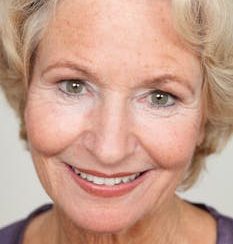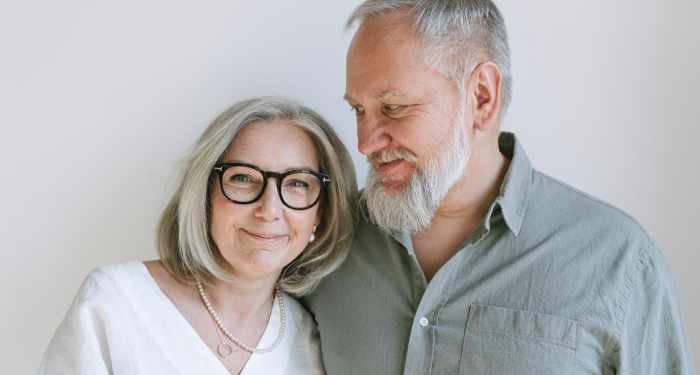
The secret isn't in the expensive creams or procedures—it's in watching a 75-year-old woman outshine someone a decade younger simply because she learned to stop carrying everyone else's shame, grief, and expectations on her face.
The woman at my neighbor's seventieth birthday party last month looked radiant, her face glowing with an inner light that made everyone gravitate toward her. Meanwhile, another guest, barely sixty-five, seemed to carry decades of invisible weight that showed in every line, every gesture, every forced smile. The difference between them had nothing to do with skincare routines or cosmetic procedures. It had everything to do with what each woman had chosen to release or continue carrying through the years.
The weight we wear on our faces
Have you ever noticed how some people seem to age backwards after a divorce, a career change, or finally setting boundaries with toxic family members? There's a reason for that. According to Hara Estroff Marano, psychologist and author, "Aging isn't what you think it is!" The process involves far more than biological factors; it's deeply intertwined with our emotional landscape.
I discovered this truth during my fifties when I was simultaneously caring for my mother with Alzheimer's, dealing with failing knees, and watching my daughter repeat relationship patterns I thought I'd warned her against. The weight of feeling responsible for everything was etching itself into my face daily. Friends would ask if I was sleeping well, but sleep wasn't the issue. I was carrying burdens that weren't mine to hold.
Research has demonstrated that both age-related changes in facial muscles and physical alterations in the face contribute to difficulties in recognizing facial expressions in older individuals, suggesting that emotional expression challenges are linked to aging. But here's what that research doesn't capture: how much of that facial tension comes from decades of unexpressed emotions, unresolved conflicts, and unreleased pain.
When emotional release becomes physical transformation
The first time I truly understood the connection between emotional weight and physical appearance was at fifty-two, sitting in a hospital gown awaiting breast biopsy results. For twenty-four years, I'd been carrying the shame of my first husband walking out when our children were toddlers. That day, facing potential mortality, something shifted. The results came back benign, but more importantly, I realized shame was a luxury I could no longer afford.
A fascinating study found that higher levels of optimism, self-esteem, and relationship satisfaction in men aged 40 to 75 were associated with perceptions of a younger facial appearance, with mental health mediating these effects. While this research focused on men, my experience teaching high school for thirty-two years showed me this truth applies universally. Students could always tell when I was carrying yesterday's argument with my son or worry about mounting bills. It showed up as jaw tension, shortened patience, the kind of exhaustion that sleep couldn't touch.
What changed everything was learning to release these weights systematically. Therapy in my fifties introduced me to boundaries, teaching me that I couldn't carry my children's choices as personal failures. Each burden I consciously released seemed to lift a line from my forehead. My evening walks became rituals of leaving behind the day's accumulated tensions. My journal became a repository for worries that didn't need to live in my body.
The unexpected beauty of grief and release
When my second husband developed Parkinson's, I thought the seven years of caregiving would age me beyond recognition. Some mornings, grief felt like concrete settling in my chest. But watching him face his illness with grace taught me something profound: holding onto pain is a form of vanity. It assumes our suffering makes us special, worthy of carrying forever.
Six months after his death, when I finally ventured out regularly again, neighbors commented that I looked different. Not younger exactly, but clearer, like someone had wiped fog from glass. The transformation puzzled me until I realized what had happened. In releasing him, in accepting the loss rather than fighting it, I'd also released years of anticipatory grief I'd been carrying since his diagnosis.
Tyler Woods notes that "Your body image encompasses your perceptions, beliefs, feelings, thoughts, and actions that pertain to your physical appearance." After my husband's death, I began to understand that my perception of my own face was filtered through layers of unprocessed emotion. As I worked through grief in my widow's support group, as I learned to forgive myself for moments of impatience during his illness, my reflection literally began to change.
The practice of putting things down
Now at seventy, my beauty routine has nothing to do with products and everything to do with release. Each morning at 5:30, I sit with tea and my journal, writing down yesterday's worries and letting the page hold them instead of my face. This isn't about positive thinking or denial. It's about recognizing what belongs to me and what I've been carrying for others.
My four grandchildren don't see the woman who once failed a student she genuinely liked or who missed her son's college graduation because she couldn't afford the plane ticket. They see someone who bakes cookies and allows messes, who writes them letters for their futures. The guilt I've released has made space for presence, and presence, it turns out, is what makes a face beautiful at any age.
Margaret Foley, psychologist and author, suggests that "Your face may soon be a vital sign that can diagnose biology, not beauty, with a single glance." But I'd argue our faces already are vital signs, broadcasting not just our physical health but the emotional weights we've chosen to carry or release.
In my weekly coffee meetings with friends, we've all discovered the same truth. Those who look radiant at seventy-five versus worn at sixty-five share one common trait: they've learned to put things down. Every resentment released softens the mouth. Every shame surrendered brightens the eyes. Every fear faced lifts the entire countenance.
The science of letting go
Tzvi Ganel discovered that "Smiling faces are perceived as older compared to neutral faces of the same people." This finding initially seems counterintuitive, but it reveals something profound about authentic expression versus forced positivity. The women in my supper club who've released their need to perform happiness actually look younger than those still forcing smiles over unprocessed pain.
The transformation isn't instant. Releasing decades of accumulated emotional weight takes time, patience, and often professional help. But the results are undeniable. In my volunteer work at the women's shelter, I see it repeatedly: women who finally leave abusive situations, who stop carrying their abuser's shame, literally transform before our eyes. Not through makeup or procedures, but through the profound beauty that emerges when we stop carrying what was never ours to hold.
Final thoughts
Beauty after sixty isn't about preservation but transformation. It's not about maintaining what was but revealing what's becoming. Every weight you release, whether it's old grief, persistent shame, or the simple daily burden of trying to be someone you're not, reveals more of the face you were meant to have. Not younger, but truer. Not perfect, but present. The mirror doesn't lie: what you put down in your fifties truly is what the world sees as light, as peace, as beauty in your seventies.