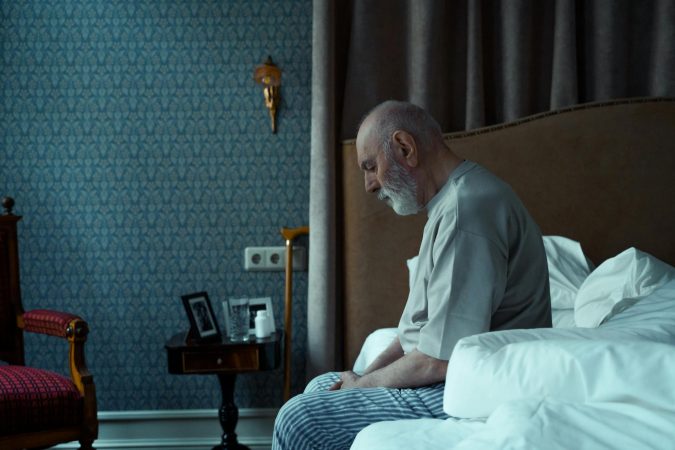
The sixty-two-year-old man who suddenly falls apart after decades of being "fine" isn't experiencing a breakdown—he's finally releasing thirty years of truths that had nowhere else to go.
When my second husband finally said the words "I'm terrified," we'd been married for five years. He was standing in our kitchen, gripping the counter with hands that had begun to shake from early Parkinson's, and I watched decades of practiced stoicism crack like ice in spring. He wasn't terrified of the disease. He was terrified of needing help, of becoming someone who couldn't fix everything, of admitting that "fine" had been a lie he'd been telling since childhood.
I think about my husband whenever I hear about another man who spent decades being "fine" before quietly collapsing. These aren't sudden breakdowns. They're the inevitable result of a system that teaches boys they're allowed exactly one answer to life's hardest questions, then acts surprised when the weight of all those unspoken truths finally becomes unbearable.
The architecture of masculine silence
My father died with apologies locked behind his teeth. Even in hospice, when I asked how he was feeling, he'd say "can't complain" while illness ate him from the inside out. It wasn't until I started teaching high school English that I understood this wasn't just his quirk—it was an entire generation's survival strategy.
Research from SAGE Journals indicates that traditional masculinity norms, such as emotional stoicism and self-reliance, lead to significant emotional suppression in men, exacerbating mental health issues like anxiety and depression. But what struck me most in thirty-two years of teaching wasn't the research—it was watching this play out in real time with teenage boys who hadn't yet perfected the performance.
They'd write essays that bled truth while claiming everything was "fine" in person. One student, whose father had been "fine" for years before driving into a telephone pole on a clear morning, wrote that the accident felt inevitable—like watching a glass inch toward the edge of a table for decades. The autopsy showed he wasn't drunk. He was just done pretending.
When fine becomes a prison
The most heartbreaking part? These men aren't lying to us. They're trapped in a language that never gave them words for what they're experiencing. When my son showed up at my door after a difficult period, he said "fine" with such practiced conviction I almost believed him. It took three hours and multiple cups of tea before he finally broke down at my kitchen table, admitting he had no idea how to handle his situation.
Men are often socialized to suppress their emotions and avoid seeking help, which can lead to mental health issues later in life. But knowing this intellectually and watching it destroy the men you love are two different things.
I volunteer at a women's shelter now, teaching resume writing to women who've survived men whose "fine" eventually exploded into violence, addiction, or abandonment. These women understand something profound: the collapse was never sudden. It was years of pressure building behind a dam of acceptable masculinity, and they just happened to be standing there when it broke.
The generational weight of unasked questions
Have you ever noticed how men ask each other "How's it going?" while already walking away? The question isn't meant to be answered—it's social choreography, a performance of connection without the risk of actual intimacy. Women, I've observed, ask "How are you really?" and then wait. We make space for the answer to be complicated.
In my widow's support group, we use words like desperate, furious, lost. We admit we're drowning even while we're swimming. But when I watch the men at church or the grocery store, they perform elaborate displays of adequacy while one man's wife has left, another hasn't slept in months, and another cries in his car after dropping his daughter at college.
A study from BMC Psychology found that strict adherence to masculine norms is associated with increased depression among Australian men, with age influencing this relationship. The older men get, the heavier the weight of all those "fines" becomes, until somewhere around sixty-two, the structure simply can't hold anymore.
Breaking the pattern before it breaks you
My grandson calls me every week, and when I ask how he's doing, he actually answers. Really answers. Sometimes he's struggling. Sometimes he's grateful. Often he's both. I taught him this during our adventure days when he was young, in quiet conversations while baking cookies. I taught him that strength isn't silence, that masculinity doesn't require invulnerability.
My husband learned this too, though it took Parkinson's to crack him open. Once he finally admitted his terror, something shifted. He could say "I need you" without it diminishing him. He could accept help without seeing it as failure. Those last years, when his hands shook too much to fix the things he'd always fixed, were paradoxically when he seemed most at peace. He'd finally stopped performing fine and started being real.
In my watercolor class at the community center, there's a man whose wife died last year. He paints the same landscape every week—a barn, a field, a sky threatening rain. The teacher says he needs variety. I think he's painting exactly what he needs: the same view repeatedly until he can finally see it differently. This is what emotional honesty looks like when you're learning it at seventy—slow, repetitive, necessary work.
The questions we need to start asking
What if instead of "How are you?" we asked "What's weighing on you today?" What if we made space for answers longer than "fine"? What if we recognized that when a sixty-two-year-old man suddenly falls apart, he's not weak—he's been carrying an impossible load for decades?
I wrote in a previous post about finding purpose after loss, but I realize now that for many men, the loss isn't a person or a job—it's the accumulated cost of never being allowed to not be okay. They've lost decades of authentic emotional life to the tyranny of fine.
The men who collapse aren't malfunctioning. The system that told them they could only ever be "fine" is what's broken. Every unspoken fear, every swallowed grief, every time they answered "good" when they meant "drowning"—these aren't signs of strength. They're tiny fractures that eventually become chasms.
Final thoughts
I'm writing birthday letters for my grandchildren to receive when they turn twenty-five. In my grandson's, I've written: "You come from a long line of men who said they were fine when they weren't. You have the chance to break this pattern."
The collapse at sixty-two isn't sudden. It's thirty years of "fine" finally meeting a truth too heavy to deny. The real tragedy isn't the falling apart—it's all those years of pretending to be whole when breaking would have been the beginning of healing.