Eating the same breakfast daily isn't a sign of boredom—it's a strategic decision to preserve mental energy for choices that actually matter, according to behavioral science research on decision fatigue.
The most quietly competent adults I know eat the same breakfast every single day, and they're not white-knuckling through some joyless ritual. They've absorbed something behavioral scientists have spent decades proving: every trivial decision you make before noon is a withdrawal from a finite mental account, and they'd rather spend that balance on their work, their relationships, and the kind of choices that actually shape a life.
The cultural assumption is the opposite. We treat routine like evidence of a small inner world. Variety reads as curiosity, optionality reads as freedom, and the person eating oatmeal with the same berries on a Tuesday in May that they ate on a Tuesday in February gets quietly filed under the category of being stuck in their ways.
That framing is wrong. Or at least, it's missing the architecture underneath.
The mental accounting nobody taught you about
The concept of ego depletion suggests that self-control and decision-making draw from the same limited reservoir of mental energy. Make a hundred small choices and the hundred-and-first gets sloppier. Resist a hundred small temptations and the hundred-and-first wins. Decision fatigue describes the mental exhaustion that builds up after too many decisions, leading to suboptimal choices, procrastination, or avoidance.
The cleanest demonstration came from a study of parole judges, who granted parole at radically different rates depending on the time of day and whether they'd taken a break. Same case files. Same judges. Different outcomes, because the brain doing the deciding had different fuel left in the tank. Read that twice. The justice system, in some measurable way, ran on whether someone had eaten lunch.
Why breakfast is the obvious place to start cutting
If decisions deplete you, the rational move is to stop spending willpower on choices whose outcome you don't actually care about. Breakfast is the cleanest example in any adult's life. You eat it half-asleep, you eat it alone most days, and the variance between the breakfast you love and a slightly different breakfast is almost always smaller than the variance between a focused workday and a foggy one.
So you pick a breakfast. A good one. And you stop deciding.
This isn't deprivation. It's the opposite. It's choosing once, well, so you don't have to choose again poorly. And the deeper reason same-breakfast people seem so frictionless about it is that the behavior has stopped being a decision at all. It's automatic. Building sustainable habits involves developing automatic responses triggered by environmental cues. The cue (morning, kitchen, kettle) triggers the behavior (the breakfast) without the prefrontal cortex having to weigh in. That's the whole point. Less thinking. That's the prize.
What the brain does when you drain it
Mental fatigue isn't just about feeling tired. It's a measurable shift in how you behave. Prolonged mental fatigue can wear down brain areas crucial for self-control and cause people to behave more aggressively, with reporting noting that people get meaner and more hostile when they're mentally drained.
So the cost of decision fatigue isn't just a worse choice on the next decision. It's a worse you. Snippier with your partner. Shorter with the barista. Less generous in a meeting. The breakfast question seems trivial until you realize the trivial questions are exactly the ones eating your reserves.
There's a particular kind of relief in the relationships and routines that don't ask you to choose — the barista who already knows your order, the vendor at the farmers market who hands you the same bunch of herbs every Saturday. Part of why those exchanges feel restorative is that they're frictionless. You don't have to decide. You just receive.
Routine breakfast is the home version of that.
The Obama wardrobe principle
The most cited example of this thinking in public life is Barack Obama, who famously wore only gray or blue suits during his presidency, explaining he was trying to pare down decisions because he had too many other choices to make. The strategy involves avoiding trivial decisions to preserve mental energy and decision power.
Steve Jobs and his black turtlenecks. Mark Zuckerberg and his gray t-shirts. The pattern shows up at the top of basically every field where the cost of a bad big decision is high.
The criticism people make is that this is a privilege of the powerful, that only someone with a personal chef can eat the same breakfast for a decade. But that gets it backward. The point isn't the breakfast. The point is the principle. You don't need a chef to figure out which decisions in your life don't deserve your energy. You just need to be honest about which ones those are.
What this looks like in practice
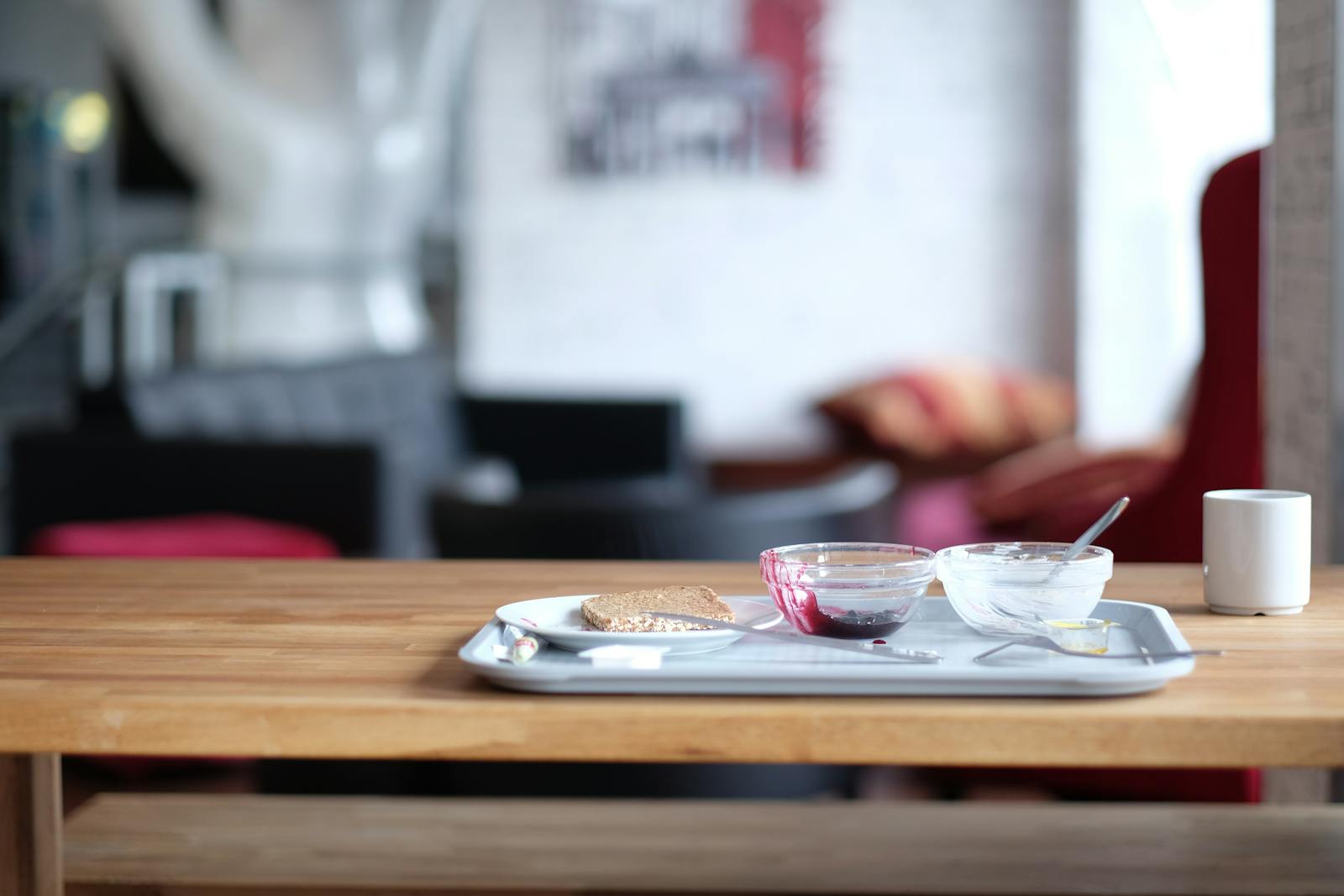
You don't have to buy the strongest version of ego depletion to find this useful. You just have to notice how you feel after a morning of small irritating choices versus a morning where you put your body on autopilot until the work begins. The mechanics are unglamorous. Building new behaviors into routine can take anywhere from 18 days to 36 weeks, and the most reliable strategy is pairing new actions with existing ones—what's often called habit stacking. You don't decide to eat the breakfast. You decide to make the coffee, and the breakfast is already attached to that.
For me, the anchor is the oat milk latte. Same mug, same pour, same stretch of news reading while it cools. The food around it shifts — I'm a chronic experimenter, the kind of person who'll spend a Sunday afternoon trying to get a cashew sauce right — but that opening move doesn't. I didn't set out to commit to it. I just stopped reconsidering. There was a stretch where I'd open the fridge and stare at it like the answer was in there. Then I noticed I was tired before I'd even started writing, and the staring was part of why.
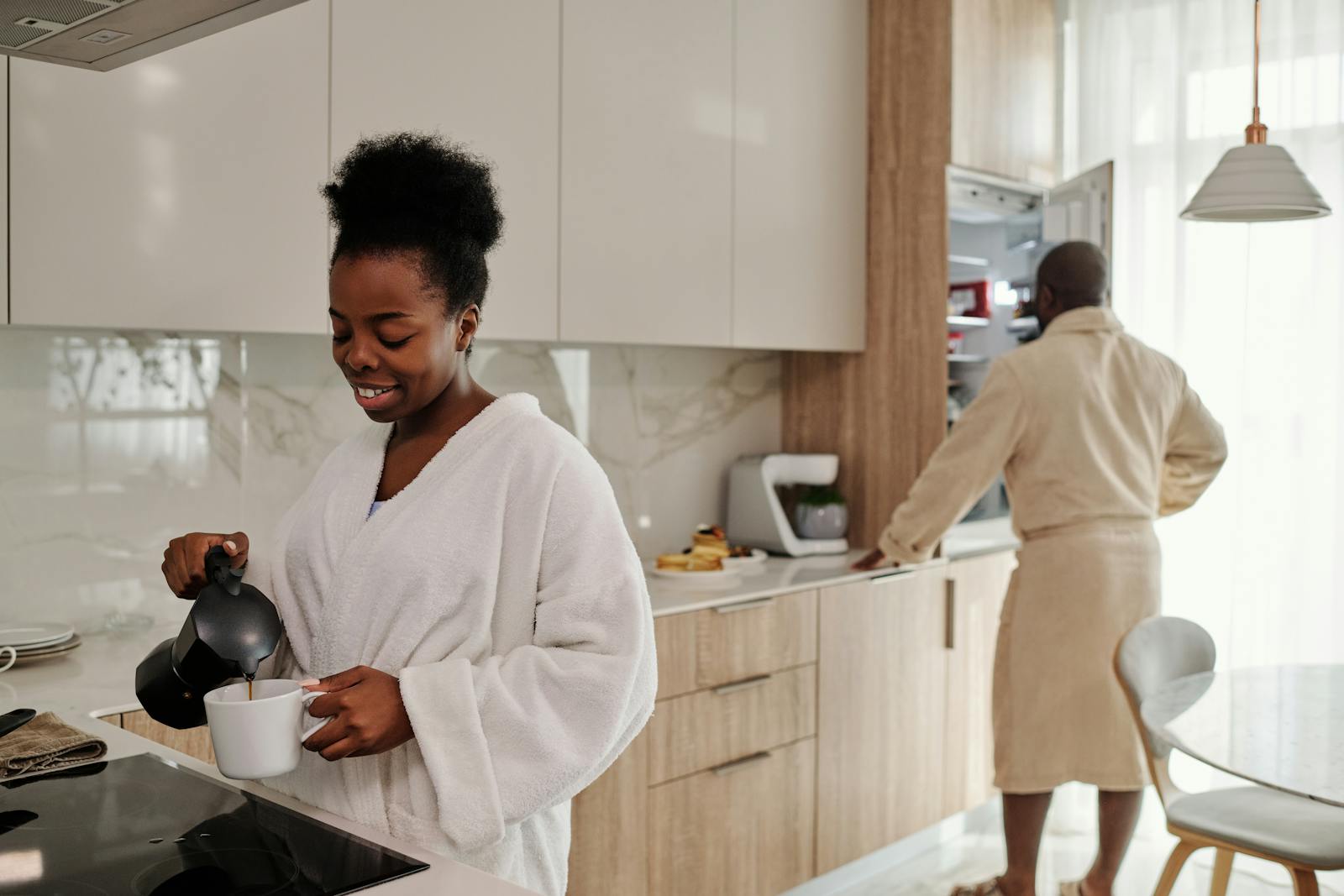
My partner finds the whole setup endearing. He came to plant-based eating slowly, on his own timeline — he'll still happily order a pepperoni pizza with ranch, but he also asks for my lentil bolognese now, and he'll request the tofu bánh mì on a weeknight without irony. He watches me run the same morning sequence with the affectionate bafflement of someone who's learned that I write better on the days I don't have to decide.
The self-respect part
The phrase in the headline that I want to defend is the idea that routine can be a form of self-respect, because that's the part that people miss when they roll their eyes at routine.
Self-respect isn't always loud. Sometimes it looks like protecting the version of yourself that shows up at 10 a.m. for the work that matters. Sometimes it looks like refusing to let the fridge ask you a question you don't have the energy to answer well. Sometimes it looks like deciding, in advance, that this part of your day is not where the interesting choices live.
The interesting choices are downstream. Whether to take the meeting. Whether to push back on the edit. Whether to be patient with someone who's having a worse day than you. Whether to call your mom. Whether to keep going on the project that won't pay off for two years.
Those are the choices that compound. Those are the ones worth being sharp for.
The quiet competence of the same bowl
I think we misread routine because we've been sold a culture of optionality. The promise of modern life is that every meal could be different, every morning could be a new adventure, every choice is yours. And some choices should be. But the unspoken cost of all that optionality is that your brain treats every small fork in the road as if it matters, and by the time you sit down to do something that actually matters, you've already spent the budget.
The same-breakfast adult has just done the math earlier than the rest of us. They've figured out that being interesting at dinner requires being boring at breakfast. That having the energy to be present with people you love requires not being depleted by people you don't. That self-respect, the real kind, isn't about chasing variety. It's about knowing what to protect.
The opener is the same. The day isn't.