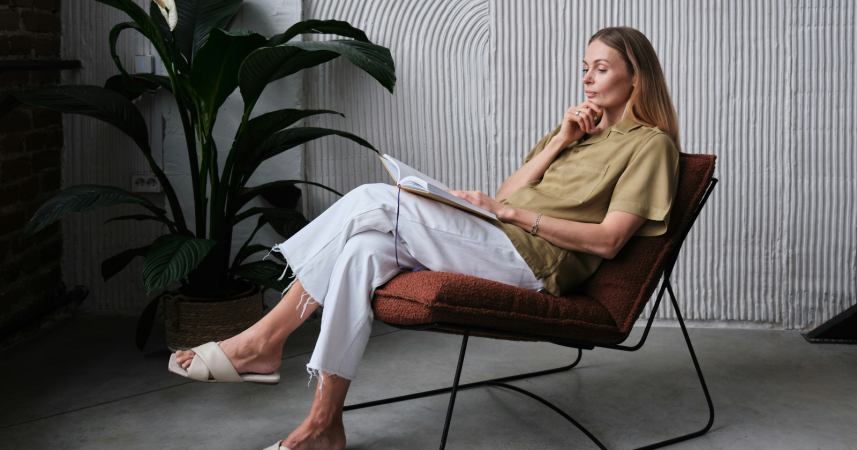
Standing in rooms filled with decades of accumulated life while your grandchildren politely decline your mahogany furniture is when you realize you've become a museum curator instead of a person living in the present.
My neighbor was holding a dented colander when she started to cry. It was the one her mother had used to drain pasta every Sunday for forty years, and now it was her turn to decide whether it stayed or went. We were three hours into sorting her late mother's house, surrounded by stacks of dishes, linens, and mail that had arrived after the funeral. She looked at me, still holding the colander, and said she didn't know what she was supposed to do with any of it.
I didn't either. I'd stood in my own version of that kitchen two years earlier.
Earlier that same morning, I had been in a different friend's kitchen entirely — three ceramics on an open shelf, a single succulent, everything arranged for a photograph. Two versions of minimalism in one day. One is chosen, curated, performed. The other arrives uninvited, demanding decisions that feel like small betrayals of the people we've loved.
When the house becomes a museum
After my husband passed two years ago, I found myself living in what felt like a museum of multiple lifetimes. His reading glasses stayed exactly where he'd left them. Boxes of my children's artwork occupied every closet. My mother's mixing bowls nested inside each other in a cabinet I never opened. Thirty-two years of teaching materials filled the basement – lesson plans, student essays, yearbooks with inscriptions from teenagers who are grandparents now.
Objects multiply when you're not paying attention. While you're raising children, caring for aging parents, managing a career, supporting a spouse through illness, things accumulate like sediment. Each layer tells a story – this from when the kids were small, that from taking care of Mom, these from before everything changed.
The weight of it didn't register until my grandson, fresh from college, needed furniture for his first apartment. I walked him through rooms filled with mahogany pieces, china cabinets, formal dining sets. "Thanks, Grandma," he said gently, "but this stuff is really... heavy."
Heavy. The word echoed differently than he'd intended. Everything was heavy – not just physically, but emotionally saturated with memory and expectation.
The paralysis of deciding what matters
Virginia Woolf once wrote about "the cotton wool of daily life" – the mundane moments that surround our significant experiences. But what happens when even the cotton wool feels too precious to discard?
I started with one drawer – that universal junk drawer we all have. Inside, I found a hospital bracelet from my husband's first diagnosis, keys to unknown locks, instruction manuals for appliances long gone, my mother's rosary wrapped in tissue paper. Each item demanded a decision that was really a small grief. The bracelet went first. I didn't need an artifact to remember seven years of watching Parkinson's slowly claim the man I loved. But the rosary? Throwing away a rosary felt like inviting cosmic retribution, even though I only attend church for the coffee and companionship.
Why do we keep things? Out of guilt, fear, misplaced optimism. Gifts from people we don't particularly like. Warranties for appliances we no longer own. Craft supplies we swore we'd use. But mostly, I think we keep things because deciding their fate takes emotional energy we don't have while we're in survival mode. During my first marriage's collapse – suddenly single with two toddlers – I developed a scarcity mindset that took decades to shake. Every broken toy might be fixed. Every outgrown coat might fit someone else's child. Every casserole dish might be needed for the potluck that could lead to the friendship that might ease the loneliness. That kind of thinking doesn't leave you just because the circumstances change.
Learning to distinguish memory from memento
The turning point came in the garage, surrounded by camping equipment my husband had bought for trips we never took. I realized I'd become a custodian rather than a creator. For years, I'd maintained shrines to other people's interests, other people's memories, other people's lives.
But how do you release objects that feel like the last tangible connection to people you've lost? Donating my husband's military histories felt like erasing him, even though I'd never read a single one. Selling my mother's sewing machine felt like severing the thread to the woman who taught me that you could make beautiful things from scraps.
I developed rituals to navigate these feelings. Before donating the books, I spent an evening going through them, saving notes he'd written in margins. I photographed the sewing machine and wrote down what I remembered about watching my mother work late into the night, making clothes that let her daughters feel rich even when we weren't.
The distinction became clearer over time. Keeping my mother's mixing bowls wouldn't preserve her patience or her Sunday dinners. Holding onto every piece of my children's artwork wouldn't make me more of a mother. The love existed independent of the objects.
The unexpected freedom of empty spaces
As rooms emptied, the house began to breathe. Light reached corners that had been blocked for years. Surfaces emerged. I could vacuum without navigating an obstacle course of memory.
The physical space was nothing compared to the mental clarity. Without the constant visual reminder of unfinished projects and unused equipment, I found energy I didn't know I still had. I started writing – something I'd always planned to do "when there was time." I joined a hiking group. I said yes to a weekend trip without the paralysis of leaving behind a house full of things that might need tending.
Not everything went. I kept one box of each child's artwork, carefully curated. Their baby shoes. My husband's wedding ring. A first edition of "To Kill a Mockingbird" he gave me for our anniversary, knowing it was the book that made me want to teach. Letters from students who wrote to say I'd changed their lives.
I developed what I call the one-year rule. If I hadn't used, worn, or looked at something in a year, it could probably go. The exceptions were few but fierce – things that made my heart literally skip when I held them.
Creating space for what comes next
My version of minimalism doesn't photograph well. There's no aesthetic unity, no color scheme, no perfectly styled corners. My house still contains mismatched furniture, walls full of family photos, too many coffee mugs. But everything here has earned its place through use or joy, not guilt or habit.
When my grandchildren visit now, they don't have to be careful around precious things. They can do cartwheels in the living room, spread out art projects on the dining table, build blanket forts without anyone worrying about disrupting carefully arranged objects. The house is for living in now, not preserving someone else's past.
Last week, I finally tackled the last box in the basement – old lesson plans from my teaching years. Page after page of carefully crafted discussions about symbolism in literature, themes of loss and redemption, the meaning we assign to objects. The irony wasn't lost on me. I kept three lessons that still made me proud and recycled the rest, watching decades of work disappear into the bin without the grief I'd expected.
Minimalism at this stage of life isn't about deprivation or aesthetics. It's about choosing what deserves the precious real estate of your remaining years.
Final thoughts
There is still one box I haven't opened. It's in the hall closet, labeled in my husband's handwriting, and I've known for months that I should deal with it. I've picked it up twice. Both times I put it back.
Some days I walk through the cleared rooms and feel relief. Other days I pass the empty corner where the china cabinet used to stand and wonder whether I should have kept it after all — whether one of the grandchildren might have wanted it eventually, whether I moved too fast on something that wasn't mine to move fast on. I don't always know. I'm not sure you're supposed to.
What I know is that the house is quieter now, and that the box in the closet is still there, and that I'll open it or I won't.
If You Were a Healing Herb, Which Would You Be?
Each herb holds a unique kind of magic — soothing, awakening, grounding, or clarifying.
This 9-question quiz reveals the healing plant that mirrors your energy right now and what it says about your natural rhythm.
✨ Instant results. Deeply insightful.
Marlene Martin
Marlene Martin is a retired high school English teacher who spent 38 years in the classroom before discovering plant-based eating in her late sixties. When her daughter first introduced her to the idea of removing animal products from her diet, Marlene was skeptical. But curiosity won out over habit, and what started as a reluctant experiment became a genuine transformation in how she thinks about food, health, and aging.
At VegOut, Marlene writes about nutrition, wellness, and the experience of embracing new ways of eating later in life. She brings a teacher’s instinct for clarity and patience to topics that can feel overwhelming, especially for readers who are just beginning to explore plant-based living. Her writing is informed by personal experience, careful research, and a belief that it is never too late to change.
Marlene lives in Portland, Oregon, where she spends her mornings reading research papers, her afternoons tending a modest vegetable garden, and her evenings knitting while listening to audiobooks. She has three adult children and two grandchildren who keep her honest about staying current.
More Articles by Marlene